

Can Dogs Eat Mayo? Safety, Risks & Feeding Guide
If you are wondering, can dogs eat mayo, the short answer is that mayonnaise is not considered toxic to dogs, but it is not a healthy or necessary food for them either. Mayo is typically high in fat and calories, and some products can contain a lot of salt or other ingredients that may upset a dog’s stomach.
A tiny amount of plain mayonnaise is unlikely to cause a problem for most healthy dogs, but larger amounts can lead to digestive upset and add unnecessary fat to their diet. The ingredients matter too, especially when mayonnaise is mixed with sauces, seasonings, garlic, onion, or other human foods.
Can Dogs Eat Mayo?
Dogs can generally eat a very small amount of plain mayonnaise without experiencing serious problems. Mayo itself is not usually considered poisonous to dogs, but it provides little nutritional value that dogs need. It is primarily made from ingredients such as oil, egg, and an acidic ingredient like vinegar or lemon juice.
The main concern is its high fat content. Feeding mayonnaise regularly or in large quantities can contribute excessive calories and may cause stomach problems. If you choose to give your dog a taste, keep the portion extremely small and make sure the product does not contain potentially harmful added ingredients.
Is Mayo Safe for Dogs?
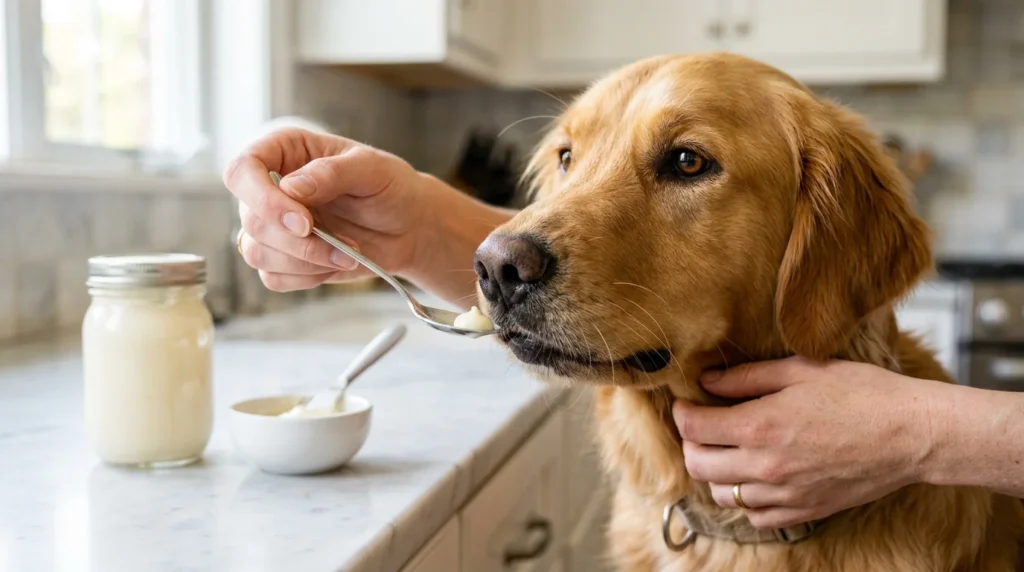
Plain mayonnaise can be safe for dogs when consumed in tiny amounts. However, “safe” does not mean that mayonnaise is a good treat to give frequently. Dogs have different dietary requirements from humans, and high-fat human foods can be difficult for some dogs to tolerate.
Always check the ingredient list before sharing mayonnaise. Some flavored mayonnaise products contain garlic, onion, chili, herbs, or other seasonings. These additions can create additional risks. For a dog-friendly option, plain food without unnecessary sauces or seasonings is generally preferable.
Can Dogs Eat Homemade Mayo?
Dogs can potentially eat a tiny amount of homemade mayonnaise if every ingredient used is safe for dogs. Homemade mayo is commonly made from oil and egg, but recipes can vary. Some may include ingredients that are unsuitable for pets, so the recipe should be checked carefully.
Homemade mayonnaise also requires proper food-safety practices because ingredients such as raw eggs can carry harmful bacteria. There is no nutritional need to feed homemade mayo to a dog, so it is generally better to keep portions very small and use plain, dog-safe foods instead.
Can Dogs Eat Store-Bought Mayo?
A small amount of plain store-bought mayonnaise is generally unlikely to be toxic to a healthy dog. However, commercial products can vary considerably in their fat, sodium, and ingredient content. Some varieties may also contain flavorings or preservatives.
Before giving your dog mayo, read the label and avoid products containing onion, garlic, or other ingredients known to be unsafe for dogs. Even when the ingredient list is suitable, mayonnaise should remain an occasional taste rather than a regular part of your dog’s diet.
Can Dogs Eat Mayo Every Day?
It is not recommended to give dogs mayonnaise every day. Mayo is calorie-dense and generally high in fat, while offering little nutritional benefit for dogs. Regular servings can make it easier for a dog to consume more calories than they need.
Frequent high-fat foods may also contribute to digestive problems in some dogs. Instead of using mayo as a daily food topper, choose nutritious foods that fit your dog’s regular diet. If your dog has a medical condition or needs a specific diet, follow your veterinarian’s feeding recommendations.
Can Puppies Eat Mayo?
Puppies can technically consume a tiny amount of plain mayonnaise, but it is best not to make it part of their diet. Puppies require carefully balanced nutrition to support growth and development, and mayonnaise does not provide the nutrients they need in meaningful amounts.
A small accidental lick is unlikely to be a serious concern for most puppies, but larger amounts may cause stomach upset because young dogs can be sensitive to dietary changes. Keep mayonnaise and other rich human foods out of your puppy’s reach.
Can Small Dogs Eat Mayo?
Small dogs may be able to tolerate a tiny amount of plain mayo, but portion size is especially important. Because smaller dogs have lower daily calorie requirements, even a small spoonful of mayonnaise can represent a relatively large amount of extra fat and calories.
If your small dog accidentally eats a little mayonnaise, monitor them for digestive changes. Avoid intentionally feeding large portions. Choose plain, dog-appropriate foods instead of mayonnaise whenever possible, particularly if your dog is overweight or has dietary restrictions.
Can Large Dogs Eat Mayo?
Large dogs can generally tolerate a small taste of plain mayonnaise, but their larger size does not make mayo a healthy food. A large dog may need more calories than a small dog, but mayonnaise can still add unnecessary fat to the diet.
Keep the serving small and occasional, and check the ingredients first. Avoid giving large dogs mayonnaise-based dishes containing onion, garlic, spicy seasonings, or fatty meats. Plain boneless meat or other dog-safe foods are better choices for treats.
Can Dogs Eat Light Mayo?
Light or reduced-fat mayonnaise may contain less fat than regular mayo, but it is not automatically a healthy food for dogs. The product may still contain significant calories, sodium, sweeteners, preservatives, or seasonings depending on the brand and recipe.
Dogs do not need mayonnaise in their diet, so choosing a lower-fat variety does not create a nutritional reason to feed it regularly. If your dog gets a tiny amount of light mayo accidentally, check the ingredients and monitor them for digestive upset.
Can Dogs Eat Vegan Mayo?
Vegan mayonnaise does not contain eggs, but that does not necessarily make it better for dogs. Different vegan mayo products use different oils, starches, flavorings, and additives. Some varieties may also contain ingredients that can cause problems for dogs.
If a dog accidentally eats a small amount, check the product label for onion, garlic, xylitol, or other potentially harmful ingredients. Never assume that a plant-based product is automatically safe for pets. Plain, minimally processed foods remain a simpler choice.
Can Dogs Eat Mayo With Garlic?
Dogs should not be given mayonnaise containing garlic. Garlic belongs to the Allium family and can be harmful to dogs when enough is consumed. Garlic may be present as fresh garlic, garlic powder, garlic extract, or another concentrated ingredient in flavored mayonnaise.
If your dog accidentally eats a small amount of garlic-flavored mayo, check the product’s ingredient list and consider how much was consumed. If the amount was significant or you are concerned about the garlic exposure, contact your veterinarian for guidance.
Can Dogs Eat Mayo With Onion?
Mayonnaise containing onion should not be intentionally fed to dogs. Onion can damage red blood cells in dogs and is unsafe in several forms, including fresh, cooked, dried, and powdered forms. Onion powder can be particularly easy to overlook in prepared sauces.
Always check mayonnaise-based sauces and salads before allowing your dog to eat them. If your dog consumes food containing onion, the level of concern depends on the amount and concentration, so contact your veterinarian if a potentially significant quantity was eaten.
Can Dogs Eat Mayo With Mustard?

Dogs should generally avoid mayonnaise mixed with mustard. While the mayo itself may not be toxic in a tiny amount, mustard products can contain ingredients and seasonings that are not appropriate for dogs. Some prepared sauces also contain onion, garlic, excessive salt, or other additives.
A small accidental taste is different from intentionally feeding a large amount. Check the ingredients if your dog eats a mayo-and-mustard sauce, and contact your veterinarian if the product contains potentially harmful ingredients or your dog consumed a substantial quantity.
Can Dogs Eat Mayo With Tuna?
A small amount of plain mayo mixed with tuna may be tolerated by some dogs, but it is not an ideal combination to feed regularly. Mayonnaise adds significant fat and calories, while tuna can contain mercury depending on the type and amount consumed.
If you give your dog tuna, plain cooked tuna or an appropriate water-packed tuna without added seasonings is a simpler option. Avoid tuna salad containing onion, garlic, excessive salt, or large amounts of mayonnaise. Keep human foods as occasional additions to a balanced canine diet.
Can Dogs Eat Mayo With Chicken?
Dogs can generally eat plain cooked chicken, but chicken salad made with mayonnaise is a different matter. Mayonnaise adds fat and calories, while chicken salad recipes may also contain onion, garlic, grapes, raisins, spices, or other ingredients that are unsafe for dogs.
If you want to share chicken with your dog, plain, fully cooked, boneless chicken is a better choice. Remove the skin and excessive fat and avoid sauces or seasonings. A tiny accidental amount of plain chicken with mayo is unlikely to cause a serious issue for most healthy dogs.
See ALso: Can Dogs Eat Celery Raw? Benefits, Risks & Safe Serving
Can Dogs Eat Mayo With Eggs?
Eggs can be a suitable food for many dogs when fully cooked and served plain, but adding mayonnaise increases the fat and calorie content. A small amount of plain egg mixed with a little mayo is unlikely to be toxic to a healthy dog, but it should not become a regular meal.
If you are preparing eggs for your dog, plain cooked egg is the simpler option. Avoid adding salt, butter, garlic, onion, or rich sauces. Keep portions appropriate for your dog’s overall diet and calorie needs.
Can Dogs Eat Mayo on Bread?
A small amount of plain mayonnaise on plain bread is generally unlikely to be toxic to a healthy dog, but neither ingredient is necessary for canine nutrition. Bread can add calories and carbohydrates, while mayonnaise adds fat without providing much benefit.
More importantly, some breads and sandwich spreads contain ingredients that dogs should avoid. Never share bread containing raisins, grapes, garlic, onion, chocolate, or other harmful ingredients. If you offer bread occasionally, keep it plain and give only a small piece.
Can Dogs Eat Mayo in Sandwiches?
It is better not to give dogs human sandwiches containing mayonnaise. Sandwiches may contain several ingredients at once, including processed meats, cheese, sauces, onion, garlic, pickles, and high levels of sodium. The combination can be much less suitable for dogs than a tiny amount of plain mayo.
If your dog steals a small bite of a simple sandwich, they may be completely fine, but check what was included. If the sandwich contained potentially toxic ingredients or your dog ate a large portion, contact your veterinarian for advice.
Can Mayo Cause Stomach Problems in Dogs?
Yes, mayonnaise can cause stomach upset in some dogs, especially when they eat a large amount. Its high fat content can be difficult for some dogs to tolerate and may result in vomiting, diarrhea, gas, or abdominal discomfort.
Dogs that already have sensitive digestion or a history of problems after eating fatty foods may be more likely to react. If your dog develops persistent vomiting, severe diarrhea, abdominal pain, weakness, or other concerning symptoms after eating mayo, contact a veterinarian.
Can Mayo Cause Pancreatitis in Dogs?
Mayonnaise is high in fat, so eating a large quantity may be concerning for dogs that are sensitive to high-fat foods. A high-fat meal can contribute to digestive upset and may be a concern for dogs at risk of pancreatitis, a painful inflammation of the pancreas.
Dogs with a history of pancreatitis or other dietary restrictions should not be given mayonnaise unless their veterinarian specifically approves it. If a dog consumes a large amount of mayo and later develops repeated vomiting, abdominal pain, weakness, or loss of appetite, seek veterinary advice promptly.
How Much Mayo Can Dogs Eat?
There is no nutritional requirement for dogs to eat mayonnaise, so the safest amount is very small and only occasional. If you intentionally offer plain mayo to a healthy dog, start with a tiny taste rather than a spoonful. The dog’s size, health, normal diet, and calorie requirements should all be considered.
| Dog Size | Conservative Starting Amount | Frequency |
|---|---|---|
| Toy / Very Small | A few drops to 1/4 teaspoon | Rarely |
| Small | Up to 1/2 teaspoon | Occasionally |
| Medium | Up to 1 teaspoon | Occasionally |
| Large | Up to 1–2 teaspoons | Occasionally |
| Very Large | Up to 1 tablespoon | Occasionally |
These are conservative suggestions rather than universal veterinary limits. Treats and human-food additions should generally make up only a small portion of a dog’s daily calories. For dogs with obesity, pancreatitis, food allergies, or other medical concerns, ask your veterinarian before offering mayonnaise.
What Are the Risks of Giving Mayo to Dogs?
The main concern with mayonnaise is its high fat and calorie content. A small taste of plain mayo is unlikely to cause a problem for most healthy dogs, but larger portions can lead to vomiting, diarrhea, gas, or abdominal discomfort. Repeatedly feeding high-fat foods can also contribute to excessive calorie intake and weight gain.
Another concern is that mayonnaise is often used in prepared foods containing additional ingredients. Onion, garlic, certain seasonings, excessive salt, and other additives can make a mayo-based dish unsafe for dogs. Always consider the complete ingredient list rather than looking at mayonnaise alone.
Can Dogs Eat Mayo Safely?
Healthy dogs can generally tolerate a very small amount of plain mayonnaise. If you decide to offer a taste, choose a simple product without onion, garlic, spicy ingredients, or other questionable additives. Start with a tiny portion, especially if your dog has never eaten mayonnaise before.
Mayonnaise should remain an occasional treat rather than something added regularly to meals. If your dog has a sensitive stomach, weight concerns, pancreatitis history, or a veterinarian-recommended diet, it is better to avoid mayo unless your veterinarian says it is appropriate.
Can Dogs Eat Mayo-Based Salads?
Dogs should generally not be given mayonnaise-based salads such as chicken salad, tuna salad, egg salad, or potato salad without checking all the ingredients. These foods may contain onion, garlic, pickles, mustard, spices, excessive salt, or other ingredients that are not appropriate for dogs.
The mayonnaise itself may only be a small part of the overall concern. If your dog accidentally eats a small bite, check what was in the salad and monitor them. If it contains a potentially harmful ingredient or your dog ate a large amount, contact your veterinarian.
Can Dogs Eat Mayo and Cheese?
A tiny amount of plain mayo and cheese is unlikely to be toxic to most healthy dogs, but this combination is high in fat and calories. Some dogs also have difficulty digesting dairy products, which can result in gas or loose stool.
There is little nutritional reason to intentionally combine these foods for a dog. If you want to offer a treat, choose a dog-appropriate food instead. For dogs with dietary restrictions or sensitive digestion, avoid rich combinations such as mayo and cheese.
Can Dogs Eat Mayo and Pickles?
It is better to avoid giving dogs mayonnaise mixed with pickles. Pickles can contain high levels of sodium, and some recipes contain garlic, onion, or spicy seasonings. The combination with mayonnaise can also create a rich food that may upset a dog’s stomach.
If your dog accidentally eats a small amount of a pickle-and-mayo mixture, check the ingredients and observe them for any unusual symptoms. Keep prepared human sauces and pickled foods away from dogs whenever possible.
Can Dogs Eat Mayo and Mustard?
Mayonnaise mixed with mustard is not a recommended dog treat. While plain mayonnaise may be tolerated in a tiny amount, mustard-based sauces can contain spices, salt, vinegar, onion, garlic, or other ingredients that dogs should not consume in significant amounts.
If you want to give your dog a small taste of a sandwich ingredient, plain cooked meat or another simple dog-safe food is a better choice. Avoid giving dogs large amounts of prepared sauces, even when individual ingredients appear harmless.
See Also: Can Dogs Eat Grits? Safety, Benefits, Risks & Portions
Can Dogs Eat Mayo With Tuna Fish?
A small amount of tuna mixed with plain mayonnaise may be tolerated by some dogs, but it is not an ideal regular food. Mayonnaise adds unnecessary fat, while tuna should also be fed cautiously because some types of tuna can contain more mercury than smaller fish.
If you give your dog tuna, choose plain tuna without sauces or seasonings and keep the portion modest. Avoid tuna salad containing onion, garlic, excessive salt, or large amounts of mayo. Human tuna dishes should remain occasional rather than becoming part of your dog’s regular diet.
Can Dogs Eat Mayo With Chicken?
Plain cooked chicken can be a suitable food for many dogs, but chicken mixed with mayonnaise is less desirable. Chicken salad may also contain onion, garlic, grapes, raisins, spices, pickles, or other ingredients that can be harmful to dogs.
If you want to share chicken with your dog, serve plain, fully cooked, boneless chicken without sauces or heavy seasoning. A tiny accidental bite of plain chicken containing a little mayo is unlikely to be serious for most healthy dogs, but larger amounts should be monitored.
Can Dogs Eat Mayo With Eggs?
Fully cooked eggs can generally be eaten by many dogs when served plain, but mayonnaise adds extra fat and calories. A small amount of plain egg with a little mayo is unlikely to be poisonous, but it is not necessary or particularly beneficial as a regular food.
For dogs, plain cooked egg is a simpler option. Avoid egg-and-mayo mixtures containing onion, garlic, excessive salt, mustard, or other seasonings. Introduce new foods gradually and keep treats and extras within your dog’s overall dietary needs.
Can Dogs Eat Mayo on French Fries?
Mayonnaise-covered fries are not a good choice for dogs. French fries are typically high in fat and salt, while mayonnaise adds even more fat and calories. Eating a large amount of this combination can cause digestive upset and may be particularly unsuitable for dogs sensitive to fatty foods.
If your dog steals one plain fry with a little mayo, it is unlikely to cause a serious problem in most cases. However, do not intentionally feed fries with mayonnaise as a treat. Plain dog-safe foods are a much better option.
Can Dogs Eat Spicy Mayo?
Spicy mayonnaise should be avoided. Spicy sauces may contain chili peppers, garlic, onion, high amounts of salt, or other seasonings that can irritate a dog’s digestive system or create more serious risks depending on the ingredients.
Dogs do not need spicy foods, and even a small amount may cause stomach discomfort in some pets. If your dog accidentally eats spicy mayo, check the ingredient list and monitor them for vomiting, diarrhea, excessive thirst, or abdominal discomfort.
Can Dogs Eat Garlic Mayo?
Dogs should not be given garlic mayonnaise. Garlic is part of the Allium family and can be harmful to dogs. Garlic may appear in mayonnaise as fresh garlic, garlic powder, garlic extract, or another concentrated form.
If your dog eats garlic mayo, check the product label and estimate how much was consumed. A veterinarian can help determine whether the exposure is concerning based on the amount and your dog’s size. Seek veterinary guidance promptly if a substantial amount was eaten.
Can Dogs Eat Onion Mayo?
Mayonnaise containing onion should not be intentionally fed to dogs. Onion can damage a dog’s red blood cells, and this concern applies to fresh, cooked, dried, and powdered forms. Onion powder may be particularly difficult to notice in sauces and prepared foods.
If your dog consumes onion-containing mayonnaise, do not assume that the small amount of mayo makes it safe. Check the ingredients and contact your veterinarian if the amount consumed could be significant or if you notice unusual symptoms.
Can Dogs Eat Mayo With Salt?
Dogs need sodium in appropriate amounts, but mayonnaise and other processed foods can contribute unnecessary salt to their diet. A tiny amount of plain mayo is generally unlikely to cause sodium poisoning in a healthy dog, but large quantities of salty foods can be dangerous.
Fresh drinking water should always be available. Avoid giving dogs heavily salted mayonnaise or mayo-based foods regularly. If your dog consumes a large amount of salty food and develops excessive thirst, vomiting, weakness, tremors, or other concerning signs, seek veterinary advice.
Can Mayo Make Dogs Sick?
Yes, mayonnaise can make some dogs sick, particularly when they eat a large quantity. Its high fat content can contribute to vomiting, diarrhea, gas, or abdominal discomfort. Dogs that are not accustomed to rich foods may be especially sensitive.
If your dog develops mild digestive upset after eating a small amount, stop giving mayo and monitor them. Make sure they have access to fresh water. Persistent vomiting, severe diarrhea, abdominal pain, weakness, or loss of appetite should be discussed with a veterinarian.
Can Dogs Eat Mayo If They Have Pancreatitis?
Dogs with a history of pancreatitis should generally avoid high-fat foods such as mayonnaise unless their veterinarian specifically approves them. Pancreatitis involves inflammation of the pancreas, and dietary fat can be an important consideration when managing dogs prone to this condition.
If a dog with a history of pancreatitis accidentally consumes mayonnaise, monitor them closely for vomiting, abdominal pain, loss of appetite, lethargy, or other unusual symptoms. Contact your veterinarian if symptoms develop or if a large amount was consumed.
Can Dogs Eat Mayo If They Are Overweight?
Mayonnaise is not an ideal treat for overweight dogs because it is calorie-dense and provides little nutritional value for them. Even small portions can add extra calories to a dog’s daily intake, particularly when mayo is included in sandwiches, salads, or other rich foods.
If your dog is trying to lose weight, prioritize treats that fit within their veterinarian-approved calorie plan. Avoid using mayonnaise as a food topper or frequent reward. Your veterinarian can help determine suitable treats based on your dog’s weight and nutritional needs.
What Should You Do If Your Dog Eats Mayo?
If your dog eats a small amount of plain mayonnaise, there is usually no reason to panic. Remove the remaining food and check the product’s ingredient list. The most important questions are how much was eaten and whether the mayo contained ingredients such as onion, garlic, or other potentially harmful additives.
For a large amount of mayonnaise, monitor your dog for vomiting, diarrhea, abdominal discomfort, lethargy, or loss of appetite. If the food contained potentially toxic ingredients or your dog develops significant symptoms, contact your veterinarian for appropriate advice.
Safer Alternatives to Mayo for Dogs
If you want to make your dog’s food more appealing, there are healthier alternatives to mayonnaise. Depending on your dog’s diet, small amounts of plain cooked chicken, plain cooked egg, or veterinarian-approved dog treats may provide more useful nutrition than a fatty sauce.
Fresh water should always be available, and your dog’s regular complete and balanced food should provide the majority of their nutrition. When introducing any new food, start with a small amount and monitor your dog for digestive or allergic reactions.
Frequently Asked Questions
Can dogs eat mayo?
Yes, dogs can generally tolerate a tiny amount of plain mayonnaise, but it is high in fat and calories and is not a necessary part of their diet.
Can dogs eat mayo every day?
No. Daily mayonnaise is not recommended because it can add unnecessary fat and calories and may cause digestive problems in some dogs.
Can dogs eat garlic mayo?
No. Garlic-containing mayonnaise should be avoided because garlic can be harmful to dogs. Check the ingredients of flavored mayo carefully.
Can dogs eat spicy mayo?
Spicy mayo is best avoided because it may contain chili, garlic, onion, excessive salt, or other ingredients that can upset or harm dogs.
What happens if a dog eats too much mayo?
A large amount of mayonnaise can cause digestive upset because of its high fat content. Monitor your dog for vomiting, diarrhea, abdominal discomfort, or loss of appetite and contact a veterinarian if symptoms are significant.
Conclusion
So, can dogs eat mayo? A small amount of plain mayonnaise is generally unlikely to be toxic to a healthy dog, but mayo is high in fat and calories and offers little nutritional benefit. It is therefore better treated as an occasional taste rather than a regular food.
Always check the ingredients, especially when mayonnaise is part of a prepared dish. Garlic, onion, spicy seasonings, excessive salt, and rich ingredients can make a mayo-based food much more dangerous for dogs. Dogs with pancreatitis, weight problems, or special dietary requirements should generally avoid mayonnaise unless their veterinarian approves it.
If your dog accidentally eats a little plain mayo, monitor them for digestive upset. If they consume a large amount, eat mayo containing potentially harmful ingredients, or develop serious symptoms, contact your veterinarian promptly.
See Also: Can Dogs Eat Egg Shells? Benefits, Risks & Safety Guide


