

Can Dogs Eat Potatoes? Safe Types, Risks & Feeding Guide 2026
You are making dinner — boiling, baking, or mashing potatoes — and your dog appears, as always, right by your side. Potatoes are one of the most common foods in any kitchen, and dogs seem endlessly curious about whatever their owners are eating. But can dogs eat potatoes? Are they safe? What about sweet potatoes, raw potatoes, mashed potatoes, or french fries?
Potatoes are a genuinely nuanced food for dogs — not a simple yes or no. The form, preparation, ripeness, and variety all matter significantly. Some potato forms are safe and nutritious. Others are potentially toxic. And some potato preparations that are perfectly fine for humans are problematic for dogs because of added ingredients.
Can Dogs Eat Potatoes?
Yes and no — and understanding the distinction is critical. Plain, cooked white potatoes (boiled, baked, or steamed without any seasoning, butter, oil, or additives) are safe for most healthy dogs in moderate amounts. Raw potatoes, however, are not safe and should never be given to dogs.
The reason raw potatoes are dangerous is solanine — a naturally occurring toxic compound found in nightshade plants including potatoes. Solanine is most concentrated in raw potatoes and in the green parts (skin that has turned green, sprouts, and any green flesh). Cooking significantly reduces solanine levels, making properly cooked potatoes safe.
Sweet potatoes are a separate category with different safety considerations — and actually safer for dogs than white potatoes in most contexts. We will cover both extensively throughout this guide.
Can Dogs Have Potatoes?
Yes — dogs can have plain, cooked potatoes in appropriate amounts. Potatoes are not inherently toxic to dogs (unlike grapes or onions), but they require specific preparation to be safe. The AKC confirms that dogs can eat potatoes as long as they are plain and cooked.
Potatoes appear as an ingredient in many commercial dog foods and treats, which confirms their status as an acceptable dog food ingredient. However, their relatively high carbohydrate content means they should be a supplemental treat rather than a dietary staple, and dogs with specific health conditions — particularly diabetes — should have potatoes only with veterinary guidance.
The key rules: always cooked (never raw), always plain (no butter, no salt, no seasonings), and always in appropriate portions based on your dog’s size and health status.
Are Potatoes Safe for Dogs?
Cooked, plain white potatoes are safe for most healthy dogs. The safety picture is nuanced and depends on several factors:
Ripeness and color: Only fully ripe, non-green potatoes should be given to dogs. Green coloration on potato skin or flesh indicates elevated solanine content — even after cooking, green potatoes retain problematic solanine levels. Always discard any potato with green skin, green flesh, or sprouts.
Cooking: Raw potatoes contain solanine at levels that can cause toxicity in dogs. Cooking (boiling, baking, steaming, or microwaving) significantly reduces solanine to safe levels in the flesh. Always cook potatoes before giving them to your dog.
Preparation: Plain cooked potato flesh is safe. Potatoes prepared with butter, oil, salt, garlic, onion, sour cream, cheese, or other toppings are not appropriate for dogs due to the added ingredients — not because of the potato itself.
Health conditions: Dogs with diabetes should have potatoes with veterinary guidance due to their high glycemic index. Dogs with DCM (dilated cardiomyopathy) may need to avoid potato-heavy diets pending ongoing FDA research.
Are Potatoes Good for Dogs?
Potatoes provide some genuine nutritional value for dogs, though they are not the most nutrient-dense treat option available. Plain cooked potato flesh contains potassium, Vitamin C, Vitamin B6, magnesium, and dietary fiber — all beneficial nutrients for dogs.
Potassium supports heart function, muscle contraction, and fluid balance. Vitamin C acts as an antioxidant supporting immune function. Vitamin B6 supports protein metabolism and nervous system health. Magnesium supports bone health and enzyme function. Dietary fiber supports healthy digestion and gut microbiome health.
Potatoes are also relatively easy to digest when cooked, making them a common ingredient in bland diets recommended for dogs recovering from gastrointestinal illness. Boiled plain potato combined with boiled plain chicken is a classic veterinary-recommended bland diet for dogs with upset stomachs.
That said, potatoes are primarily a carbohydrate food — not a vitamin-mineral powerhouse like sweet potatoes or a protein-rich food like eggs. Their nutritional benefit to dogs is modest rather than exceptional.
Health Benefits of Potatoes for Dogs
Let’s examine the specific health contributions potatoes make for dogs.
Potassium for Cardiovascular and Muscle Health Potatoes are one of the better plant sources of potassium. Potassium is an essential electrolyte that regulates heart rhythm, supports proper muscle contraction, and maintains healthy fluid balance throughout the body. For active and working dogs, adequate potassium intake supports performance and helps prevent muscle fatigue and cramping. For dogs with heart conditions, discuss potassium-rich foods including potatoes with your veterinarian.
Vitamin C for Immune Function and Antioxidant Protection Cooked potatoes provide Vitamin C — a water-soluble antioxidant that supports immune system function, helps protect cells from oxidative damage, and contributes to collagen production for healthy joints and skin. While dogs produce their own Vitamin C, additional dietary C provides extra immune support — particularly valuable for older dogs, stressed dogs, or those recovering from illness.
Vitamin B6 for Metabolism and Brain Health Vitamin B6 (pyridoxine) supports protein metabolism, neurotransmitter synthesis, red blood cell production, and immune function. It plays a role in regulating blood glucose levels and supporting overall metabolic balance. Potatoes provide a meaningful amount of B6 in a natural, easily digestible form.
Digestible Carbohydrates for Energy The starch in potatoes provides readily digestible carbohydrates that the body can convert to glucose for energy. For active dogs that need reliable energy sources, cooked potato starch is an easily utilized fuel. The digestibility of cooked potato starch is actually quite high — making it efficient as an energy source.
Bland Diet Component for GI Recovery This is one of the most practically important uses of potato for dogs. Plain boiled or baked potato is a classic ingredient in the bland diet recommended by veterinarians for dogs recovering from gastrointestinal upset — vomiting, diarrhea, or post-surgical digestive recovery. Combined with plain boiled chicken or turkey, plain potato provides easily digestible carbohydrates that help restore normal digestive function without stressing the gut.
Fiber for Digestive Health Potatoes contain both soluble and insoluble dietary fiber. Soluble fiber slows digestion and helps stabilize blood sugar. Insoluble fiber adds bulk to stool and supports regular bowel movements. The fiber in potatoes feeds beneficial gut bacteria, supporting the microbiome that underpins immune function and overall health.
When Are Potatoes Bad for Dogs?
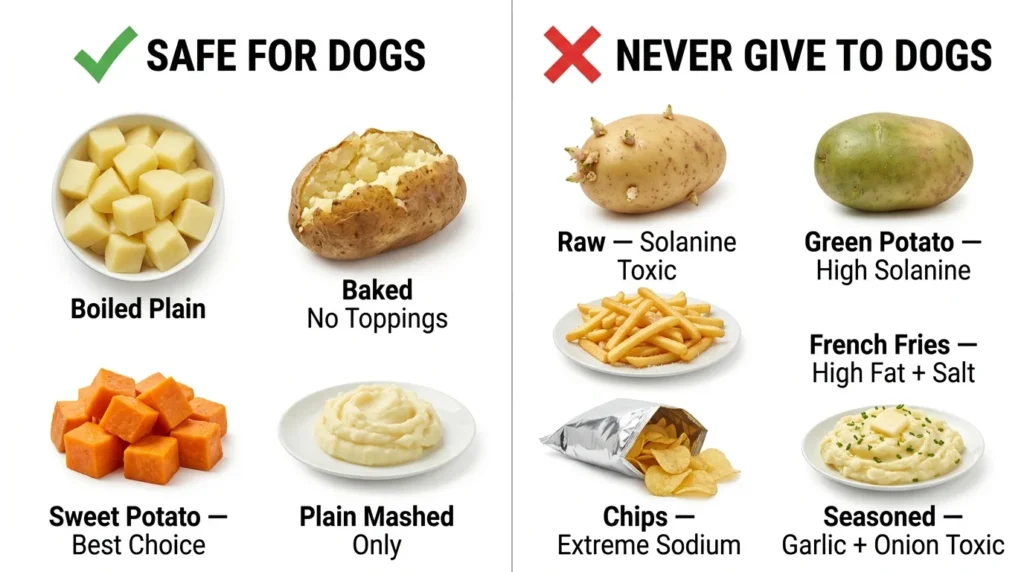
Potatoes become bad for dogs in several specific and important situations that every dog owner must understand.
Raw potatoes: Raw potatoes contain solanine at levels that can cause toxicity in dogs. Solanine causes gastrointestinal distress, lethargy, weakness, confusion, and in severe cases, cardiac and neurological symptoms. Never give raw potatoes to dogs.
Green potatoes: Any potato with green skin or green flesh — whether raw or cooked — contains elevated solanine. The green color indicates high solanine concentration. Discard potatoes with any green coloration, sprouts, or green patches before cooking for dogs.
Potato skin in large amounts: Potato skin contains higher solanine concentrations than the flesh, even after cooking. Small amounts of cooked potato skin may be acceptable, but large amounts are not recommended. Peel potatoes before cooking for dogs when possible.
Potatoes with seasonings: Butter, salt, garlic, onion, sour cream, chives, cheese — all common potato toppings — make potatoes inappropriate for dogs. Garlic and onion are toxic. Excessive butter and salt create their own health issues.
French fries and fried potatoes: Deep frying dramatically increases fat content, creating pancreatitis risk. Fries are also high in salt and sometimes contain seasoning blends with garlic or onion powder.
Daily or excessive feeding: Potatoes are high on the glycemic index — they cause blood sugar spikes. Regular excessive potato feeding contributes to weight gain and blood sugar instability. For diabetic dogs, potatoes are genuinely problematic even in plain cooked form.
Potato chips: Extremely high sodium, high fat, and often flavored with toxic seasonings. Never appropriate for dogs.
Can Dogs Eat Sweet Potatoes?
Yes — and sweet potatoes are actually the superior potato choice for dogs. Sweet potatoes are not botanically related to regular white potatoes (they belong to a different plant family), and they do not contain solanine. This means sweet potatoes are genuinely safer than white potatoes for dogs.
Sweet potatoes are nutritionally exceptional — they are rich in beta-carotene (the precursor to Vitamin A), Vitamin C, Vitamin B6, potassium, calcium, and dietary fiber. The orange pigment from beta-carotene gives sweet potatoes their distinctive color and provides powerful antioxidant protection.
Cooked sweet potato (boiled, baked, or steamed plain) is one of the most recommended vegetables for dogs across veterinary and nutritional sources. It is easy to digest, naturally sweet in a way dogs find appealing, and genuinely more nutrient-dense than white potato.
The same rules apply: always cooked, always plain, always in appropriate amounts. Sweet potato mash made with butter, brown sugar, or marshmallows (common in human holiday cooking) is not appropriate for dogs.
Can Dogs Eat Raw Sweet Potatoes?
Not recommended — raw sweet potatoes should not be given to dogs. Unlike white potatoes where raw feeding is a clear safety concern due to solanine, raw sweet potatoes are not toxic to dogs. However, raw sweet potato is very hard, dense, and difficult for most dogs to properly chew — creating a significant choking hazard, particularly for small dogs and enthusiastic gulpers.
Raw sweet potato is also harder to digest than cooked — the starch is less available and can cause digestive upset including gas and bloating. The naturally hard texture can also be hard on teeth for some dogs.
The simple solution: cook the sweet potato. Boiling, baking, steaming, or microwaving makes it soft, easy to eat, digestible, and actually increases the bioavailability of beta-carotene. Always cook sweet potatoes before giving them to your dog.
Can Dogs Eat Mashed Potatoes?
Depends entirely on how the mashed potatoes were prepared. Plain mashed potato — potato boiled in plain water and mashed with no additions — is safe for dogs in small amounts. But realistically, mashed potatoes served to humans almost never meet this standard.
Standard mashed potato recipes include butter (high fat — pancreatitis risk), milk or cream (dairy — potential lactose intolerance issues), salt (excess sodium), and sometimes garlic or chives — both toxic to dogs. Instant mashed potato products contain preservatives, artificial flavoring, and high sodium.
If you want to share mashed potato with your dog, prepare a plain portion separately — mash a small amount of boiled potato with a tiny splash of water or plain low-sodium chicken broth and nothing else. That is the safe version. The mashed potatoes you serve the family almost certainly contain ingredients that are not appropriate for dogs.
Can Dogs Eat Cooked Potatoes?
Yes — plain cooked potatoes are the safe form for dogs. Cooking achieves two important things: it significantly reduces solanine levels (making the potato safe rather than potentially toxic) and it makes the starch digestible and the texture manageable.
Any thorough cooking method is appropriate: boiling in plain water, baking without oil or butter, steaming, or microwaving. The flesh of the potato after proper cooking is soft, digestible, and safe for dogs.
The consistent rule across all cooked potato preparations: serve plain with absolutely no added ingredients. The potato is safe — the butter, salt, oil, garlic, cheese, and sour cream that transform potato into many human dishes are what makes those dishes inappropriate for dogs.
Allow cooked potato to cool completely before serving. Cut into small pieces appropriate for your dog’s size.
Can Dogs Eat Raw Potatoes?
No — raw potatoes should never be given to dogs. This is a firm safety rule backed by clear veterinary guidance. Raw potatoes contain solanine — a glycoalkaloid toxin produced naturally by nightshade plants (Solanum tuberosum, the potato plant) as a defense mechanism against insects and pathogens.
Solanine is present in all raw potato parts but is most concentrated in the skin, the green flesh and skin portions, sprouts, and any green areas. In the flesh of a ripe, properly stored (non-green) raw potato, solanine levels are lower but still potentially harmful in the quantities a dog might consume.
Solanine toxicity in dogs causes vomiting, diarrhea, lethargy, weakness, dilated pupils, slowed heart rate, and in more severe cases, neurological symptoms including tremors and loss of coordination. Severity depends on the amount consumed and the dog’s size.
If your dog eats a small piece of raw potato, monitor for any of these symptoms and contact your veterinarian if any appear. If a significant amount of raw potato (especially green potato) was consumed, contact your vet or ASPCA Animal Poison Control immediately.
See Also: Can Dogs Eat Raw Eggs or Fried Eggs? Full Safety Guide 2026
Can Dogs Eat Boiled Potatoes?
Yes — plain boiled potatoes are one of the best potato preparations for dogs. Boiling potatoes in plain water (no salt added to the cooking water) cooks them thoroughly — reducing solanine to safe levels — with no added fat, oil, or seasonings. It is the cleanest, most preparation-appropriate cooking method for potatoes intended for dogs.
Boiled potato is also soft and easy to digest — particularly useful during gastrointestinal recovery when the digestive system needs easily processed foods. As part of the classic bland diet (boiled chicken and boiled potato or boiled rice), plain boiled potato is specifically recommended by veterinarians for dogs recovering from stomach upset.
After boiling, allow to cool completely, peel if the skin was left on during cooking, and cut into small pieces appropriate for your dog’s size. Serve plain with no toppings or additions.
Can Dogs Eat Baked Potatoes?
Yes — a plain baked potato with no toppings is safe for dogs. A whole potato baked in its skin (which reduces solanine slightly during baking) is a convenient way to prepare potato for dogs — just peel, scoop out the flesh, cut into pieces, cool, and serve.
The challenge with baked potatoes is that they are almost universally served to humans with toppings: butter, sour cream, cheddar cheese, bacon bits, chives, or salt. All of these make the baked potato inappropriate for dogs. Chives are particularly concerning — like garlic and onion, chives contain compounds toxic to dogs.
If you are baking potatoes for a family meal and want to share some with your dog, set aside a small portion of plain potato flesh before adding any toppings. That plain scoop of baked potato is safe. The fully-dressed baked potato is not.
Can Dogs Eat White Potatoes?
Yes — plain cooked white potatoes (the standard russet, Idaho, or all-purpose white potato) are safe for dogs when cooked properly. White potatoes are what most people think of when they say “potato” — the standard starchy variety used for baking, boiling, frying, and mashing.
The solanine content of white potatoes is higher than in some other varieties, which is why the raw/cooked distinction is particularly important with white potatoes. Always cook white potatoes before giving them to dogs, and always choose fully ripe potatoes with no green coloration.
Plain boiled or baked white potato flesh, cooled and served without any toppings, is a safe occasional treat or bland diet component for healthy adult dogs. See the portion table below for appropriate amounts by dog size.
Can Dogs Eat Red Potatoes?
Yes — red potatoes are safe for dogs when cooked plain. Red potatoes are a waxy variety with thinner skin and slightly different starch content than russet potatoes. They have a naturally buttery flavor and creamy texture that makes them appealing in cooking — and dogs find this flavor profile appealing too.
Red potatoes contain the same basic nutritional profile as white potatoes — potassium, Vitamin B6, Vitamin C, and fiber. The thin skin of red potatoes is softer than russet skin, but it still contains higher solanine concentration than the flesh and should be removed before giving to dogs.
Boil plain, peel, cut into small pieces, cool, and serve. Red potatoes work well as a training treat when cut into small cubes, and they are often easier to portion than larger russet potatoes.
Can Dogs Eat Sweet Potatoes Skin?
Small amounts of cooked sweet potato skin are generally safe for dogs, but it is better practice to peel before serving. Sweet potato skin (unlike regular potato skin) does not contain solanine, which removes the main safety concern with white potato skin. However, sweet potato skin is tough and fibrous — harder to chew and digest than the flesh, and a potential choking hazard for small dogs.
The surface of sweet potato skin may also carry pesticide residue from conventional farming. Washing thoroughly reduces surface residue, but peeling eliminates this concern entirely.
For most practical purposes: peel sweet potatoes before cooking for dogs. The flesh is where the nutritional value is concentrated, and the skin adds little benefit while introducing additional digestive challenges. Organic sweet potatoes with the skin left on after thorough washing are safer if you prefer to serve skin-on.
Can Dogs Eat Russet Potatoes?
Yes — plain cooked russet potatoes are safe for dogs. Russet potatoes (also called Idaho potatoes) are the most common potato variety in North America — the large, brown-skinned, starchy potato used for baking and french fries. They have higher starch content than waxy varieties, which means they cook to a fluffier texture when baked.
The higher starch content of russet potatoes means they are higher on the glycemic index than waxy varieties — they cause blood sugar to rise more quickly after consumption. This is a consideration for diabetic dogs, who should avoid russet potatoes or have them only under veterinary guidance.
For healthy dogs, plain boiled or baked russet potato flesh (skin removed) in appropriate amounts is a safe occasional treat. The classic bland diet potato is often made with russet potato for its easily digestible, mild flavor.
Can Dogs Eat Japanese Sweet Potatoes?
Yes — Japanese sweet potatoes (also called Japanese purple sweet potatoes, Murasaki sweet potatoes, or Satsumaimo) are safe for dogs and are actually a nutritionally excellent choice. Japanese sweet potatoes have purple-reddish skin and creamy white or light yellow flesh — different in appearance from standard orange-fleshed sweet potatoes but equally nutritious.
The white flesh of Japanese sweet potatoes has a somewhat drier, nuttier, less sweet flavor than standard orange sweet potatoes, which some dogs find equally appealing. Nutritionally, they provide similar amounts of potassium, Vitamin B6, and fiber, with somewhat different antioxidant compounds — including anthocyanins in the purple skin that provide additional anti-inflammatory benefits.
Cook before serving (boil, bake, or steam plain), peel (the skin is tougher than standard sweet potato skin), and cut into small pieces. Japanese sweet potatoes are safe, nutritious, and a good variety to rotate into your dog’s vegetable treat routine.
Can Dogs Eat Fried Potatoes?
No — fried potatoes in any form are not appropriate for dogs. This includes french fries, hash browns, potato wedges, and any other preparation where potato is cooked in oil.
Deep frying dramatically increases the fat and calorie content of potatoes — a plain potato containing minimal fat becomes a high-fat food after frying. This high fat content significantly increases the risk of pancreatitis — a serious, painful, and potentially life-threatening condition. Dogs predisposed to pancreatitis (including Miniature Schnauzers, Cocker Spaniels, and Yorkshire Terriers) are at particularly high risk from high-fat foods.
Fried potatoes also absorb significant amounts of sodium from the frying process and are typically seasoned with salt, garlic powder, onion powder, or other flavor compounds that are harmful to dogs. Even “unseasoned” fries from restaurants contain significant sodium and fat.
Can Dogs Eat Raw Potatoes Without Skin?
No — removing the skin from a raw potato does not make it safe for dogs. While potato skin does contain higher solanine concentrations than the flesh, solanine is present throughout the entire raw potato — in the flesh as well. Peeling reduces solanine exposure but does not eliminate it.
Additionally, raw potato flesh — even without skin — is hard, starchy, and difficult for dogs to digest. The raw starch is far less digestible than cooked starch, meaning the dog gains less nutritional value and the hard texture creates choking risk.
The only safe approach is to cook the potato (which reduces solanine in the flesh to safe levels) and then peel before serving. No amount of raw potato preparation makes it appropriate for dogs — cooking is the essential step.
Can Dogs Eat Purple Potatoes?
Yes — purple potatoes are safe for dogs when cooked plain. Purple potato varieties (including Purple Majesty, Purple Viking, and Adirondack Blue) get their distinctive color from anthocyanin pigments — the same powerful antioxidant compounds found in blueberries, purple sweet potatoes, and other dark-colored plants.
This means purple potatoes may actually have additional antioxidant benefits compared to standard white or yellow potatoes. Anthocyanins have documented anti-inflammatory and cellular protective properties. For dogs, this could mean modest additional health benefits from purple potato consumption compared to standard varieties.
Cook thoroughly (boiling is ideal), peel, cut into small pieces, cool, and serve plain. The raw potato safety rules apply to purple potatoes just as to any other variety — always cook before serving.
See Also: Can Dogs Eat Corn? Cobs, Chips, Candy Corn & Every Form Covered
Can Dogs Eat Instant Mashed Potatoes?
No — instant mashed potatoes are not appropriate for dogs. Instant mashed potato products are heavily processed and typically contain large amounts of sodium, artificial flavoring, preservatives, dried milk powder, artificial butter flavor, and various additives. These are not appropriate ingredients for dogs.
The sodium content of a single serving of instant mashed potatoes far exceeds what is appropriate for a dog. The artificial flavoring compounds may cause digestive irritation. The processing strips much of the nutritional value from the original potato while adding ingredients that are unhelpful or harmful.
There is no reason to use instant mashed potatoes for your dog when plain boiled or baked potato is easy to prepare, more nutritious, and completely additive-free. Always use fresh potatoes when preparing potato for your dog.
Can Dogs Eat Potato Chips?
No — potato chips are one of the clearest “never” answers in the entire potato category. Potato chips are extremely high in sodium, extremely high in fat from frying, and typically flavored with salt and various seasoning blends that include garlic powder, onion powder, artificial cheese flavoring, and other compounds that are not appropriate for dogs.
The sodium content of potato chips is particularly alarming — a single small bag can contain 200 to 400mg of sodium or more, which is many times an appropriate daily sodium intake for a small or medium dog. High sodium causes excessive thirst, increased urination, and in significant amounts, sodium toxicity.
The frying process creates a very high-fat product that triggers digestive upset and pancreatitis risk. There is simply no responsible reason to give potato chips to a dog. A plain boiled potato cube delivers the same basic potato taste without any of the harmful additives.
Can Dogs Eat Potatoes Everyday?
Not recommended for most dogs. While small amounts of plain cooked potato a few times per week is acceptable for healthy adult dogs, daily potato feeding raises concerns for several reasons.
Potatoes are high on the glycemic index — they cause blood sugar to rise relatively quickly after consumption. Daily consumption contributes to consistent blood sugar fluctuations that over time can contribute to insulin resistance and weight gain. For diabetic dogs, daily potato feeding is particularly problematic.
Potatoes are primarily a carbohydrate food with limited protein, vitamins, and minerals compared to vegetables like sweet potato, broccoli, or carrots. Rotating different vegetables and treats provides broader nutritional coverage and is a better dietary practice than relying on any single food daily.
Occasional potato treats — a few times per week — provide the benefits without the concerns of daily high-glycemic carbohydrate feeding.
Can Dogs Eat Potatoes with Butter?
No — potatoes with butter are not appropriate for dogs. Butter is a high-fat dairy product, and adding it to potato dramatically changes the fat content of what would otherwise be a low-fat food. The high fat from butter significantly increases pancreatitis risk — particularly for dogs already predisposed to this condition.
Butter also contains lactose (dairy sugar), which can cause digestive upset in lactose-intolerant dogs. And potatoes served with butter are almost always also salted — adding excess sodium to the fat concern.
If you want to share potato with your dog, prepare a plain portion before adding butter to the family’s serving. Plain potato without any fat, salt, or other additions is the only appropriate form for dogs.
Can Dogs Eat Potato Peels?
Not recommended in significant amounts. Potato peels (the skin of white potatoes) contain higher concentrations of solanine than the inner flesh — even after cooking. While cooking reduces solanine throughout the potato, the skin retains more than the flesh, meaning potato skin is a higher-solanine portion of the cooked potato.
A small incidental piece of cooked potato skin is unlikely to cause serious harm in a healthy adult dog. But intentionally feeding potato skins — particularly in any quantity — is not recommended. Always peel potatoes before giving them to your dog.
Additionally, the surface of potato skin may retain pesticide residue and dirt that is harder to remove than on smoother surfaces. Peeling eliminates these concerns entirely, leaving only the safe potato flesh.
Can Dogs Eat Irish Potatoes?
“Irish potatoes” is simply a colloquial term for the common white potato (Solanum tuberosum) — the standard potato most people eat. It is the same food addressed throughout this guide under “white potatoes,” “russet potatoes,” etc.
Plain cooked Irish (white) potato with no skin and no seasonings is safe for dogs in appropriate amounts. The same rules apply: always cooked, always plain, never raw, skin removed, cooled before serving.
Note: in some regions, “Irish potato candy” (a cream cheese and coconut confection shaped to look like a small potato) occasionally comes up in searches. This is a processed sugar candy not appropriate for dogs — it contains cream cheese, powdered sugar, shredded coconut, and sometimes other ingredients that are too high in sugar and fat for dogs.
Can Dogs Eat French Fries?
No — french fries are not appropriate for dogs under any circumstances. French fries are the quintessential fried potato product and represent everything that makes fried potato a health concern for dogs.
A standard serving of restaurant french fries contains enormous amounts of fat from deep frying in oil, extremely high sodium (often 300 to 500mg or more per serving), and sometimes seasoning blends that include garlic powder and onion powder. The combination of high fat (pancreatitis trigger), high sodium (cardiovascular and kidney stress), and potentially toxic seasonings creates multiple simultaneous problems.
Fast food french fries are particularly concentrated in salt and fat because they are specifically engineered for maximum palatability — a profile that is the opposite of what a dog’s body needs. Even “natural” or “minimal ingredient” restaurant fries are cooked in significant amounts of oil and salted.
If your dog grabbed a single fry that fell on the floor, this is unlikely to cause a serious emergency. But french fries should never be given intentionally as a dog treat.
See Also: Can Dogs Eat Cheese? The Complete Safe-Feeding Guide (2026)
How to Feed Potatoes to Your Dog
Here is a practical, step-by-step guide to safely preparing and serving potatoes to your dog.
Step 1 — Choose the right potato: Select a fully ripe potato with no green patches, no sprouting, and no soft spots. Yellow or red flesh varieties are fine. Discard any potato with green coloration — the green indicates elevated solanine that even cooking does not fully eliminate.
Step 2 — Peel completely: Remove all skin from the potato before cooking. The skin contains higher solanine concentrations than the flesh. Peeling ensures your dog gets only the safest, lowest-solanine portion.
Step 3 — Cook thoroughly: Boil in plain water with no salt until completely soft throughout, or bake without oil until fully cooked. The potato must be cooked through — not just softened on the outside. Thorough cooking reduces solanine to safe levels in the flesh.
Step 4 — No additions: If cooking for both yourself and your dog, separate your dog’s portion before adding any butter, salt, oil, garlic, cheese, sour cream, or other toppings. Cook dog portions separately if possible.
Step 5 — Cool completely: Allow cooked potato to cool to room temperature before serving. Hot potato can burn a dog’s mouth and throat.
Step 6 — Cut into appropriate pieces: Cut into small cubes or thin slices appropriate for your dog’s size. Small dogs need very small pieces to prevent choking.
Step 7 — Introduce slowly: If your dog has not had potato before, start with a very small piece — a teaspoon for small dogs, a tablespoon for medium dogs — and wait 24 hours to observe for any digestive reaction.
How Much Potato Can a Dog Eat?
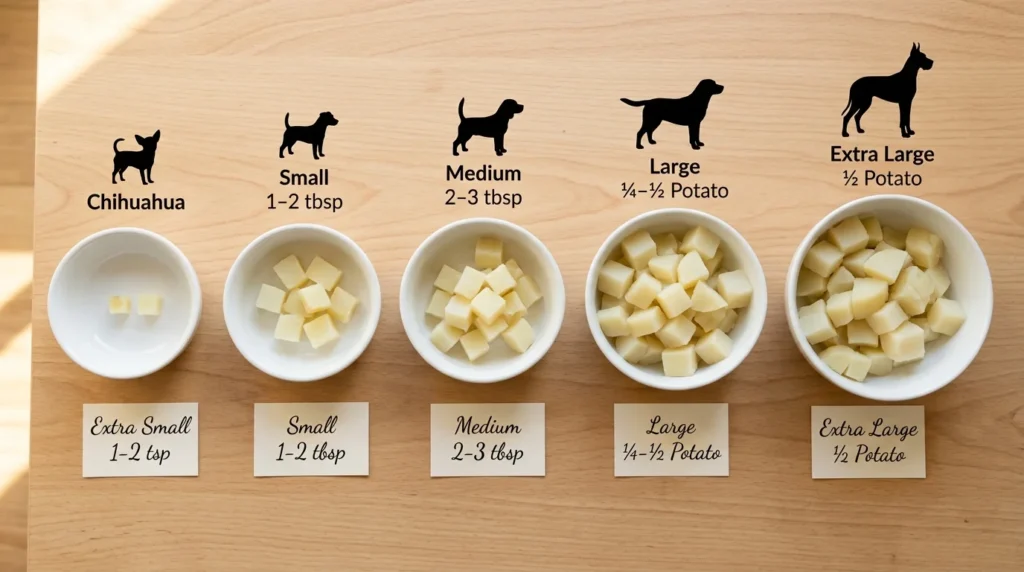
The standard treat guideline applies — treats should not exceed 10% of your dog’s total daily caloric intake. Because potatoes are higher in calories and carbohydrates than low-calorie vegetables like cucumber or carrots, portions need to be genuinely appropriate.
How Much Potato Can a Dog Eat? — Portion Guide by Dog Size
| Dog Size | Weight Range | Plain Cooked Potato Per Day (Max) | Serving Format | Frequency |
|---|---|---|---|---|
| Extra Small | Under 10 lbs | 1–2 teaspoons (thumbnail-sized cube) | Tiny cubes, cooled and peeled | 2–3 times per week |
| Small | 10–20 lbs | 1–2 tablespoons (marble-sized pieces) | Small cubes or thin slices | 2–3 times per week |
| Medium | 20–50 lbs | 2–3 tablespoons (a few tablespoons) | Small to medium cubes | A few times per week |
| Large | 50–90 lbs | ¼ to ½ of a medium potato | Cubed or sliced portions | A few times per week |
| Extra Large | 90 lbs + | ½ of a medium potato | Cubed pieces or mashed plain | A few times per week |
Important notes on this table:
- These are maximum amounts for plain cooked potato flesh only — peeled, no seasonings, no butter, no oil.
- Sweet potato portions are similar but sweet potato is more nutrient-dense — you can give the same volume with greater nutritional benefit.
- Diabetic dogs: avoid potatoes or consult your vet for personalized guidance.
- Overweight dogs: reduce portions significantly or choose lower-calorie vegetable treats (cucumber, carrots, broccoli).
- These amounts should be factored into the total daily treat budget alongside any other treats given.
- For bland diet use (GI recovery): your veterinarian will give specific guidance on amounts — these are general treat guidelines, not therapeutic diet guidelines.
- Never give the same day as other high-carbohydrate treats.
What Happens if a Dog Eats Too Many Potatoes?
The response depends significantly on what type of potato was eaten and how much.
If your dog ate too many plain cooked potatoes: Expect temporary digestive upset — gas, bloating, and loose stools from the high carbohydrate and fiber content overwhelming the digestive system. Blood sugar may spike temporarily. These effects are uncomfortable but not a toxic emergency in most cases. Ensure fresh water access, reduce or skip the next meal, and monitor for 24 hours.
If your dog ate raw potatoes (any amount): Monitor for signs of solanine toxicity — vomiting, diarrhea, lethargy, weakness, slowed heart rate, dilated pupils, or confusion. Contact your veterinarian promptly if any of these symptoms appear. For small dogs, even a modest amount of raw potato warrants a vet call.
If your dog ate green potatoes (raw or cooked): Green coloration indicates high solanine. Contact your veterinarian for guidance regardless of amount. Even cooking does not fully eliminate solanine from visibly green potato.
If your dog ate potato chips or fried potatoes: Monitor for vomiting, diarrhea, and signs of excessive sodium intake (extreme thirst, urination). For large amounts of chips, contact your vet — the sodium content can be significant.
If your dog ate potatoes with garlic or onion: Contact your veterinarian promptly. Garlic and onion are toxic to dogs and can cause hemolytic anemia, damaging red blood cells. This is not a “wait and see” situation — prompt vet communication is appropriate.
Can Puppies Eat Potatoes?
Yes — puppies can eat small amounts of plain cooked potato, but with extra caution and smaller portions than adult dogs. Puppies have developing digestive systems that are more sensitive to high-glycemic foods and new food introductions.
The preparation rules are the same but even more strictly applied for puppies: only plain cooked potato (boiled or baked), peeled completely, cooled, cut into very small pieces appropriate for the puppy’s size. Start with a teaspoon or less as a first introduction.
Wait 48 hours after the first introduction before giving more — puppies may take longer to show reactions than adult dogs. Watch for any digestive upset, lethargy, or unusual behavior.
Potatoes should never displace any portion of a puppy’s complete puppy food. Puppies have critical and specific nutritional requirements for healthy growth that only a complete, AAFCO-approved puppy food can meet. Potato is a supplemental treat, never a dietary component.
Frequently Asked Questions
Can dogs eat potatoes?
Yes — plain, cooked potatoes (boiled, baked, or steamed without any seasoning, butter, or oil) are safe for most healthy dogs in moderate amounts. Raw potatoes are never safe due to solanine content. Always peel and cook thoroughly before serving.
Can dogs have potatoes?
Yes, dogs can have plain cooked potato as an occasional treat or bland diet component. Cooked potatoes appear in many commercial dog foods. The essential rules: cook thoroughly, peel, serve plain, and keep portions appropriate for dog size.
Are potatoes safe for dogs?
Cooked, peeled, plain white potatoes are safe for most healthy dogs. Raw potatoes, green potatoes, and potatoes with seasonings are not safe. Sweet potatoes are safer than white potatoes because they do not contain solanine.
Are potatoes good for dogs?
Potatoes provide potassium, Vitamin C, Vitamin B6, and fiber — modest but real nutritional benefits. Sweet potatoes are more nutritious than white potatoes, offering beta-carotene, more vitamins, and superior antioxidant content. Plain cooked potato is good as an occasional treat.
Can dogs eat sweet potatoes?
Yes — sweet potatoes are one of the best vegetables for dogs. They are richer in beta-carotene, vitamins, and antioxidants than white potatoes and do not contain solanine. Always cook plain before serving.
Can dogs eat raw sweet potatoes?
Not recommended. Raw sweet potatoes are very hard and difficult to chew — a choking hazard and hard to digest. Cooking makes them soft, easy to eat, and increases bioavailability of beta-carotene. Always cook sweet potatoes before serving to dogs.
Can dogs eat mashed potatoes?
Only if prepared completely plain — no butter, milk, cream, salt, garlic, chives, or other additions. Standard family mashed potatoes contain ingredients not appropriate for dogs. Prepare a plain portion separately for your dog.
Can dogs eat raw potatoes?
No. Raw potatoes contain solanine — a toxic compound that causes vomiting, diarrhea, weakness, and neurological symptoms in dogs. Always cook potatoes before giving to your dog. If your dog ate raw potato, watch for symptoms and contact your vet if any appear.
Can dogs eat boiled potatoes?
Yes. Plain boiled potato (in plain water, no added salt) is one of the best and safest potato preparations for dogs. It is also a core component of the bland diet recommended for dogs recovering from gastrointestinal upset.
Can dogs eat baked potatoes?
Yes — plain baked potato flesh with no toppings is safe. Set aside a plain portion before adding butter, sour cream, cheese, or other toppings to your own portion.
Can dogs eat french fries?
No. French fries are very high in fat (pancreatitis risk), extremely high in sodium, and often seasoned with garlic or onion powder (toxic). Never give french fries to dogs intentionally.
Can dogs eat potato chips?
No. Potato chips are extremely high in sodium and fat, and are often flavored with garlic and onion compounds toxic to dogs. Never appropriate as a dog treat.
Can dogs eat sweet potato skin?
Small amounts of cooked sweet potato skin are not toxic, but it is better practice to peel before serving. Sweet potato skin is fibrous, harder to digest, and may carry pesticide residue.
Can dogs eat russet potatoes?
Yes — plain cooked russet potato (peeled, boiled or baked, no seasonings) is safe for dogs. Russet potatoes are higher on the glycemic index than waxy varieties — a consideration for diabetic dogs.
Can dogs eat purple potatoes?
Yes. Purple potatoes are safe and may offer additional antioxidant benefits from anthocyanin pigments. Cook thoroughly, peel, and serve plain like any other potato variety.
Can dogs eat instant mashed potatoes?
No. Instant mashed potatoes contain high sodium, artificial flavoring, preservatives, and dried dairy products. Always use fresh potatoes prepared plain instead.
Can dogs eat fried potatoes?
No. Frying dramatically increases fat content, creating pancreatitis risk. Fried potatoes are also high in sodium and often seasoned with toxic ingredients. Use boiling or baking instead.
Can dogs eat potatoes with butter?
No. Butter adds significant fat that increases pancreatitis risk and is problematic for lactose-intolerant dogs. Always serve potato plain with no fat, salt, or additions.
Can dogs eat potatoes every day?
Not recommended. Potatoes are high on the glycemic index and cause blood sugar fluctuations with daily feeding. A few times per week is more appropriate for most healthy adult dogs.
What happens if a dog eats too many potatoes?
Plain cooked potato: digestive upset (gas, bloating, loose stools). Raw or green potato: solanine toxicity risk — contact your vet. Seasoned with garlic/onion: contact vet immediately. Chips or fried potato: monitor for sodium-related symptoms and high-fat digestive upset.
Can puppies eat potatoes?
Yes, in very small amounts of plain cooked potato. Start with a teaspoon, wait 48 hours. Never give raw potato. Primary nutrition must come from complete puppy food.
Can dogs with diabetes eat potatoes?
Only with explicit veterinary approval. Potatoes have a high glycemic index and cause blood sugar spikes that interfere with diabetes management. Sweet potato may be slightly better but still requires vet guidance for diabetic dogs.
Conclusion
Potatoes are one of the most nuanced foods in the dog feeding world — safe in the right form, potentially toxic in the wrong form, and dramatically varying in appropriateness across their many preparations and varieties. Getting the details right is what matters most with this topic.
The complete summary of everything you need to know:
Safe for dogs:
- Plain cooked white potato flesh (boiled, baked, or steamed) — peeled, no seasonings
- Plain cooked sweet potato — boiled, baked, or steamed, peeled, no additions
- Plain cooked red, russet, purple, or Japanese sweet potato — same rules apply
- Plain boiled potato as part of a bland GI recovery diet
Never safe for dogs:
- Raw potato of any variety — solanine toxicity risk
- Green potatoes (raw or cooked) — elevated solanine in green portions
- Potato skin in significant amounts — higher solanine than flesh
- French fries — very high fat and sodium, toxic seasonings
- Potato chips — extreme sodium, fat, and toxic seasonings
- Instant mashed potatoes — high sodium, artificial additives
- Potatoes with butter, garlic, onion, sour cream, chives, or salt
- Mashed potatoes made with standard human recipe additions
Also Read: Can Dogs Eat Oranges? Peel, Juice, Seeds & Every Form Covered


