

What Nuts Can Dogs Eat? Full Safety Guide 2026
Some nuts can be eaten by dogs in very small amounts, but nuts are not necessary for a healthy canine diet. Many nuts are high in fat and calories, while some can contain ingredients or toxins that are dangerous for dogs. The safest approach is to choose only dog-safe nuts, serve them plain and unsalted, and keep portions small.
It is also important to remember that a nut being safe does not mean every nut product is safe. Salted nuts, chocolate-covered nuts, seasoned nuts, nut mixes, and products containing toxic ingredients can create additional risks. Whole nuts may also present a choking hazard, particularly for small dogs.
What Nuts Can Dogs Eat?
Dogs can eat a few types of nuts in moderation, including plain peanuts, cashews, and certain other non-toxic varieties when prepared appropriately. These should be unsalted, unseasoned, and free from chocolate or other harmful ingredients.
However, nuts should remain an occasional treat rather than a regular part of a dog’s diet. Their high fat content can add many calories and may cause digestive problems in some dogs. Always introduce a new nut in a very small amount and monitor your dog.
Can Dogs Eat Peanuts?
Yes, plain, unsalted peanuts can generally be given to dogs in small amounts. Peanuts are not considered toxic to dogs and contain protein and fats. However, they are calorie-dense, so even a small serving can contribute significantly to a dog’s daily calorie intake.
Choose plain peanuts without salt, spices, chocolate, or coatings. Avoid giving dogs peanuts from flavored snack mixes. Whole peanuts can also be difficult for some dogs to chew, so smaller pieces or appropriately prepared peanuts are preferable.
Can Dogs Eat Peanut Butter?
Dogs can generally eat small amounts of plain peanut butter, provided it does not contain xylitol. Peanut butter can be a useful occasional treat and is commonly used to fill certain dog toys.
Always check the ingredient label because some reduced-sugar or sugar-free peanut butters may contain xylitol, which is highly toxic to dogs. Choose a simple product without xylitol, excessive salt, chocolate, or unnecessary sweeteners.
Can Dogs Eat Cashews?
Plain, unsalted cashews are generally considered non-toxic to dogs and can be offered occasionally in small quantities. They contain fats and protein, but their high calorie content means they should not become a regular snack.
Avoid salted, seasoned, chocolate-covered, or flavored cashews. Cashews should also be given in appropriately sized pieces, especially to small dogs. Introduce them gradually because some dogs may develop digestive upset after eating fatty foods.
Can Dogs Eat Almonds?
Sweet almonds are not generally considered toxic to dogs, but they are not an ideal treat. Almonds are relatively large, hard, and high in fat, which can create choking or digestive concerns.
If a dog accidentally eats one plain sweet almond, it may not cause a serious problem. However, avoid intentionally feeding large amounts. Never confuse sweet almonds with bitter almonds, which can contain compounds that are toxic.
Can Dogs Eat Walnuts?
Walnuts are best avoided by dogs. Certain walnuts, particularly black walnuts, can contain toxins that are dangerous to dogs. Moldy walnuts can also contain tremorgenic mycotoxins that may cause serious neurological symptoms.
Because it can be difficult to identify the type and condition of a walnut, keeping walnuts away from dogs is the safest choice. Do not allow dogs to pick up fallen walnuts from gardens, yards, or outdoor areas.
Can Dogs Eat Black Walnuts?
No. Black walnuts should not be given to dogs. They can contain compounds that are harmful to dogs, and walnuts that have become moldy may contain toxins capable of causing neurological problems.
Keep black walnut trees, fallen nuts, shells, and decomposing walnut material away from dogs. If your dog eats black walnuts and develops vomiting, weakness, tremors, seizures, or unusual behavior, seek veterinary care promptly.
Can Dogs Eat Pecans?
Pecans are best avoided by dogs. They are high in fat and can become contaminated with mold, while certain mold toxins can cause serious neurological symptoms in dogs.
Human pecans may also be salted, seasoned, candied, or covered in chocolate, creating additional risks. If your dog accidentally eats a small piece of plain pecan, monitor them, but contact your veterinarian if a large quantity or moldy pecans were consumed.
Can Dogs Eat Pistachios?
Plain pistachios are not generally considered highly toxic to dogs, but they are not an ideal regular treat. Their high fat content can cause digestive upset, and pistachio shells can create choking or intestinal obstruction risks.
If a dog eats pistachios, they should be plain, unsalted, and shelled. Avoid flavored or seasoned pistachios and never allow your dog to eat large quantities. Moldy pistachios are particularly concerning because mold can produce harmful toxins.
Can Dogs Eat Macadamia Nuts?
No. Macadamia nuts are toxic to dogs and should never be intentionally fed to them. Even relatively small amounts can cause symptoms such as weakness, vomiting, tremors, lethargy, and difficulty walking.
If your dog eats macadamia nuts, contact a veterinarian promptly, particularly if the amount consumed is unknown or your dog develops symptoms. Keep macadamia nuts, cookies, and other foods containing them out of your dog’s reach.
See Also: Can Dogs Eat Sweet Potatoes? Benefits, Risks & Safe Feeding Guide
Can Dogs Eat Brazil Nuts?
Brazil nuts are not generally considered toxic to dogs, but they are very high in fat and calories and are therefore not a particularly useful dog treat. Their large size can also make them difficult for some dogs to chew safely.
It is better to avoid giving Brazil nuts routinely. If a dog accidentally eats a small piece of plain Brazil nut, monitor for digestive upset. Never offer salted, chocolate-covered, seasoned, or flavored versions.
Can Dogs Eat Hazelnuts?
Plain hazelnuts are generally not considered toxic to dogs, but they are not an ideal regular snack. Whole hazelnuts can be a choking hazard, and the high fat content may cause digestive problems when dogs eat too many.
If your dog eats a small amount of plain, shelled hazelnut, serious problems are unlikely in many cases. However, avoid chocolate-covered hazelnuts, sweetened spreads containing unsafe ingredients, and nuts with shells.
Can Dogs Eat Chestnuts?
Plain edible chestnuts can generally be eaten by dogs in small amounts when they are properly cooked, shelled, and served without salt or seasoning. They differ from horse chestnuts, which are toxic and should not be eaten by dogs.
Because chestnut varieties can be confusing, never let your dog eat unknown nuts found outdoors. Remove the shell before offering an edible chestnut and keep the serving small.
Can Dogs Eat Pine Nuts?
Pine nuts are not generally considered toxic to dogs, but they are high in fat and can cause digestive upset if consumed in large amounts. They are also not necessary for a dog’s nutritional needs.
If you offer pine nuts, use only a tiny amount of plain, unsalted nuts. Avoid pesto and other pine-nut-containing foods because they may also contain garlic, onion, salt, or other ingredients that dogs should avoid.
Can Dogs Eat Hickory Nuts?
Hickory nuts are best kept away from dogs. Besides being high in fat, nuts collected outdoors can become moldy and may contain toxins. The shells can also create choking or digestive hazards.
Dogs should never be encouraged to eat unknown nuts found on the ground. If your dog consumes hickory nuts, especially a large quantity or nuts that may be moldy, monitor closely and contact your veterinarian if concerning symptoms develop.
Can Dogs Eat Acorns?
No. Dogs should not eat acorns. Acorns contain tannins and can cause gastrointestinal problems, while swallowed acorns and shells can potentially contribute to digestive obstruction.
Prevent dogs from collecting acorns during outdoor walks or from eating them in yards. If your dog consumes multiple acorns or develops vomiting, abdominal pain, lethargy, or difficulty passing stool, contact a veterinarian.
Can Dogs Eat Hazelnuts With Shells?
It is best not to give dogs hazelnuts with their shells. The hard shell can be difficult to chew and may become a choking hazard or cause digestive tract problems if swallowed.
If plain hazelnuts are offered at all, remove the shell first and give only a small amount. Keep chocolate-coated hazelnuts and sweetened hazelnut products away from dogs because additional ingredients can be unsafe.
Can Dogs Eat Salted Nuts?
Salted nuts are not a good choice for dogs. Dogs need sodium as part of a balanced diet, but heavily salted human snacks can provide excessive amounts and may cause increased thirst or digestive problems.
Choose plain, unsalted options if you give a dog a nut that is considered safe. Avoid seasoned nut mixes because they may contain additional ingredients such as garlic, onion, spices, or other substances that are unsuitable for dogs.
Can Dogs Eat Roasted Nuts?
Plain roasted nuts may be tolerated by dogs when the nut itself is non-toxic and the product contains no salt, spices, sugar, chocolate, or other unsafe ingredients. However, roasting does not make a toxic nut safe.
Check the ingredients and preparation method before sharing any roasted nuts. Avoid heavily seasoned snack nuts and products cooked with ingredients that dogs should not consume.
Can Dogs Eat Raw Nuts?
Whether a raw nut is safe depends on the type. Some raw nuts are non-toxic in small amounts, while others can be dangerous. Raw nuts can also be contaminated with mold, especially when stored improperly or collected outdoors.
Never assume that all raw nuts are safe simply because they are natural. Identify the exact nut first and keep unknown nuts away from your dog. Plain, appropriate dog treats are usually a safer choice.
Can Dogs Eat Mixed Nuts?
Mixed nuts are best avoided because a single package can contain several varieties with very different safety profiles. Some mixes may contain macadamia nuts, walnuts, pecans, salted nuts, chocolate, raisins, or spicy seasonings.
If your dog accidentally eats a mixed-nut product, check the ingredient list immediately. Determine whether any toxic ingredients were present and contact your veterinarian if your dog consumed a significant amount or a potentially dangerous nut.
Can Dogs Eat Nuts With Chocolate?
No. Dogs should not eat chocolate-covered nuts or other nut products containing chocolate. Chocolate contains methylxanthines, including theobromine and caffeine, which can be toxic to dogs.
The risk depends on the type and amount of chocolate and the dog’s size. If your dog eats chocolate-covered nuts, contact a veterinarian promptly and provide the product packaging so the ingredients can be identified.
Are Nuts Good for Dogs?
Some nuts contain protein, healthy fats, vitamins, minerals, and other nutrients, but dogs do not need nuts to maintain a balanced diet. Complete dog food already provides the nutrients required for normal health, growth, and daily activity.
The high fat and calorie content of many nuts is an important consideration. Even nuts that are not toxic can cause stomach upset or contribute to unwanted weight gain when dogs eat too many. Nuts should therefore remain an occasional treat rather than a dietary staple.
What Are the Safest Nuts for Dogs?
Plain peanuts and cashews are among the more suitable nuts for dogs when offered in very small quantities. They should be unsalted, unseasoned, shelled, and free from chocolate or other potentially harmful ingredients.
Other non-toxic nuts may be tolerated, but that does not necessarily make them good treats. Because nuts vary considerably in size, fat content, and potential risks, simple dog treats are often a better option than routinely sharing human nuts.
How Many Nuts Can Dogs Eat?

There is no universal serving size for every dog because the appropriate amount depends on the dog’s size, health, calorie needs, and the particular type of nut. Nuts should always represent only a very small portion of the dog’s diet.
For a safe nut variety, start with a tiny amount and monitor your dog. Avoid giving handfuls of nuts or allowing free access to a container. Even non-toxic nuts can cause digestive upset when eaten in excess.
Can Dogs Eat Nuts Every Day?
It is generally better not to give dogs nuts every day. Even safe nuts can provide a substantial amount of fat and calories, which may contribute to weight gain or digestive problems when fed frequently.
If you want to use nuts as an occasional reward, keep portions very small and choose plain, unsalted varieties. Dogs can receive all the nutrients they need without nuts when they eat a complete and balanced diet.
Can Puppies Eat Nuts?
Puppies should not routinely be given nuts. Their nutritional requirements are especially important during growth, and whole nuts can also create choking risks. Puppies may chew or swallow foods differently from adult dogs.
If you want to offer a treat, choose a puppy-appropriate product and make sure the size and texture are suitable. Avoid toxic nuts, salted nuts, seasoned mixes, and nuts with shells.
Can Small Dogs Eat Nuts?
Small dogs require particular caution with nuts because a relatively small amount can represent a large portion of their daily calorie intake. Whole nuts can also be difficult for smaller dogs to chew and may present a choking risk.
If a safe nut is offered, use a tiny portion and break it into an appropriate size when necessary. Never allow a small dog to eat directly from a bag or bowl of mixed nuts.
Can Large Dogs Eat Nuts?
Large dogs may be able to tolerate a somewhat larger portion of a non-toxic nut, but size does not make unsafe nuts safe. Macadamia nuts, chocolate-covered nuts, and nuts containing toxic ingredients should still be avoided.
Large dogs can also experience digestive problems after eating excessive amounts of fatty foods. Keep portions controlled and choose plain, unsalted options if you offer nuts at all.
Can Dogs Eat Nuts With Salt?
Dogs should generally avoid salted nuts. Human snack nuts can contain considerably more sodium than a dog needs, especially when several nuts are consumed at once.
Excessive salt intake can cause increased thirst and gastrointestinal problems and, in serious cases, sodium poisoning. Plain, unsalted nuts are a better option if you decide to give a dog a suitable nut.
Can Dogs Eat Nuts With Seasoning?
Seasoned nuts are not recommended for dogs because the seasoning may contain salt, garlic, onion, chili, or other ingredients that can cause problems. The nut itself may be safe while the coating is not.
Never assume that removing visible seasoning makes the product safe. Flavoring can remain on the nut, and some seasonings are incorporated during processing. Plain nuts are preferable.
Can Dogs Eat Nut Shells?
Dogs should not eat nut shells. Shells can be hard, sharp, or difficult to digest and may cause choking, mouth injuries, gastrointestinal irritation, or an intestinal blockage if swallowed.
Always remove shells before giving a dog a suitable nut. Keep piles of shells and discarded nuts away from pets, particularly outdoors where dogs may eat them without supervision.
Can Dogs Eat Nuts From the Ground?
Dogs should not be allowed to freely eat nuts they find on the ground. Fallen nuts may be moldy, contaminated, or difficult to identify, and some wild nuts can be toxic to dogs.
Outdoor nuts may also be mixed with shells, leaves, soil, or animal waste. Supervise your dog during walks and in yards where nuts or other fallen plant material are present.
Can Moldy Nuts Make Dogs Sick?
Yes. Moldy nuts can contain tremorgenic mycotoxins, which may cause serious neurological symptoms in dogs. Signs can include agitation, tremors, lack of coordination, increased body temperature, seizures, and other abnormal behavior.
Never give dogs old, damp, spoiled, or visibly moldy nuts. If your dog eats moldy nuts or unknown nuts from outdoors and develops neurological symptoms, seek emergency veterinary care.
See Also: Can Dogs Eat Zucchini? Safe Feeding Guide for Dog Owners
Can Dogs Eat Nuts With Raisins?
No. Nut mixes containing raisins should not be given to dogs. Grapes and raisins can cause serious kidney problems in dogs, and the amount that causes toxicity can vary between individual animals.
Check mixed snack ingredients carefully because raisins may be hidden among nuts, dried fruit, or trail-mix ingredients. If your dog eats a product containing raisins, contact a veterinarian promptly rather than waiting for symptoms.
Can Dogs Eat Nuts With Honey?
Plain honey itself is not considered toxic to most healthy adult dogs in small amounts, but honey-coated nuts are not a recommended treat. The combination can add unnecessary sugar and calories, while commercial products may contain other ingredients.
Check the complete ingredient list before sharing any sweetened nut product. Avoid products containing chocolate, xylitol, macadamia nuts, or other unsafe ingredients.
Can Dogs Eat Nuts With Cinnamon?
Small amounts of ordinary cinnamon are generally not considered toxic to dogs, but cinnamon-coated nuts are still not a good routine treat. The product may also contain sugar, salt, chocolate, or other ingredients that are unsuitable for dogs.
It is safer to avoid flavored nut snacks and choose plain, unsalted foods. If your dog accidentally eats a small amount, check the ingredients and monitor for digestive irritation.
Can Dogs Eat Nut Butter?
Some nut butters can be given to dogs in small amounts, but the ingredient list must be checked carefully. Plain peanut butter without xylitol is a common dog treat, while certain nut butters may contain excessive salt, sugar, chocolate, or other additives.
Never give a dog nut butter containing xylitol. This sweetener can cause a dangerous drop in blood sugar and potentially life-threatening complications. Always check the label before sharing nut butter.
Can Dogs Eat Almond Butter?
Plain almond butter without xylitol or harmful additives may be tolerated by dogs in very small amounts. However, it is high in fat and calories, so it should not become a regular part of the diet.
Check the ingredient label carefully and avoid products containing chocolate, excessive salt, sugar, or xylitol. If your dog has a sensitive stomach or weight-management needs, other lower-calorie treats may be more appropriate.
Can Dogs Eat Cashew Butter?
Plain cashew butter without xylitol or harmful additives may be tolerated in small amounts. Cashews themselves are generally considered non-toxic to dogs, but cashew butter can be calorie-dense because of its fat content.
Choose a simple product and avoid versions containing chocolate, excessive salt, sugar, or unsafe sweeteners. Use only a small amount as an occasional treat.
Can Dogs Eat Nutella?
No. Dogs should not eat Nutella or similar chocolate-hazelnut spreads. These products contain chocolate and substantial amounts of sugar and fat, making them unsuitable for dogs.
Chocolate can be toxic to dogs because of theobromine and caffeine. If your dog eats a significant amount of chocolate-hazelnut spread, contact a veterinarian promptly and provide the product details.
Can Dogs Eat Trail Mix?
Dogs should not be given ordinary trail mix. Trail mix may contain raisins, chocolate, macadamia nuts, salted nuts, and other ingredients that can be harmful to dogs.
Even a trail mix that appears mostly nut-based can contain multiple hazards in one serving. Keep human snack mixes away from dogs and choose a specifically formulated dog treat instead.
Can Dogs Eat Nut Cookies?
Nut cookies are generally not suitable for dogs. In addition to nuts, cookies can contain chocolate, raisins, excessive sugar, butter, salt, and other ingredients that are not appropriate for canine diets.
If your dog accidentally eats a cookie, check the ingredients and estimate how much was consumed. Chocolate, raisins, macadamia nuts, or xylitol make the situation more urgent and warrant veterinary advice.
Can Dogs Eat Nut Cake?
Nut cakes and desserts are not recommended for dogs. They can contain high amounts of sugar and fat as well as chocolate, raisins, macadamia nuts, alcohol-containing flavorings, or other ingredients that may be dangerous.
Keep cakes and desserts intended for people away from pets. If your dog consumes a large portion or a cake containing a toxic ingredient, contact your veterinarian promptly.
What Should You Do If Your Dog Eats a Toxic Nut?
If your dog eats a potentially toxic nut such as a macadamia nut, do not wait for symptoms before seeking advice. Determine what was eaten, estimate the amount, and keep the packaging or product information available.
Contact your veterinarian or an emergency veterinary service for instructions. Do not induce vomiting or give home remedies unless a veterinary professional specifically instructs you to do so.
What Happens If a Dog Eats Too Many Nuts?
Eating too many nuts can cause vomiting, diarrhea, abdominal discomfort, excessive thirst, or other digestive problems because many nuts contain substantial amounts of fat. Large quantities can also contribute excessive calories.
If your dog eats a large amount, monitor them closely and contact your veterinarian if they develop repeated vomiting, severe diarrhea, weakness, abdominal pain, tremors, or other unusual symptoms.
How to Safely Give Nuts to Dogs
If you choose to give your dog a nut that is considered non-toxic, select a plain, unsalted, unseasoned, shelled variety. Start with a very small amount and observe your dog for any digestive reaction.
Never offer macadamia nuts, toxic wild nuts, moldy nuts, chocolate-covered nuts, or nut mixes containing raisins. Keep nuts stored securely because dogs may consume a large quantity if given unrestricted access.
Which Nuts Are Toxic to Dogs?
Some nuts can be dangerous for dogs and should never be intentionally fed. Macadamia nuts are toxic to dogs, while black walnuts can be dangerous, particularly when they are moldy. Mold-contaminated nuts can contain toxins that may cause serious neurological symptoms.
Other nuts may not be directly toxic but can still cause problems because they are high in fat, difficult to chew, or covered with unsafe ingredients. When you are unsure about a particular nut, it is safer to keep it away from your dog.
Which Nuts Are Safe for Dogs?
Plain peanuts and cashews can generally be offered to healthy dogs in very small amounts. Plain sweet almonds, hazelnuts, pistachios, and some other non-toxic nuts are not usually considered poisonous, but they are not necessarily ideal treats because of their fat content and choking risks.
Safe nuts should always be plain, unsalted, unseasoned, shelled, and free from chocolate or toxic ingredients. Even a non-toxic nut should be treated as an occasional snack rather than an important part of your dog’s diet.
Can Dogs Eat Nuts as a Regular Treat?
Nuts are not necessary as regular treats for dogs. Although some varieties contain protein, fats, vitamins, and minerals, their high calorie content means that frequent feeding can contribute to weight gain.
There are many dog-specific treats that are easier to portion and formulated with canine nutrition in mind. If you choose to offer nuts, keep the amount very small and consider them an occasional reward.
Can Dogs Eat Nuts With Peanut Butter?
Plain peanut butter can generally be given to dogs in small amounts if it does not contain xylitol. Xylitol is highly toxic to dogs and can cause a dangerous drop in blood sugar and potentially severe health complications.
Always check the ingredient label before giving peanut butter or any nut butter. Avoid products containing chocolate, excessive salt, onion, garlic, or other ingredients that may be unsuitable for dogs.
Can Dogs Eat Nuts With Salt?
Salted nuts are best avoided. Dogs require sodium as part of a balanced diet, but heavily salted human snacks can provide excessive amounts, especially when a dog eats several nuts at once.
Too much salt can cause increased thirst and digestive problems and, in serious cases, sodium poisoning. If you offer a suitable nut, choose a plain, unsalted variety instead.
Can Dogs Eat Nuts With Chocolate?
No. Chocolate-covered nuts should not be given to dogs. Chocolate contains theobromine and caffeine, substances that can be toxic to dogs depending on the type and amount consumed.
Chocolate nut products can also contain large amounts of sugar and fat. If your dog eats chocolate-covered nuts, especially a significant amount, contact a veterinarian promptly and provide information about the product.
Can Dogs Eat Nut Shells?
Dogs should not eat nut shells. Shells can be hard and difficult to digest and may cause choking, mouth injuries, gastrointestinal irritation, or an intestinal blockage if swallowed.
Always remove shells before giving a dog an appropriate nut. Keep discarded shells and whole nuts away from dogs, especially outdoors where they may eat them without supervision.
Can Dogs Eat Nuts From the Garden?
It is safest to prevent dogs from eating nuts they find in gardens or yards. Fallen nuts can become moldy, contaminated, or difficult to identify, and some varieties may be toxic.
Dogs may also swallow shells, leaves, soil, or other debris along with outdoor nuts. Supervise your dog outside and remove potentially dangerous nuts from areas where your pet has access.
Can Dogs Eat Nuts During Training?
Some plain, non-toxic nuts can technically be used as occasional training rewards, but they are not always the best option. Their calorie and fat content can quickly add up when multiple rewards are given during a training session.
Small dog treats or tiny pieces of appropriate low-calorie foods are generally easier to portion. If nuts are used, break an appropriate variety into very small pieces and account for the calories in your dog’s daily intake.
Can Dogs Eat Nuts if They Are Overweight?
Overweight dogs generally benefit from carefully controlled calorie intake, making high-fat nuts less suitable as routine treats. Even a small amount can add more calories than expected.
If your dog needs to lose weight, choose lower-calorie treats and follow your veterinarian’s feeding recommendations. Avoid using nuts as a regular reward unless they fit within the dog’s overall calorie allowance.
Can Dogs Eat Nuts if They Have a Sensitive Stomach?
Dogs with sensitive digestive systems may react poorly to high-fat foods such as nuts. Eating too many nuts can lead to vomiting, diarrhea, gas, or abdominal discomfort.
If your dog has a history of digestive problems, introduce new foods cautiously or avoid nuts altogether. A veterinarian can help determine which treats are appropriate for your dog’s individual needs.
Can Dogs Eat Nuts if They Have Pancreatitis?
Dogs with pancreatitis or a history of pancreatitis may need to follow a carefully controlled low-fat diet. Because many nuts are naturally high in fat, they may not be appropriate for these dogs.
Do not give nuts to a dog with pancreatitis unless your veterinarian specifically approves them. Follow the recommended diet and treat plan to reduce the risk of digestive complications.
What Should You Do If Your Dog Eats Macadamia Nuts?
If your dog eats macadamia nuts, contact your veterinarian as soon as possible. Macadamia nuts are toxic to dogs and can cause signs such as weakness, vomiting, tremors, lethargy, and difficulty walking.
Do not wait for symptoms to become severe before seeking advice. Tell the veterinarian what product was eaten, approximately how much was consumed, and when the ingestion occurred.
What Should You Do If Your Dog Eats Moldy Nuts?
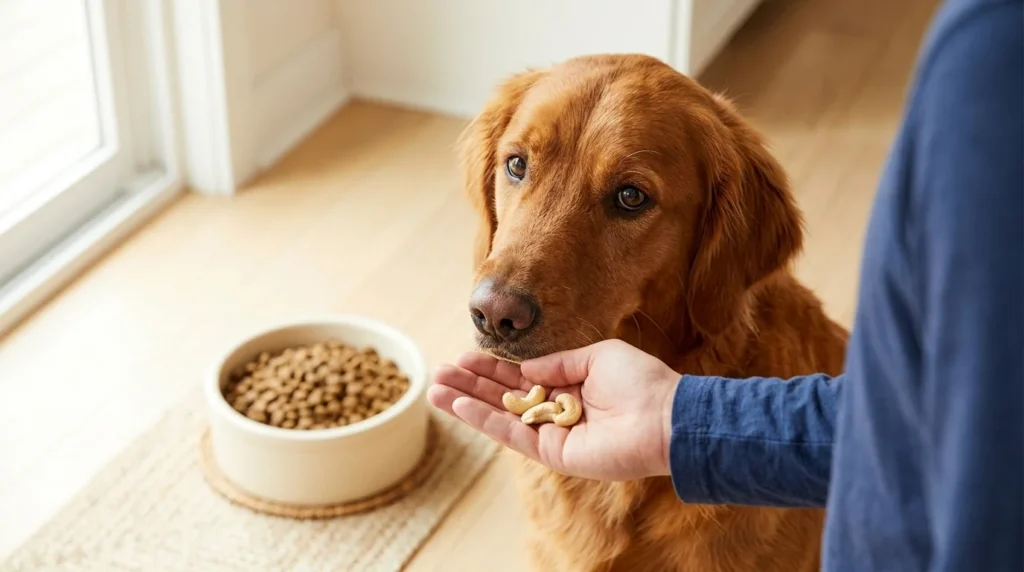
Moldy nuts can contain toxins that may cause serious neurological problems in dogs. Symptoms can include agitation, tremors, loss of coordination, increased body temperature, and seizures.
If you suspect that your dog has eaten moldy nuts, contact a veterinarian promptly. Keep your dog away from the remaining nuts and provide the veterinarian with information about what was consumed.
What Should You Do If Your Dog Eats a Large Amount of Nuts?
If your dog consumes a large quantity of nuts, monitor them closely and contact your veterinarian for guidance. A large amount of fatty food can cause digestive upset and may create more serious concerns in susceptible dogs.
Keep the packaging or product information available so the ingredients can be identified. This is especially important if the nuts were salted, seasoned, chocolate-covered, mixed with raisins, or contained macadamia nuts.
How to Choose Safe Nuts for Dogs
When choosing a nut for a dog, first confirm that the specific variety is considered non-toxic. Select plain, unsalted, unseasoned, shelled nuts without chocolate, sweeteners, or other potentially harmful ingredients.
Start with a tiny portion and monitor your dog for digestive problems. Avoid giving nuts freely from a bowl or bag because dogs can easily consume more than intended.
What Nuts Should Dogs Never Eat?
Dogs should never intentionally eat macadamia nuts. Black walnuts are also best avoided, especially because moldy walnuts can contain dangerous toxins. Dogs should also be kept away from unknown wild nuts and nuts contaminated with mold.
Chocolate-covered nuts, salted nut mixes, and nut products containing raisins or xylitol should also be avoided. The safest choice is to give only clearly identified, plain, non-toxic nuts in very small quantities.
Frequently Asked Questions
What nuts can dogs eat safely?
Plain, unsalted peanuts and cashews can generally be given to dogs in small amounts. Other non-toxic nuts may also be tolerated, but they should still be limited because of their high fat and calorie content.
What nuts are toxic to dogs?
Macadamia nuts are toxic to dogs and should be avoided completely. Black walnuts can also be dangerous, particularly when moldy. Unknown or moldy nuts should never be given to dogs.
Can dogs eat peanuts and cashews?
Yes, plain, unsalted peanuts and cashews can generally be given occasionally in small amounts. They should be free from chocolate, seasonings, excessive salt, and other unsafe ingredients.
Can dogs eat almonds and pistachios?
Plain sweet almonds and pistachios are not generally considered highly toxic to dogs, but they are not ideal treats because they are high in fat and can create choking or digestive risks. If given, portions should be very small.
Can dogs eat nuts every day?
It is better not to give dogs nuts every day. Even non-toxic nuts are calorie-dense and high in fat. Dogs can receive complete nutrition without nuts, so they are best kept as occasional treats.
Conclusion
Some nuts can be eaten by dogs in small amounts, but not all nuts are safe. Plain peanuts and cashews are among the better options when they are unsalted, unseasoned, shelled, and given occasionally. Other non-toxic nuts may be tolerated, but their high fat content and choking risks make them less desirable as regular treats.
Macadamia nuts should never be given to dogs, while black walnuts, moldy nuts, chocolate-covered nuts, salted nut mixes, and nuts containing raisins or xylitol should also be avoided. When in doubt, choose a dog-specific treat instead. If your dog eats a potentially toxic nut or a large amount of nuts, contact your veterinarian promptly.
See Also: Can Dogs Eat Broccoli? Raw, Cooked, Stems & Every Form Covered