
Can Dogs Eat Corn on the Cob? Safety Guide 2026
Dogs can eat plain cooked corn kernels in moderation, but corn on the cob itself is not safe for dogs to chew or eat. The main problem is the cob, which can be a choking hazard and may cause a serious intestinal blockage if swallowed.
If you want to share corn with your dog, remove the kernels completely from the cob and serve them plain. Avoid butter, salt, spices, and other toppings that may upset your dog’s stomach.
Can Dogs Eat Corn on the Cob?
No, dogs should not eat corn on the cob. While the corn kernels can be safe for many dogs, the cob is difficult to digest and can become lodged in the digestive tract.
A dog may also try to swallow pieces of the cob while chewing it. This can create a potentially serious obstruction that may require veterinary treatment or surgery.
Can Dogs Eat Corn Without the Cob?
Yes, plain corn kernels can generally be given to dogs in moderation. Corn provides carbohydrates, fiber, and some nutrients, making the kernels a reasonable occasional treat.
Remove the cob completely before serving. Plain cooked or fresh kernels are preferable, while heavily seasoned, buttered, or salted corn should be avoided.
Can Dogs Eat Cooked Corn on the Cob?
Cooking does not make the cob safe for dogs. Even when the corn is fully cooked, the cob remains difficult to digest and can cause choking or intestinal obstruction if swallowed.
You can safely remove the cooked kernels from the cob and offer a small amount to your dog. Let the kernels cool first and serve them without butter, salt, or seasoning.
Can Dogs Eat Raw Corn on the Cob?
Raw corn on the cob is not recommended for dogs. The cob can be difficult to chew and digest, and dogs may swallow large pieces while trying to eat the kernels.
If you want to offer raw corn kernels, remove them from the cob first and give only a small portion. Cooked plain kernels can also be used as an occasional treat.
Can Dogs Eat Corn Kernels?
Yes, most healthy dogs can eat plain corn kernels in moderation. The kernels are much safer than the cob because they are easier to chew and digest.
Always remove the cob before serving. Avoid corn prepared with butter, salt, garlic, onion, chili, or other seasonings that can be harmful or irritating to dogs.
Can Puppies Eat Corn on the Cob?
Puppies should not chew or eat corn on the cob because the cob can cause choking or a digestive obstruction. Puppies may also be more likely to chew and swallow pieces of unfamiliar foods.
If your puppy is eating solid food, a few plain corn kernels may be offered occasionally if appropriate for their diet. Their main nutrition should come from complete puppy food.
Can Small Dogs Eat Corn on the Cob?
Small dogs should never be given corn on the cob. Their smaller digestive tracts can be particularly vulnerable to an obstruction if a piece of cob is swallowed.
For a safer option, remove the kernels completely and offer only a small amount of plain corn. Cut or mash the kernels if needed to make them easier to eat.
Can Large Dogs Eat Corn on the Cob?
Large dogs should also avoid eating corn on the cob. Although a large dog may be able to chew the cob more easily, that does not make it digestible or safe to swallow.
The safest way to share corn is to remove all kernels from the cob first. Serve a small amount of plain corn as an occasional treat.
Can Dogs Eat Corn on the Cob With Butter?
Corn with butter is not a good choice for dogs. Butter is high in fat and can cause digestive upset, especially when consumed in larger amounts.
Large amounts of fatty foods can also contribute to more serious digestive problems in some dogs. If you share corn, serve it plain without butter.
Can Dogs Eat Corn on the Cob With Salt?
Dogs should not be given heavily salted corn. Excessive salt can cause increased thirst and digestive problems, while very large amounts can lead to salt toxicity.
Plain corn kernels are a much safer option. Dogs do not need added salt in their diet, so avoid seasoning corn before giving it to them.
Can Dogs Eat Corn on the Cob With Seasoning?
Seasoned corn can contain ingredients that are unsafe for dogs, including onion, garlic, excessive salt, chili, and other spices. These ingredients can cause digestive problems or more serious health effects.
Keep corn completely plain when sharing it with your dog. Remove the kernels from the cob and avoid sauces, butter, and seasoning.
Can Dogs Eat Corn on the Cob Every Day?
Corn on the cob should not be given to dogs at all because of the cob. Even plain corn kernels should only be an occasional treat rather than a daily food.
Dogs need a complete and balanced diet, and too many treats can add unnecessary calories. Keep corn portions small and occasional.
Is Corn Good for Dogs?
Plain corn kernels can provide carbohydrates, fiber, vitamins, and minerals, so they can be a nutritious occasional addition to a dog’s diet. However, dogs do not need corn specifically to remain healthy.
The safety issue is mainly the cob and the way corn is prepared. Plain kernels are much safer than corn served with butter, salt, sauces, or seasonings.
Does Corn Have Benefits for Dogs?
Corn kernels contain carbohydrates that provide energy, along with fiber and several nutrients. When served plain and in moderation, they can be used as an occasional treat for many healthy dogs.
However, corn should not replace nutritionally complete dog food. The benefits come from the kernels, not from the cob, which should always be removed before serving.
What Happens If a Dog Eats Corn on the Cob?
If a dog swallows a piece of corn cob, it may pass through the digestive system, but it can also become stuck and cause an intestinal blockage. The risk depends on the size of the piece and the dog’s size.
Watch for vomiting, loss of appetite, abdominal pain, lethargy, difficulty passing stool, or changes in bowel movements. Contact a veterinarian promptly if your dog has swallowed any part of a cob.
Can Corn on the Cob Cause a Blockage in Dogs?
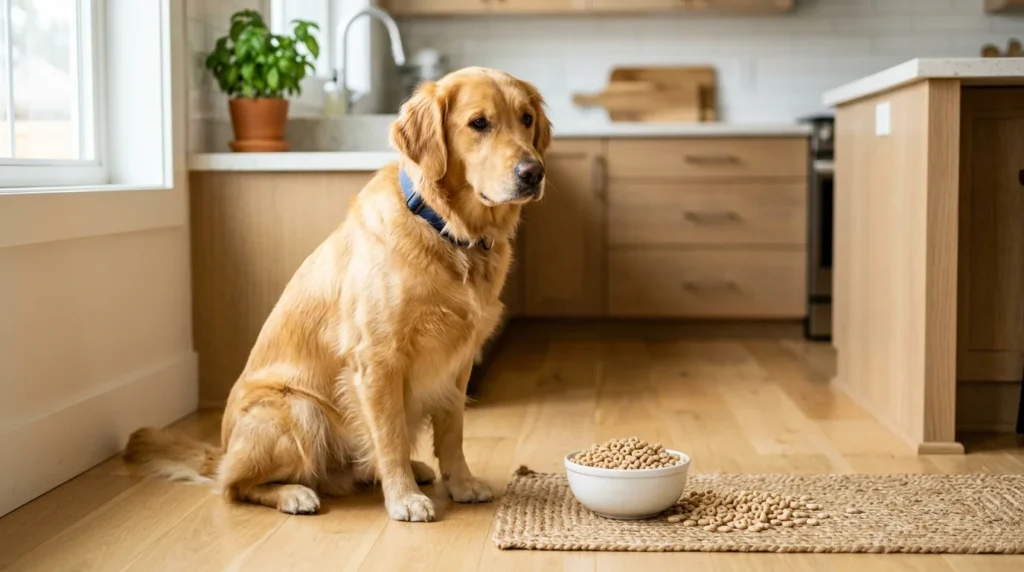
Yes. Corn cobs are not easily digested and can become lodged in the stomach or intestines. An obstruction can prevent food and fluids from moving normally through the digestive tract.
A blockage can become a medical emergency. If your dog has swallowed a cob or a large piece of one, contact your veterinarian rather than waiting to see whether it passes naturally.
What Are the Signs of a Corn Cob Blockage?
Common warning signs can include repeated vomiting, loss of appetite, abdominal discomfort, weakness, lethargy, bloating, constipation, or difficulty passing stool.
Symptoms may not always appear immediately after ingestion. If you know or suspect that your dog swallowed corn cob, seek veterinary advice even if your dog initially appears normal.
What Should You Do If Your Dog Eats Corn on the Cob?
Remove any remaining corn or cob from your dog’s reach and determine how much of the cob may have been swallowed. Do not try to make your dog vomit unless a veterinarian specifically instructs you to do so.
Contact your veterinarian for advice, especially if a piece of the cob was swallowed. Seek urgent care if your dog develops vomiting, severe abdominal pain, weakness, breathing problems, or collapse.
How Much Corn Can Dogs Eat?
There is no need to give dogs large portions of corn. A small amount of plain, removed corn kernels is generally enough as an occasional treat.
The appropriate portion depends on your dog’s size, health, activity level, and regular diet. Treats, including corn, should remain a small part of the dog’s daily calorie intake.
See Also: Can Dogs Eat Onions? Toxicity, Symptoms & Safety Guide 2026
Can Dogs Eat Canned Corn?
Dogs can generally eat small amounts of plain canned corn if it does not contain added salt, butter, spices, or other unsafe ingredients. Drain and rinse canned corn before serving when appropriate.
Fresh or plain cooked kernels may be a better choice because you have more control over the ingredients. Never give the can or cob to your dog.
Can Dogs Eat Frozen Corn?
Plain frozen corn kernels can generally be given to dogs in small amounts, but they should be served appropriately for the dog’s size and ability to chew.
Never give a frozen corn cob. If using frozen kernels, thaw or cook them as appropriate and make sure there are no added sauces, salt, or seasonings.
Can Dogs Eat Popcorn and Corn on the Cob?
Plain, air-popped popcorn can be an occasional treat for some dogs when it contains no butter, salt, or seasoning. Corn on the cob is different because the cob can cause choking or intestinal obstruction.
If offering popcorn, remove unpopped kernels and keep the portion small. Never substitute a corn cob for a dog-safe treat.
Can Dogs Eat Corn Husks?
Corn husks are not a suitable food for dogs. They are fibrous and difficult to digest, and large pieces can contribute to choking or digestive obstruction.
Remove the husk completely before preparing corn for your dog. Only serve a small amount of plain corn kernels after the cob and husk have been discarded.
Can Dogs Eat Corn Starch?
Cornstarch itself is not generally considered toxic to dogs in small amounts, but it provides little nutritional benefit and should not be intentionally fed in large quantities.
If cornstarch is part of another food, check the complete ingredient list. The other ingredients may be more important to your dog’s safety than the cornstarch itself.
Can Dogs Eat Cornmeal?
Plain cornmeal is generally not toxic to dogs, but it should not be fed as a substitute for balanced dog food. Its suitability depends on how it is prepared.
Avoid cornmeal dishes containing excessive salt, butter, sugar, onion, garlic, or other ingredients that are unsafe or unsuitable for dogs.
Can Dogs Eat Corn Dogs?
Corn dogs are not a good food for dogs. They are usually high in fat, salt, calories, and processed ingredients, and the sausage inside may contain seasonings that dogs should avoid.
The safest choice is plain corn kernels rather than fried or heavily processed corn-based foods. Keep human fast foods away from your dog.
See Also: Can Dogs Eat Cinnamon? Safety, Risks & Feeding Guide 2026
Can Dogs Eat Creamed Corn?
Creamed corn is generally not recommended for dogs because it can contain dairy, butter, salt, sugar, and other ingredients that may cause digestive upset.
Plain cooked corn kernels are a much simpler option. If your dog has eaten a small amount of creamed corn, monitor for digestive symptoms and check the ingredients.
Can Dogs Eat Corn With Cheese?
Corn with cheese is not an ideal dog treat. Cheese can be high in fat and salt, and some dogs have difficulty digesting dairy products.
If you want to share corn, remove it from the cob and serve the kernels plain. This avoids unnecessary fat, salt, and seasonings.
Frequently Asked Questions
Can dogs eat corn on the cob?
No. Dogs can eat plain corn kernels in moderation, but the cob can cause choking or a potentially serious intestinal blockage.
Can dogs eat cooked corn kernels?
Yes. Plain cooked corn kernels can generally be given in small amounts as an occasional treat. Remove the cob completely first.
What should I do if my dog swallowed a corn cob?
Contact your veterinarian promptly. Do not induce vomiting unless a veterinarian specifically tells you to do so, because a cob can cause an obstruction.
Can puppies eat corn?
Puppies should never chew or eat corn cobs. Small amounts of plain corn kernels may be appropriate occasionally once they are eating solid food, but puppy food should provide their main nutrition.
Can dogs eat canned corn?
Small amounts of plain canned corn can generally be given to dogs if it contains no harmful seasonings or excessive salt. Drain and rinse it when appropriate, and never give the can or cob.
Conclusion
Dogs should not eat corn on the cob because the cob can cause choking and serious intestinal obstruction. The safe part is the corn kernels, which can generally be given in small amounts when they are plain and removed completely from the cob.
Avoid butter, excessive salt, sauces, and seasonings, and never allow your dog to chew on the cob or husk. If your dog swallows any part of a corn cob, contact a veterinarian promptly and watch for signs of blockage.
See Also: Can Dogs Eat Bread? Safe Types, Risks & Feeding Guide For 2026


