

Can Dogs Eat Granola? Safe Ingredients & Risks
Dogs can sometimes eat a small amount of plain granola, but granola is not automatically safe for dogs. Many commercial granolas contain ingredients such as raisins, chocolate, macadamia nuts, excessive sugar, artificial sweeteners, or large amounts of fat. Some of these ingredients can be dangerous for dogs.
If you want to share granola with your dog, check the ingredient list carefully and choose a very simple product without harmful ingredients. Plain oats are generally a better option than sweetened, chocolate-covered, or fruit-filled granola. Even safe granola should only be offered in small amounts as an occasional treat.
Can Dogs Eat Granola?
Dogs can eat some types of granola in small amounts, but it depends heavily on the ingredients. Granola made primarily from plain oats and other dog-safe ingredients may be tolerated by many healthy dogs.
However, granola is usually designed for people and may contain ingredients that dogs should avoid. Always check the package before sharing it, and never assume that a granola product is safe simply because it contains oats.
Is Granola Safe for Dogs?
Simple granola without toxic or harmful ingredients can generally be given to dogs in moderation. The main issue is that granola recipes vary significantly. One product may contain simple oats, while another may contain chocolate, raisins, nuts, sugar, or artificial sweeteners.
Choose granola with a short, simple ingredient list and avoid products containing ingredients known to be unsafe for dogs. Plain cooked or dry oats can also be a simpler alternative when you want to offer your dog an oat-based treat.
Can Dogs Eat Plain Granola?
Plain granola may be suitable for dogs if it contains only simple, dog-safe ingredients. Oats, for example, are generally safe for dogs when served appropriately. However, even plain granola can contain added sugar or fat.
Check the ingredients carefully and offer only a small portion. Granola should remain an occasional treat rather than becoming a regular part of your dog’s meals.
Can Dogs Eat Granola With Oats?
Oats are generally safe for dogs and can provide carbohydrates and fiber. Because granola is often oat-based, oats themselves are usually not the main concern when evaluating whether a particular granola product is suitable.
The additional ingredients are what matter most. Avoid oat granola containing raisins, chocolate, macadamia nuts, xylitol, excessive sugar, or heavily salted and seasoned ingredients.
Can Dogs Eat Granola With Raisins?
No. Dogs should not eat granola containing raisins. Raisins and grapes can cause kidney injury in dogs, and the amount that causes illness can vary between individual dogs.
If your dog has eaten granola containing raisins, do not wait for symptoms before contacting a veterinarian. Provide information about the product, the amount eaten, and your dog’s size so a veterinary professional can advise you appropriately.
Can Dogs Eat Granola With Chocolate?
No. Granola containing chocolate should not be given to dogs. Chocolate contains methylxanthines such as theobromine and caffeine, which can be toxic to dogs.
The risk depends on the type and amount of chocolate consumed and the dog’s size. Dark chocolate and cocoa products can be particularly concerning. If your dog eats chocolate-containing granola, contact your veterinarian promptly.
Can Dogs Eat Granola With Macadamia Nuts?
No. Granola containing macadamia nuts should not be given to dogs. Macadamia nuts can cause illness in dogs, with symptoms potentially including weakness, vomiting, tremors, and difficulty walking.
Check granola labels carefully because macadamia nuts may be mixed into otherwise simple-looking oat and nut blends. If your dog consumes macadamia nuts, contact your veterinarian for guidance.
Can Dogs Eat Granola With Almonds?
Almonds are not considered a good regular treat for dogs. They are not typically considered poisonous like some other nuts, but whole almonds can create choking or intestinal blockage risks, and their high fat content may cause digestive upset.
Granola containing almonds may also contain chocolate, raisins, salt, sugar, or other ingredients that are unsafe. A simple oat-based treat is generally a better choice for dogs.
Can Dogs Eat Granola With Peanuts?
Plain, unsalted peanuts are generally tolerated by many dogs in small amounts, but peanut-containing granola is not automatically safe. Granola may contain chocolate, raisins, excess sugar, salt, or other ingredients that create additional risks.
If you give your dog a peanut-based treat, choose plain, unsalted peanuts or a dog-appropriate peanut product rather than a heavily sweetened granola mixture.
Can Dogs Eat Granola With Honey?
A small amount of honey is generally not considered toxic to healthy adult dogs, but honey adds sugar and calories. Granola already tends to be calorie-dense, so adding honey can make it even less suitable as a regular treat.
Dogs with certain health conditions may need to avoid extra sugar. For most dogs, there is little reason to choose heavily honey-sweetened granola over a simpler oat-based snack.
Can Dogs Eat Granola With Yogurt?
Plain granola with plain, unsweetened yogurt may be tolerated by some dogs, but both foods should be offered in small amounts. Some dogs have difficulty digesting lactose or may react to dairy products.
Avoid yogurt containing xylitol or other artificial sweeteners that may be harmful to dogs. Check the labels of both the granola and yogurt before sharing them.
Can Dogs Eat Granola With Coconut?
Plain coconut is generally considered safe for dogs in small amounts, although it is relatively high in fat. Granola containing unsweetened coconut may therefore be tolerated by some healthy dogs.
Sweetened coconut granola is less desirable because of its added sugar. Always check the complete ingredient list and avoid products containing chocolate, raisins, macadamia nuts, or artificial sweeteners.
Can Dogs Eat Granola With Dried Fruit?
Dried fruit requires particular caution. Raisins and dried grapes can be dangerous for dogs, while other dried fruits may contain concentrated sugar or added preservatives.
Do not give your dog granola containing raisins or dried grapes. Check mixed-fruit granolas carefully because potentially dangerous dried fruit can be easy to overlook.
Can Dogs Eat Granola Every Day?
Granola should not be a daily food for dogs. Even a dog-safe granola can contain significant calories, carbohydrates, sugar, or fat, and it does not provide the complete nutrition required for a dog’s regular diet.
Use granola only as an occasional treat if the ingredients are appropriate. Your dog’s main meals should come from a complete and balanced diet suitable for its age, size, and nutritional needs.
How Much Granola Can Dogs Eat?
The appropriate amount depends on your dog’s size, calorie needs, activity level, and the ingredients in the granola. When introducing a new food, start with a very small amount and observe your dog for digestive problems.
Because granola can be calorie-dense, even a seemingly small handful can contribute significant calories for a small dog. Treats and extras should remain a limited part of the overall diet.
| Dog Size | Suggested Starting Portion |
|---|---|
| Small Dogs | 1 teaspoon or a few small pieces |
| Medium Dogs | 1–2 teaspoons |
| Large Dogs | 1 tablespoon or a small portion |
| Puppies | A tiny amount when appropriate |
Is Granola Good for Dogs?
Granola is not necessary for dogs and is not usually the best way to provide nutrition. Plain oats can provide fiber and carbohydrates, but commercial granola often contains added sugar, fats, dried fruit, nuts, and other ingredients that provide little benefit to dogs.
A complete and balanced dog food is much more appropriate as the foundation of your dog’s diet. If you want to use oats as an occasional treat, plain cooked oats without sugar or unsafe toppings are generally simpler.
Can Puppies Eat Granola?
Puppies should not be given granola as a regular food. Growing puppies require carefully balanced amounts of protein, fat, vitamins, minerals, and calories, which granola cannot provide on its own.
A tiny amount of a simple, dog-safe granola may not cause a problem for some puppies, but it is better to choose puppy-appropriate foods and treats. Avoid granola containing raisins, chocolate, macadamia nuts, or artificial sweeteners completely.
What Happens If a Dog Eats Too Much Granola?
Eating too much granola can cause vomiting, diarrhea, gas, abdominal discomfort, or excessive calorie intake. High-fat or heavily sweetened granola may be particularly difficult for some dogs to tolerate.
If the granola contained raisins, chocolate, macadamia nuts, xylitol, or another potentially dangerous ingredient, the situation is more serious. Contact your veterinarian promptly rather than waiting for symptoms to appear.
How to Safely Give Granola to Your Dog

If you decide to give your dog granola, choose a product with simple, recognizable ingredients. Ideally, it should be free from raisins, grapes, chocolate, macadamia nuts, xylitol, excessive sugar, and heavily salted ingredients.
Start with a very small amount and use it only as an occasional treat. Plain oats are often a simpler choice than commercial granola because you have greater control over the ingredients and preparation.
Can Dogs Eat Granola Bars?
Most commercial granola bars are not ideal for dogs. They can contain chocolate, raisins, artificial sweeteners, high amounts of sugar, nuts, or other ingredients that may be harmful to pets.
Even bars without toxic ingredients can be high in calories and sugar. Always read the complete ingredient list before giving any granola bar to your dog, and avoid products containing xylitol or raisins.
See Also: Can Dogs Eat Hard Boiled Eggs? Benefits, Risks & Tips
Can Dogs Eat Homemade Granola?
Homemade granola can be easier to control because you choose the ingredients yourself. A simple mixture of plain oats and a small amount of dog-safe ingredients may be suitable as an occasional treat.
Avoid adding chocolate, raisins, macadamia nuts, artificial sweeteners, excessive sugar, or large amounts of oil. Keep the recipe simple and offer only a small portion.
Can Dogs Eat Granola With Peanut Butter?
Plain, unsweetened peanut butter can generally be tolerated by many dogs in small amounts, but peanut butter granola requires careful ingredient checking. Some peanut butter products contain xylitol, an artificial sweetener that is extremely dangerous for dogs.
If you use peanut butter with oats, choose a product that contains no xylitol and little or no added sugar or salt. A small amount is enough because peanut butter and granola can both be calorie-dense.
Can Dogs Eat Granola With Blueberries?
Plain blueberries are generally safe for dogs in moderation. A granola product containing fresh or properly prepared blueberries may therefore be less concerning than one containing raisins or chocolate.
However, check the full ingredient list because blueberry granola may also contain added sugar, artificial sweeteners, chocolate, or other ingredients that dogs should avoid. A few plain blueberries with plain oats can be a simpler option.
Can Dogs Eat Granola With Strawberries?
Plain strawberries are generally safe for dogs in moderation. If a granola product contains real strawberries, the fruit itself is usually not the primary concern.
Check for added sugar, chocolate, artificial sweeteners, or other unsafe ingredients. A small amount of plain oat-based granola with a few fresh strawberry pieces may be preferable to highly processed strawberry-flavored granola.
Can Dogs Eat Granola With Bananas?
Plain banana is generally safe for dogs in small amounts. Banana-flavored or banana-containing granola may also be tolerated if the remaining ingredients are dog-safe.
However, banana granola can contain added sugar, chocolate, artificial sweeteners, or other ingredients that are unsuitable for dogs. Always check the label and keep the serving small.
Can Dogs Eat Granola With Apples?
Plain apple flesh can generally be eaten by dogs when the seeds, stem, and core are removed. Granola containing small amounts of apple may therefore be suitable if the other ingredients are safe.
Be careful with apple granola containing raisins, cinnamon-heavy seasoning, chocolate, added sugar, or artificial sweeteners. Fresh, cored apple pieces with plain oats are a simpler alternative.
Can Dogs Eat Granola With Pumpkin?
Plain cooked pumpkin is generally suitable for many dogs in moderation. Pumpkin can provide fiber, but pumpkin-flavored granola may contain significant amounts of sugar, spices, oils, or other ingredients.
If you want to combine pumpkin and oats for your dog, plain cooked pumpkin with plain oats is easier to control than a heavily sweetened commercial granola product.
Can Dogs Eat Granola With Cinnamon?
Small amounts of ordinary cinnamon are generally not considered toxic to dogs, but cinnamon-heavy foods are unnecessary. Granola containing cinnamon may also contain sugar, chocolate, raisins, or other ingredients that pose greater concerns.
Avoid giving large amounts of cinnamon powder or cinnamon-flavored products. When choosing granola for your dog, focus on the entire ingredient list rather than one ingredient alone.
Can Dogs Eat Granola With Maple Syrup?
A small amount of pure maple syrup is not generally considered toxic to dogs, but it contains a large amount of sugar and offers little nutritional benefit. Granola already tends to be calorie-dense, so heavily sweetened varieties are not ideal.
Avoid sugar-free maple-flavored products unless you have checked the ingredients carefully. Artificial sweeteners can be dangerous for dogs, particularly xylitol.
Can Dogs Eat Granola With Sugar?
Dogs do not need added sugar in their diet. A small amount of sugar is not generally considered poisonous, but sugary granola can contribute unnecessary calories and may encourage weight gain when given frequently.
Choose unsweetened or minimally sweetened products when possible. Plain cooked oats are an even simpler option if you want to give your dog an oat-based treat.
Can Dogs Eat Granola With Xylitol?
No. Dogs should never eat granola containing xylitol. Xylitol is an artificial sweetener that can cause a rapid drop in blood sugar and potentially severe illness in dogs.
If your dog eats a product containing xylitol, contact a veterinarian or emergency veterinary service immediately. Do not wait for symptoms to develop because xylitol poisoning can progress quickly.
Can Dogs Eat Granola With Salt?
Heavily salted granola is not suitable for dogs. Excessive sodium is unnecessary and can cause serious problems when consumed in large quantities.
Choose unsalted or low-sodium products instead. This is particularly important for dogs that already have dietary restrictions or health conditions requiring controlled sodium intake.
Can Dogs Eat Granola With Dried Cranberries?
Dried cranberries themselves are not generally considered toxic to dogs, but many commercial dried cranberries contain added sugar. Some mixed-fruit granolas may also contain raisins, which are dangerous for dogs.
If you choose a granola containing dried fruit, check the ingredients carefully and make sure there are no raisins or grapes. Plain oats without dried fruit are a simpler option.
What Are the Risks of Granola for Dogs?
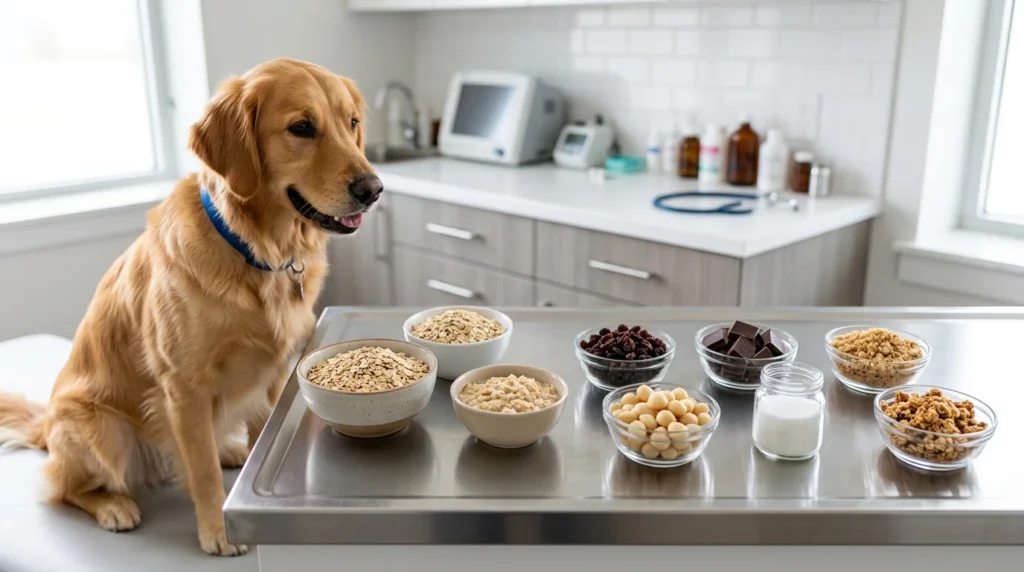
The main risk is not the oats themselves but the additional ingredients commonly found in granola. Raisins, chocolate, macadamia nuts, xylitol, excessive sugar, and high-fat ingredients can make a product unsafe or unhealthy for dogs.
Even granola made with safe ingredients can cause digestive upset when eaten in large quantities. Portion control and careful ingredient checking are therefore important whenever sharing human granola with a dog.
See Also: Can Dogs Eat Graham Crackers? Safety, Risks & Tips
What Should You Do If Your Dog Eats Granola With Raisins?
If your dog eats granola containing raisins, contact your veterinarian promptly. Grapes and raisins have been associated with acute kidney injury in dogs, and it is not possible to reliably predict which dogs will become seriously ill based only on the amount eaten.
Keep the granola package available so you can provide the exact ingredients and product information. Do not wait for vomiting or other symptoms before seeking veterinary advice.
What Should You Do If Your Dog Eats Chocolate Granola?
If your dog eats chocolate-containing granola, determine what type of chocolate was present and approximately how much was consumed. Dark chocolate and cocoa products generally contain more theobromine than milk chocolate.
Contact your veterinarian promptly, particularly if your dog is small or consumed a significant amount. Possible signs of chocolate toxicity include vomiting, restlessness, rapid heart rate, tremors, and seizures.
Frequently Asked Questions
Can dogs eat granola?
Some plain granolas can be given in small amounts, but ingredients must be checked carefully. Avoid granola containing raisins, chocolate, macadamia nuts, xylitol, or excessive sugar.
Can dogs eat granola bars?
Most commercial granola bars are not recommended because they may contain chocolate, raisins, artificial sweeteners, high sugar, or other unsuitable ingredients.
Can dogs eat granola with raisins?
No. Raisins can cause serious kidney problems in dogs. Contact your veterinarian promptly if your dog eats granola containing raisins.
Can dogs eat granola with chocolate?
No. Chocolate can be toxic to dogs. If your dog eats chocolate granola, contact your veterinarian for guidance based on the type and amount consumed.
Can puppies eat granola?
Puppies should not rely on granola for nutrition. A tiny amount of simple, dog-safe granola may be tolerated, but complete and balanced puppy food should remain their primary diet.
Conclusion
Dogs can eat some types of granola in small amounts, but careful ingredient checking is essential. Plain oat-based granola without toxic ingredients may be acceptable as an occasional treat, while many commercial granolas are unsuitable because of chocolate, raisins, macadamia nuts, xylitol, excessive sugar, or high fat.
When in doubt, choose plain cooked oats instead of granola. If your dog accidentally eats granola containing a potentially dangerous ingredient, contact your veterinarian promptly and provide the product’s ingredient information.
See Also: What Fruit Can Dogs Eat? Safe & Unsafe Fruits Guide


