

Can Dogs Eat Honeydew? Benefits, Risks & Safe Feeding Guide
Honeydew is a sweet, refreshing melon that is popular during the summer months. It contains plenty of water, vitamins, and antioxidants, making it a healthy snack for many people. Since dogs often enjoy sweet fruits, many pet owners wonder whether honeydew is safe to share with their furry companions.
The good news is that dogs can eat honeydew in moderation. While the fruit itself is non-toxic, it contains natural sugars, so it should only be offered as an occasional treat. Proper preparation is also important because the rind and seeds can pose health risks.
Can Dogs Eat Honeydew?
Yes, dogs can eat honeydew. The soft flesh of ripe honeydew is safe for most healthy dogs and provides vitamins C and B6, potassium, fiber, and plenty of water that may help support overall health.
Honeydew should be fed as an occasional snack rather than replacing your dog’s complete and balanced diet.
How Much Honeydew Can Dogs Eat?
The amount of honeydew your dog can safely eat depends on their size, age, and overall health. Since honeydew contains natural sugars, moderation is important.
Introduce honeydew gradually and monitor your dog for any signs of digestive upset before offering it again.
| Dog Size | Recommended Amount | Frequency |
|---|---|---|
| Small Dogs | 2–3 small cubes | Occasionally |
| Medium Dogs | 4–6 small cubes | Occasionally |
| Large Dogs | 6–10 small cubes | Occasionally |
| Puppies | 1–2 small cubes | Rarely |
Can Dogs Eat Fresh Honeydew?
Yes, fresh honeydew is the safest option for dogs. Fresh fruit contains natural nutrients without added sugar, preservatives, or artificial ingredients.
Wash the fruit thoroughly, remove the rind and seeds, and cut the flesh into bite-sized cubes before serving.
Can Dogs Eat Honeydew Rind?
No, dogs should not eat honeydew rind. The rind is thick, tough, and difficult to digest, which may cause choking or intestinal blockages.
Always remove the rind completely before giving honeydew to your dog.
Can Dogs Eat Honeydew Seeds?
No, dogs should avoid eating honeydew seeds. Although a few seeds are unlikely to be highly toxic, they can present a choking hazard, especially for small dogs.
Remove all seeds before serving honeydew to help keep your pet safe.
Can Puppies Eat Honeydew?
Yes, puppies can eat a small amount of ripe honeydew occasionally. However, puppy food should remain the primary source of nutrition during growth and development.
If you introduce honeydew to a puppy, start with one or two small cubes and monitor for digestive changes.
Can Dogs Eat Honeydew Every Day?
No, dogs should not eat honeydew every day. Its natural sugar content makes it better suited as an occasional treat rather than a daily snack.
Offering honeydew once or twice a week in moderation is a healthier approach for most dogs.
Can Dogs Eat Frozen Honeydew?
Yes, dogs can eat frozen honeydew in moderation. Frozen honeydew cubes can be a refreshing treat during hot weather and may help keep your dog cool.
Serve small pieces appropriate for your dog’s size to reduce the risk of choking, and always remove the rind and seeds before freezing.
Can Dogs Eat Honeydew Melon?
Yes, honeydew melon is safe for dogs when the flesh is served plain. It contains water, fiber, potassium, vitamin C, and other nutrients that can be part of a healthy occasional snack.
Only the soft flesh should be fed. The rind and seeds should always be discarded before serving.
See Also: Can Dogs Eat Olives? Benefits, Risks & Safe Feeding Guide
Is Honeydew Good for Dogs to Eat?
Yes, honeydew can be a healthy treat for many dogs. It is low in fat and provides hydration along with vitamins, minerals, and antioxidants that may support overall wellness.
Because honeydew contains natural sugar, it should be offered only in moderation, especially for overweight or diabetic dogs.
How to Safely Share Honeydew With Your Dog

Wash the honeydew thoroughly, cut it open, remove all seeds and the rind, then slice the flesh into small bite-sized cubes suitable for your dog’s size.
Serve only fresh or frozen plain honeydew without sugar, syrup, seasonings, or other toppings. Introduce it gradually and watch for any digestive reactions.
Does Honeydew Have Benefits For Dogs?
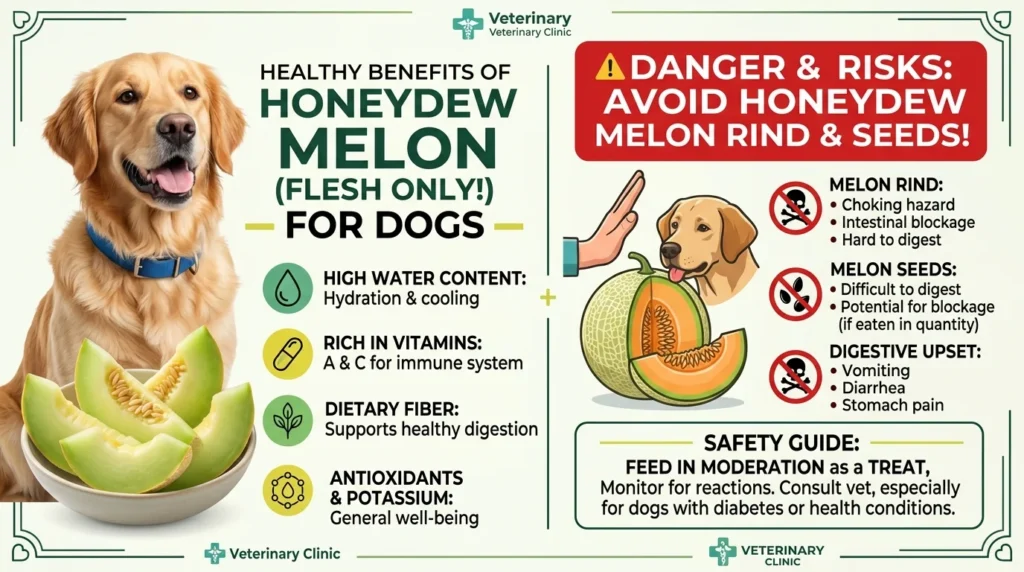
Yes, honeydew provides several nutrients that may benefit dogs. Its high water content helps support hydration, while vitamin C, potassium, and antioxidants contribute to normal body functions.
The fiber in honeydew may also support healthy digestion when served in appropriate portions.
See Also: Can Dogs Eat Cabbage? Benefits, Risks & Safe Feeding Guide
Does Honeydew Have Any Risks For Dogs?
Yes, feeding too much honeydew may cause diarrhea or stomach upset because of its natural sugar and fiber content. Dogs with diabetes or weight management issues should only eat honeydew after veterinary guidance.
The rind and seeds pose the biggest risks because they can cause choking or digestive blockages if swallowed.
Frequently Asked Questions
Can dogs eat honeydew melon?
Yes. Dogs can safely eat the soft flesh of honeydew melon after the rind and seeds have been removed.
Can dogs eat honeydew rind?
No. Honeydew rind is tough to digest and may cause choking or intestinal blockage.
Can dogs eat honeydew seeds?
No. Honeydew seeds should always be removed because they can become a choking hazard.
Can puppies eat honeydew?
Yes. Puppies can enjoy one or two small pieces occasionally, but puppy food should remain their primary source of nutrition.
How often can dogs eat honeydew?
Most healthy dogs can eat a few small pieces of honeydew once or twice a week as an occasional treat.
Conclusion
Dogs can safely eat honeydew in moderation. The soft fruit provides hydration, vitamins, fiber, and antioxidants that can make it a healthy occasional snack for many dogs.
For the safest feeding experience, always remove the rind and seeds, serve only plain ripe honeydew, and keep portions small. When offered responsibly, honeydew can be a refreshing and nutritious addition to your dog’s treat rotation.
See Also: What Fruits Can Dogs Eat? Safe Fruits, Benefits & Risks


