

Can Dogs Eat Sugar Snap Peas? Safety & Benefits
Yes, dogs can eat sugar snap peas in moderation. Sugar snap peas are crunchy, naturally sweet vegetables that provide fiber, vitamins, and other nutrients. They can be a refreshing occasional treat for many healthy dogs when served plain and prepared appropriately. Both the peas inside the pod and the pod itself are generally edible, but the size and texture of the pod may create a choking risk for some dogs.
Although sugar snap peas are not usually harmful to dogs, they should not replace a complete and balanced dog food. Too many peas can cause gas, bloating, or loose stools, especially in dogs that are not used to eating vegetables. Wash them thoroughly, remove any tough stems or strings, and avoid adding salt, butter, oil, garlic, onion, or seasonings.
Are Sugar Snap Peas Safe for Dogs?
Sugar snap peas are generally safe for dogs when they are fresh, clean, and served in small amounts. They are a type of edible-pod pea, meaning dogs can eat both the round peas inside and the tender outer pod. Their naturally sweet flavor and crunchy texture may make them appealing to dogs that enjoy vegetables.
However, not every dog handles new foods in the same way. Some dogs may develop gas or diarrhea after eating peas, while others may have difficulty chewing a whole pod. Introduce sugar snap peas gradually, cut them into suitable pieces, and stop feeding them if your dog shows signs of digestive discomfort.
Can Dogs Eat Raw Sugar Snap Peas?
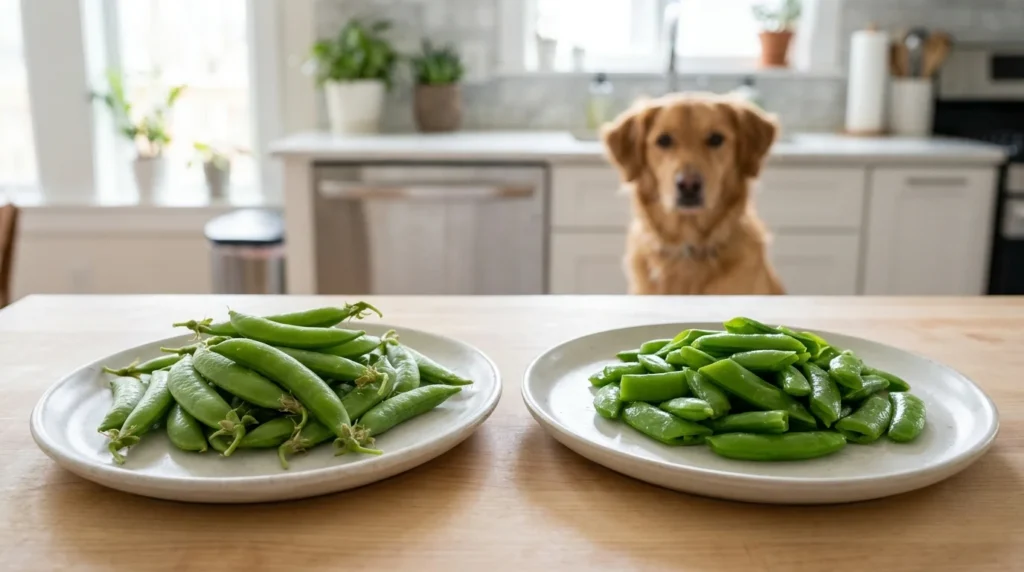
Yes, most healthy dogs can eat small amounts of raw sugar snap peas. Raw pods are crisp and crunchy, and washing them under clean running water helps remove dirt and surface debris. Remove tough stems and strings, then cut the pods into small pieces if your dog tends to swallow food quickly.
Raw sugar snap peas can be harder to chew than lightly cooked peas, so consider your dog’s size, age, and chewing habits. Avoid offering whole pods to dogs that gulp their food or have difficulty chewing. If your dog has a sensitive stomach, try a small amount of lightly steamed sugar snap peas instead.
Can Dogs Eat Cooked Sugar Snap Peas?
Yes, plain cooked sugar snap peas can be a suitable occasional treat for dogs. Light steaming is a good preparation method because it softens the pods without requiring oil or other added ingredients. Let the peas cool completely before serving, and cut them into small pieces to make them easier to chew.
Do not prepare sugar snap peas with garlic, onion, butter, heavy sauces, or excessive salt. These additions can make an otherwise simple vegetable less suitable for dogs. Boiled or steamed peas should be plain, and they should not be served piping hot. Start with a small portion to see how your dog responds.
Can Puppies Eat Sugar Snap Peas?
Puppies may be able to eat a tiny amount of plain, soft sugar snap peas, but they do not need vegetables to meet their nutritional needs. A complete puppy food should provide the nutrients required for growth and development. New treats should be introduced carefully so they do not interfere with the puppy’s normal diet.
Because puppies have small mouths and may swallow food without chewing properly, whole pods can be a choking concern. If your veterinarian agrees that a small taste is appropriate, cook the peas until tender, allow them to cool, and cut them into very small pieces. Avoid giving them to very young puppies without veterinary guidance.
Can Small Dogs Eat Sugar Snap Peas?
Small dogs can generally eat sugar snap peas in moderation, but portion size and preparation are particularly important. A whole pod may be too large for some small dogs to chew comfortably, especially if they tend to gulp their food. Cutting the pod into small pieces can make it easier to eat.
Begin with one or two small pieces rather than offering a handful. Watch for gas, diarrhea, or signs of discomfort after feeding. Small dogs need relatively little food, so treats should remain a minor part of their daily calorie intake. If your dog has a history of digestive problems, ask your veterinarian before introducing a new vegetable.
Can Large Dogs Eat Sugar Snap Peas?
Large dogs can generally enjoy small servings of sugar snap peas as an occasional treat. Their larger mouths may make the pods easier to chew, but size does not remove the risk of choking, particularly for dogs that swallow food quickly. Washing the peas and removing tough stems or strings are still important steps.
Even large dogs can experience gas or loose stools after eating too many peas. Introduce them gradually and avoid letting your dog eat a large quantity straight from a garden or container. Plain, chopped sugar snap peas can be mixed into a small portion of food if your dog tolerates them well.
Can Dogs Eat Sugar Snap Pea Pods?
Yes, sugar snap pea pods are edible and can be eaten by dogs when they are fresh, tender, and properly prepared. Unlike garden peas, which are commonly shelled before eating, sugar snap peas are grown to be eaten with their outer pods. The pods provide fiber, but their firm texture can be difficult for some dogs to chew.
Remove the stem and any tough strings before serving. For small dogs, puppies, senior dogs, or dogs that gulp food, cut the pods into small pieces or cook them until tender. Do not give your dog pods that are tough, spoiled, moldy, or contaminated with garden chemicals.
Can Dogs Eat Frozen Sugar Snap Peas?
Frozen sugar snap peas can be suitable for dogs if they are plain and do not contain added salt, sauces, or seasonings. Thawing and lightly steaming them is a practical way to soften the pods before serving. Always check the package ingredients because some frozen vegetable products include added flavorings or other ingredients.
Avoid giving hard, frozen whole pods to dogs that may swallow them without chewing. Very cold or firm pieces can also be uncomfortable for dogs with sensitive teeth. Once thawed and prepared, cut the peas into small pieces appropriate for your dog’s size.
Can Dogs Eat Canned Sugar Snap Peas?
Canned sugar snap peas are not the best option for dogs because canned vegetables may contain added sodium or other ingredients. Excess salt is unnecessary in a dog’s diet, and some canned vegetable products may also include seasonings. Check the label carefully before considering a small serving.
If the product contains only peas and water with no added salt, a small amount may be acceptable for many healthy dogs, but fresh or plain frozen peas are usually easier choices. If you use canned peas, drain and rinse them thoroughly to help remove some of the surface sodium. Do not serve products containing onion, garlic, sauces, or spices.
Are Sugar Snap Peas Good for Dogs?
Sugar snap peas provide fiber and naturally occurring nutrients, including vitamins and minerals. Fiber supports normal digestion, while the water in fresh vegetables can contribute to a dog’s overall food moisture intake. Their crunchy texture can also give dogs a different treat experience from their usual biscuits.
However, sugar snap peas are not a nutritional requirement for dogs, and their benefits should not be exaggerated. A complete and balanced dog food should remain the foundation of your pet’s diet. Think of sugar snap peas as an occasional extra rather than a way to treat a health problem or replace a more appropriate source of nutrition.
Can Dogs Eat Sugar Snap Peas Every Day?
Some healthy dogs may tolerate a small amount of sugar snap peas regularly, but daily feeding is not necessary. If you offer them often, keep the portions small and make sure treats and extras do not displace a significant amount of your dog’s balanced food. Too many vegetables can upset the digestive system or add unnecessary calories.
It is sensible to rotate occasional dog-safe treats rather than relying on one human food every day. If your dog has a medical condition, follows a prescription diet, or experiences recurring digestive symptoms, ask your veterinarian before making sugar snap peas a regular part of the diet.
How Many Sugar Snap Peas Can Dogs Eat?
The amount of sugar snap peas a dog can eat depends on its size, activity level, overall diet, and tolerance for vegetables. Start with one or two small pieces to see how your dog responds. If there are no signs of digestive upset, you can occasionally offer a few more pieces as a treat.
Keep all treats and extras to a small portion of your dog’s daily calories. Sugar snap peas should not replace a balanced meal, and large servings are more likely to cause gas or loose stools. When in doubt, offer less rather than more, particularly if your dog has never eaten peas before.
Can Sugar Snap Peas Cause Gas in Dogs?
Yes, sugar snap peas can cause gas in some dogs. Like other legumes, peas contain fiber and carbohydrates that may be fermented by intestinal bacteria during digestion. Dogs that eat a large portion or are not accustomed to vegetables may be more likely to experience gas, bloating, or stomach discomfort.
Introduce peas gradually and stop offering them if your dog consistently develops digestive problems after eating them. If your dog has severe abdominal swelling, repeated unsuccessful attempts to vomit, restlessness, or obvious pain, seek emergency veterinary care. These signs can indicate a serious condition and should not be assumed to be ordinary gas.
Can Sugar Snap Peas Cause Diarrhea in Dogs?
Yes, eating too many sugar snap peas may lead to diarrhea or loose stools, particularly when they are introduced suddenly. Some dogs have sensitive digestive systems and may react even to a relatively small serving. Spoiled, dirty, or chemically contaminated peas can create additional health concerns.
If your dog develops mild loose stools after eating peas, stop offering them and monitor your pet. Make sure fresh water is available. Contact your veterinarian if diarrhea persists, becomes severe, contains blood, or occurs with vomiting, weakness, loss of appetite, or signs of dehydration.
Can Dogs Eat Sugar Snap Peas With Butter?
It is best to avoid sugar snap peas prepared with butter. Butter adds fat and calories that dogs do not need from a vegetable treat, and rich foods may upset the stomach. A large amount of fatty food can also increase the risk of more serious digestive problems in susceptible dogs.
Plain, lightly steamed sugar snap peas are a better option. Cook them without butter, oil, sauces, or seasoning, then let them cool before serving. If your dog accidentally eats a small piece of a pea cooked with a little butter, monitor for digestive upset; contact your veterinarian if symptoms are severe or persistent.
Can Dogs Eat Sugar Snap Peas With Garlic?
No. Do not feed your dog sugar snap peas prepared with garlic. Garlic belongs to the Allium family and can damage dogs’ red blood cells when enough is consumed. It may be included in stir-fries, sauces, frozen vegetable mixes, or seasoned pea dishes even when it is not easy to see.
If your dog eats peas containing garlic, the level of concern depends on the amount consumed, the concentration of garlic, and your dog’s size. Contact your veterinarian if a meaningful amount may have been eaten. Do not wait for symptoms or try to induce vomiting unless a veterinary professional tells you to do so.
See Also: Can Dogs Eat Oysters? Safety, Risks & Feeding Tips
Can Dogs Eat Sugar Snap Peas With Onion?
No. Sugar snap peas cooked with onion should not be intentionally fed to dogs. Onion can damage red blood cells, and it may be present in stir-fries, sauces, soups, and mixed vegetable dishes. Both raw and cooked onion can be harmful to dogs.
If your dog accidentally eats a dish containing onion, contact your veterinarian for advice, especially if the amount is uncertain or more than a tiny taste. Keep the recipe or ingredient packaging available. Do not assume that removing visible onion pieces makes the remaining dish safe, because onion may be mixed throughout the food.
Can Dogs Eat Sugar Snap Peas With Salt?
Dogs should not be given sugar snap peas covered in salt or heavily seasoned with salty ingredients. Dogs need some sodium in a balanced diet, but additional salt is unnecessary and can become dangerous in excessive amounts. Plain peas provide a simpler option without the extra sodium.
Choose fresh or plain frozen sugar snap peas without added salt. If your dog eats a large amount of heavily salted food, contact your veterinarian for guidance. Excessive salt intake can cause increased thirst, vomiting, diarrhea, weakness, tremors, or more serious signs depending on the quantity consumed.
Can Dogs Eat Sugar Snap Peas in Stir-Fry?
It is better not to share human stir-fry containing sugar snap peas with your dog. Stir-fries often include soy sauce, garlic, onion, chili, cooking oil, or rich sauces. These additions can make the meal unsuitable even if the peas themselves are generally safe in small amounts.
If you want to share a few peas, remove a small portion before adding seasonings and sauces. Cook them plainly, let them cool, and cut them into small pieces. Keep the prepared human meal out of reach, especially if it contains garlic, onion, or a large amount of salt.
Can Dogs Eat Sugar Snap Peas With Rice?
Plain cooked rice and small amounts of sugar snap peas can be tolerated by many healthy dogs. However, combining the two does not automatically create a complete or balanced meal. Rice and peas alone do not provide all the nutrients a dog needs, especially over the long term.
If you offer a small amount of rice with peas as an occasional extra, keep both foods plain and free from butter, salt, garlic, onion, and sauces. Your dog’s regular complete and balanced food should remain the main diet. If your dog needs a special diet for a medical condition, ask your veterinarian before adding extra foods.
What Happens If a Dog Eats Too Many Sugar Snap Peas?
Eating too many sugar snap peas may cause gas, bloating, loose stools, diarrhea, or vomiting. A dog that gulps down whole pods may also be at risk of choking, particularly if the pods are large or tough. The risk depends on the amount eaten, the dog’s size, and how the peas were prepared.
Remove any remaining peas and monitor your dog if the amount was small and your pet seems well. Contact your veterinarian if your dog ate a large quantity, has ongoing digestive symptoms, or may have eaten peas prepared with garlic, onion, or another harmful ingredient. Seek emergency care for choking, breathing difficulty, severe abdominal swelling, collapse, or repeated unsuccessful attempts to vomit.
What Should You Do If Your Dog Eats Sugar Snap Peas?
If your dog eats a few plain sugar snap peas, there is usually no reason to panic. Check that your dog is breathing normally and behaving as usual, provide access to fresh water, and monitor for digestive upset. If the peas were raw, make sure your dog has not swallowed a large or tough pod that could cause choking or discomfort.
If your dog ate a large amount or the peas contained garlic, onion, excessive salt, or rich sauces, contact your veterinarian for advice. Do not induce vomiting or give home remedies unless a veterinary professional specifically instructs you to do so. If possible, keep the package or recipe available so you can explain exactly what your dog consumed.
See Also: Can Dogs Eat Cooked Mushrooms? Safety & Risks
Fresh vs. Frozen vs. Canned Sugar Snap Peas
| Type | Generally Suitable? | Main Concern | Best Preparation |
|---|---|---|---|
| Fresh sugar snap peas | Yes, in moderation | Dirt, tough strings, and choking risk | Wash, remove tough ends, and cut into small pieces |
| Plain frozen sugar snap peas | Yes, in moderation | Hard texture when frozen and possible added ingredients | Thaw or lightly steam and cool before serving |
| Canned sugar snap peas | Less ideal | Added sodium and seasonings | Check the label, drain, and rinse if no harmful ingredients are present |
| Seasoned sugar snap peas | Not recommended | Garlic, onion, salt, sauces, and excess fat | Choose plain peas instead |
How to Prepare Sugar Snap Peas for Dogs
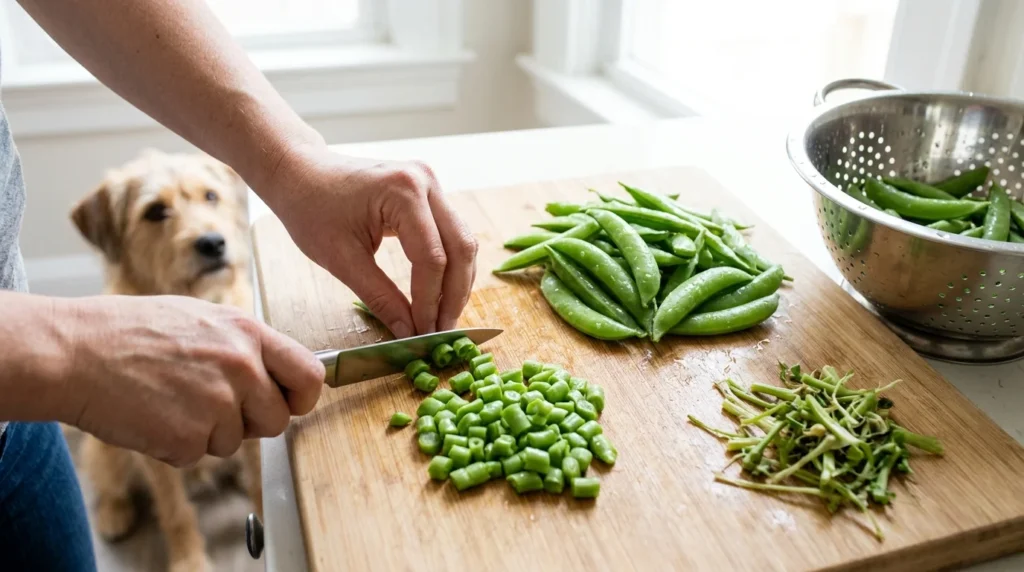
Start by choosing fresh, firm sugar snap peas without mold, spoilage, or damaged areas. Wash them thoroughly under clean running water, remove tough stems and strings, and cut the pods into pieces suitable for your dog’s size. For dogs that struggle to chew raw vegetables, lightly steam the peas until tender and allow them to cool completely.
Serve them plain, without butter, oil, salt, garlic, onion, chili, or sauces. Begin with a small portion and observe your dog for digestive upset. Avoid giving whole pods to dogs that gulp their food, and never feed peas from a garden that may have been treated with pesticides or other chemicals.
When Should Dogs Avoid Sugar Snap Peas?
Some dogs should avoid sugar snap peas or receive them only with veterinary guidance. This includes dogs that repeatedly develop gas or diarrhea after eating peas, dogs on a prescription diet, and dogs with medical conditions for which dietary changes need to be controlled. Dogs that have difficulty chewing or swallowing may also need a different treat texture.
Avoid sugar snap peas that are spoiled, chemically contaminated, or prepared with garlic, onion, heavy seasoning, or excessive salt. If your dog has a history of digestive problems, ask your veterinarian before introducing new vegetables. Plain peas may be tolerated by many dogs, but they are not necessary for every pet.
Frequently Asked Questions
Can dogs eat raw sugar snap peas?
Yes, most healthy dogs can eat small amounts of raw sugar snap peas. Wash them thoroughly, remove tough stems and strings, and cut them into small pieces if your dog tends to swallow food quickly.
Can dogs eat the whole sugar snap pea pod?
Dogs can generally eat the tender pod as well as the peas inside. However, whole pods may pose a choking risk for small dogs or dogs that gulp their food, so cutting them into small pieces is safer.
Can dogs eat frozen sugar snap peas?
Plain frozen sugar snap peas can be suitable after thawing or lightly steaming. Avoid hard frozen whole pods if your dog may swallow them without chewing, and check the label for added salt or seasonings.
Can sugar snap peas make dogs sick?
Yes, eating too many may cause gas, diarrhea, or vomiting. Seasonings such as garlic and onion create additional risks. Contact your veterinarian if symptoms are severe, persistent, or accompanied by other concerning signs.
Can dogs eat sugar snap peas every day?
A small amount may be tolerated by some healthy dogs, but daily feeding is unnecessary. Keep peas as an occasional extra and ensure that your dog’s main diet remains complete and balanced.
Conclusion
Dogs can generally eat sugar snap peas in moderation, whether raw or lightly cooked. These crunchy vegetables provide fiber and naturally occurring nutrients, but they are not essential to a dog’s diet. The most important precautions are to wash them thoroughly, remove tough stems and strings, cut the pods into suitable pieces, and avoid added salt, butter, garlic, onion, and sauces.
Start with a small serving and monitor your dog for gas, diarrhea, or other digestive changes. Puppies, small dogs, and dogs that gulp their food may need extra care with the size and texture of each piece. If your dog has a medical condition, follows a special diet, or develops concerning symptoms after eating peas, consult your veterinarian.


