

Can Dogs Eat Goldfish? Safety & Risks
If you mean Goldfish crackers, dogs can eat a small amount occasionally, but they are not a healthy treat for regular feeding. Goldfish crackers are made for people and usually contain refined flour, cheese or cheese flavoring, salt, and other ingredients that do not provide much nutritional value for dogs. A single cracker or a few crackers are unlikely to cause a problem in a healthy dog, but larger amounts can lead to stomach upset.
The biggest concern is not usually one Goldfish cracker. The concern is feeding them frequently or giving your dog a large serving. Human snacks can add unnecessary sodium, calories, and fat to a dog’s diet. Dogs with sensitive stomachs or certain health conditions may also react more strongly. For regular treats, plain cooked meat, carrots, green beans, or veterinarian-approved dog treats are better choices.
Are Goldfish Crackers Safe for Dogs?
Goldfish crackers are generally not considered toxic to dogs when eaten in small quantities. If your dog grabs one or two crackers from the floor, there is usually no reason to panic. However, they should not become a normal part of your dog’s diet because they are designed as a human snack rather than balanced canine food.
Goldfish crackers can contain ingredients such as wheat, dairy, salt, oils, and seasonings. Individual varieties can have different recipes, so it is important to check the ingredient label of the specific product your dog ate. If the crackers contain an ingredient that is unsafe for dogs, the situation may require more attention.
Can Dogs Eat Cheese Goldfish?
Plain cheese-flavored Goldfish crackers are not usually poisonous to dogs, but they are not an ideal treat. The cheese flavor, salt, and processed ingredients can provide extra calories without offering much nutritional benefit. A healthy dog that eats a small amount will generally tolerate them better than a dog that eats a large quantity.
Dairy ingredients can also cause digestive problems in some dogs. If your dog is sensitive to dairy or has a history of diarrhea after eating rich foods, even a small amount may cause loose stool, gas, or stomach discomfort. It is better to choose a simple dog-safe snack instead of intentionally giving cheese crackers.
Can Puppies Eat Goldfish Crackers?
Puppies should not be given Goldfish crackers as a regular treat. Growing puppies need food that provides the right balance of protein, fat, vitamins, minerals, and calories for development. Goldfish crackers do not provide the balanced nutrition that puppy food is designed to deliver.
If a puppy accidentally eats one Goldfish cracker, it is usually not an emergency. Watch for vomiting, diarrhea, unusual thirst, or other signs of stomach upset. Because puppies are smaller and more sensitive to dietary changes, avoid giving them handfuls of human snack foods.
Can Dogs Eat Goldfish Crackers Every Day?
It is best not to give Goldfish crackers to your dog every day. Even small servings can add unnecessary sodium and calories over time, especially when they are given in addition to a complete dog food diet. Frequent human snacks can also make it harder to keep your dog’s overall calorie intake under control.
Occasional accidental consumption is different from making Goldfish crackers part of your dog’s routine. If you want to use treats during training, choose small dog treats or pieces of appropriate plain foods. These options make it easier to reward your dog without regularly adding processed human snacks to the diet.
What Happens If a Dog Eats Goldfish Crackers?
What happens depends on how many crackers your dog ate, the dog’s size, and the ingredients in the particular Goldfish product. A small amount may cause no noticeable reaction. Eating a larger amount may cause increased thirst, gas, loose stool, vomiting, or general stomach discomfort.
The salt and fat in processed snacks can be more concerning when a dog eats a large quantity. If your dog has eaten a whole bag or a very large amount, do not assume everything will be fine simply because Goldfish crackers are not normally considered toxic. Contact your veterinarian for advice, particularly if your dog is small or begins showing symptoms.
See Also: Can Dogs Eat Garbanzo Beans? Safety & Benefits
Can Dogs Eat Goldfish Puffs?
Goldfish Puffs and similar varieties are also not recommended as regular dog treats. They are processed human snacks and may contain different amounts of fat, sodium, flavorings, and other ingredients compared with standard Goldfish crackers. Always check the package ingredients if your dog has eaten a specific variety.
A tiny accidental amount is unlikely to cause serious problems in most healthy dogs, but there is no nutritional reason to intentionally feed these snacks. If your dog enjoys crunchy treats, ask your veterinarian about appropriate dog treats that fit your dog’s size, age, and diet.
Can Dogs Eat Flavored Goldfish?
Flavored Goldfish crackers deserve extra caution because the ingredients vary between products. Some flavors may contain additional seasonings, cheese powders, spices, or other ingredients that can irritate a dog’s digestive system. A product that is safe for people is not automatically a good choice for dogs.
If your dog eats a flavored variety, check the ingredient list rather than relying only on the product name. Pay particular attention to ingredients that are known to be dangerous to dogs, such as onion or garlic in some seasoned foods. If you are unsure about an ingredient or your dog ate a large amount, contact a veterinarian for guidance.
Can Dogs Eat Goldfish Crackers With Peanut Butter?
Goldfish crackers covered with peanut butter are not a good dog treat. The crackers already contain processed ingredients and sodium, while peanut butter can add significant fat and calories. Some peanut butter products may also contain xylitol, an ingredient that is highly dangerous to dogs.
If you want to give your dog peanut butter, choose a dog-safe peanut butter without xylitol and use only a small amount. It is better to offer it separately in an appropriate portion than to combine it with salty processed snacks such as Goldfish crackers.
Can Dogs Eat Goldfish Crackers With Milk?
Giving Goldfish crackers with milk is not recommended as a treat for dogs. Many adult dogs have limited ability to digest lactose, and milk can cause gas, diarrhea, or stomach discomfort in sensitive dogs. Combining milk with a salty processed snack can also make the overall treat less suitable.
If your dog accidentally drinks a small amount of milk while eating a few crackers, simply monitor them for digestive upset. Fresh water should remain your dog’s main drink. For regular treats, stick with foods that are appropriate for canine nutrition rather than combining several human snack foods.
How Many Goldfish Crackers Can Dogs Eat?
There is no recommended daily serving of Goldfish crackers for dogs because they are not a necessary part of a canine diet. If a healthy dog accidentally eats a few crackers, the amount is generally small enough that serious problems are unlikely. However, the smaller the dog, the more quickly a large number of crackers can become significant.
If you intentionally give a Goldfish cracker as an occasional treat, keep the amount very small and do not make it a habit. Treats and human snacks should make up only a limited portion of a dog’s daily calories. A healthier dog treat is usually a better choice than processed crackers.
Goldfish Crackers and Salt
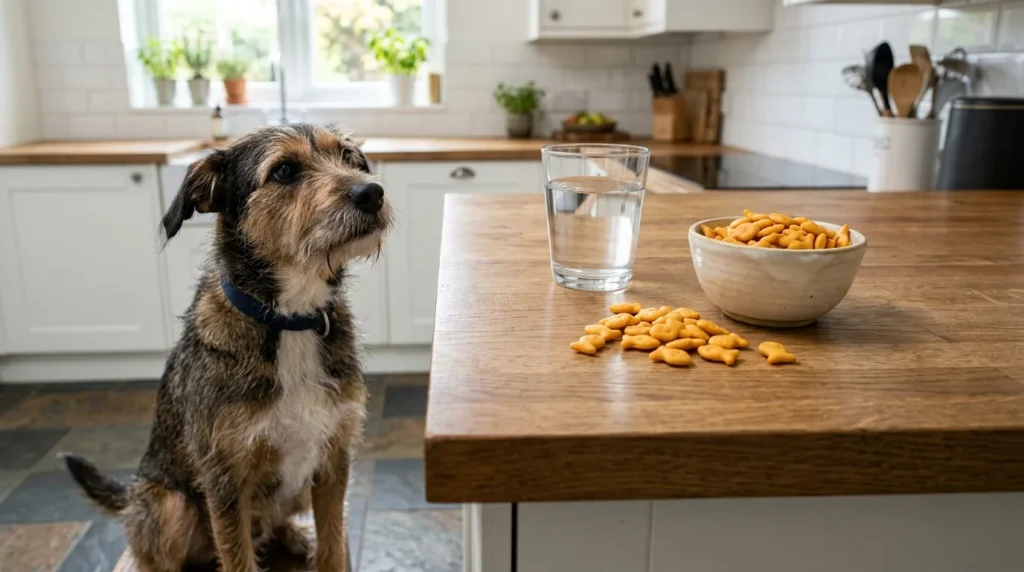
One reason Goldfish crackers are not ideal for dogs is their sodium content. Dogs need some sodium as part of a balanced diet, but they do not need salty human snacks to meet that requirement. Eating several crackers adds sodium without providing the balanced nutrition your dog needs.
A dog that eats a large quantity of salty food may become unusually thirsty and can develop digestive upset. The risk depends on the amount eaten and the dog’s size. If your dog consumes a very large quantity of Goldfish crackers, especially from a whole package, contact your veterinarian rather than waiting for symptoms to become severe.
Can Goldfish Crackers Cause Diarrhea in Dogs?
Yes, Goldfish crackers can contribute to diarrhea in some dogs. Their processed ingredients, dairy components, fat, salt, and sudden introduction into the diet may upset a sensitive stomach. Some dogs may experience loose stool after eating only a small amount, while others may have no noticeable reaction.
If your dog has mild diarrhea after eating a few crackers, provide access to fresh water and avoid giving additional human snacks. Keep an eye on their condition. Persistent diarrhea, repeated vomiting, weakness, blood in the stool, or other concerning symptoms should be discussed with a veterinarian.
Can Goldfish Crackers Cause Vomiting in Dogs?
Goldfish crackers can cause vomiting if a dog eats too many or if the dog has a sensitive stomach. Rich or salty foods can be difficult for some dogs to tolerate, particularly when they are not accustomed to eating them. A single cracker is unlikely to cause vomiting in most healthy dogs, but individual reactions vary.
If your dog vomits once after eating a small amount, monitor them closely and prevent them from eating more crackers or other rich foods. Repeated vomiting, severe discomfort, unusual behavior, or an inability to keep water down warrants prompt veterinary advice.
What If My Dog Ate a Whole Bag of Goldfish?
If your dog ate a whole bag of Goldfish crackers, the situation deserves more attention than eating one or two. A large quantity can provide a substantial amount of salt, fat, and calories in a short period. The packaging itself may also be a concern if your dog swallowed part of the bag.
Do not try to make your dog vomit unless a veterinarian specifically tells you to do so. Check the package to determine the product and approximate amount consumed, then contact your veterinarian for individualized advice. Seek urgent veterinary care if your dog develops repeated vomiting, severe weakness, tremors, difficulty breathing, collapse, or other serious symptoms.
See Also: Can Dogs Eat Cooked Shrimp? Safety & Feeding Guide
Are Goldfish Crackers Bad for Dogs?
Goldfish crackers are not a good regular treat for dogs, but calling a small accidental amount “dangerous” would be an overstatement for most healthy dogs. The main issue is that they offer little nutritional value for dogs while adding processed carbohydrates, salt, fat, and other ingredients to the diet.
The occasional cracker is very different from regularly feeding handfuls of them. If your dog frequently begs for Goldfish, replace them with an appropriate dog treat or a small portion of a dog-safe whole food. This gives your dog a reward without making processed human snacks part of their routine.
What Should Dogs Eat Instead of Goldfish Crackers?
There are many better snack options for dogs. Depending on your dog’s diet and any food sensitivities, small portions of plain cooked chicken, carrots, green beans, or appropriate commercial dog treats can be used as occasional rewards. These options can provide more useful nutrition than processed crackers.
When introducing any new food, start with a small amount and watch how your dog responds. Treats should complement a complete and balanced diet rather than replace it. If your dog has a medical condition or follows a special diet, ask your veterinarian before introducing new treats.
When Should You Call a Veterinarian?

Contact a veterinarian if your dog eats a very large amount of Goldfish crackers, particularly if the dog is very small or has an existing health condition. You should also seek advice if you are unsure about an ingredient in the specific flavor your dog consumed.
Get prompt veterinary attention if your dog develops repeated vomiting, severe diarrhea, marked weakness, tremors, seizures, collapse, difficulty breathing, or other unusual symptoms. If packaging was swallowed, mention that when speaking with the veterinarian because it can create a separate problem.
Frequently Asked Questions
Can dogs eat one Goldfish cracker?
For most healthy dogs, eating one Goldfish cracker is unlikely to cause a problem. It is not a nutritious dog treat, though, so it is better not to make it a regular habit.
Can dogs eat Goldfish crackers every day?
Dogs should not eat Goldfish crackers every day. They are processed human snacks containing ingredients such as salt and refined carbohydrates that do not provide the balanced nutrition dogs need.
What should I do if my dog ate too many Goldfish crackers?
Remove the remaining crackers and check approximately how much your dog consumed. Provide fresh water and monitor for symptoms. If a large amount was eaten or your dog becomes sick, contact your veterinarian for guidance.
Are Goldfish crackers toxic to dogs?
Standard Goldfish crackers are not generally considered toxic to dogs in small amounts. However, certain flavored varieties may contain additional ingredients, so check the label if your dog has eaten a flavored product.
What are healthier treats for dogs?
Depending on your dog’s individual diet, healthier options may include veterinarian-approved dog treats or small portions of plain cooked chicken, carrots, or green beans. Avoid foods containing toxic ingredients, excessive salt, or heavy seasoning.
Conclusion
So, can dogs eat Goldfish? A healthy dog can usually eat a few Goldfish crackers without serious consequences, but these salty processed snacks should not be a regular part of a dog’s diet. They provide little nutritional benefit and may cause digestive upset when eaten in larger quantities.
If your dog accidentally eats one or a few crackers, monitor them and make sure fresh water is available. For regular rewards, choose dog treats or simple dog-safe foods instead. If your dog eats a large amount, swallows packaging, or develops concerning symptoms, contact your veterinarian promptly.
See Also: Abella Danger Net Worth: Biography, Career, Income & 2026 Update


