

Can Dogs Eat Apples? Safety, Benefits & Feeding Guide
Yes, dogs can eat apples in moderation. Apples can be a tasty, crunchy treat and provide nutrients such as fiber and vitamin C. They are also relatively low in fat, making plain apple pieces a reasonable occasional snack for many healthy dogs.
However, apples need to be prepared properly before you give them to your dog. The seeds, core, and stem should be removed, and large pieces should be cut into smaller portions to reduce choking risks. Plain fresh apple is a much better choice than apple desserts or products containing added sugar and other ingredients.
Are Apples Safe for Dogs?
Fresh apple flesh is generally safe for most dogs when served in appropriate portions. You should wash the apple thoroughly, remove the stem and core, take out the seeds, and cut the remaining fruit into manageable pieces.
Although apples can be a healthy treat, they should not replace your dog’s regular complete and balanced food. Giving too much fruit at once can add unnecessary calories and sugar and may cause digestive upset such as gas or loose stools.
Can Dogs Eat Apple Skin?
Dogs can generally eat apple skin when the apple has been washed properly. The skin contains fiber and other plant nutrients, and many dogs can digest it without a problem.
For dogs with sensitive stomachs, peeling the apple may make it easier to tolerate. Regardless of whether you leave the skin on, always remove the stem, core, and seeds before giving apple to your dog.
Can Dogs Eat Apple Seeds?
No, you should not intentionally give apple seeds to your dog. Apple seeds contain compounds that can release cyanide when crushed or chewed, although the amount present in a few seeds is generally small.
The safest approach is simple: remove all seeds along with the core before serving apples. If your dog accidentally eats one or two seeds, do not panic, but contact your veterinarian if a significant quantity was consumed or if you are concerned.
Can Dogs Eat Apple Cores?
Apple cores should not be given to dogs. The core is hard and can be difficult to chew, creating a choking risk or potentially causing an intestinal blockage if a large piece is swallowed.
The core also contains the seeds, so removing it helps eliminate two potential concerns at once. Cut the apple around the core and give your dog only the soft fruit portion.
Can Dogs Eat Green Apples?
Yes, dogs can generally eat green apples such as Granny Smith apples in moderation. The slightly tart flavor does not make the fruit unsafe, although some dogs may prefer sweeter varieties.
Wash the apple, remove the core, stem, and seeds, and cut it into small pieces before serving. Avoid adding sugar, caramel, peanut butter containing unsafe sweeteners, or other toppings.
Can Dogs Eat Red Apples?
Red apples can generally be given to dogs as an occasional treat. Varieties such as Gala, Fuji, and Red Delicious can be suitable when the fruit is prepared correctly.
The color of the apple does not remove the need to take out the seeds, core, and stem. Serve plain apple flesh in a small portion and monitor your dog when introducing it for the first time.
Can Dogs Eat Cooked Apples?
Dogs can eat plain cooked apple if it is prepared without sugar, butter, spices, or other unnecessary ingredients. Soft cooked apple can also be easier for some dogs to chew.
Before cooking, remove the seeds, core, and stem. Avoid cooked apple desserts such as sugary apple fillings, pies, or apples prepared with large amounts of butter or sweeteners.
Can Dogs Eat Raw Apples?
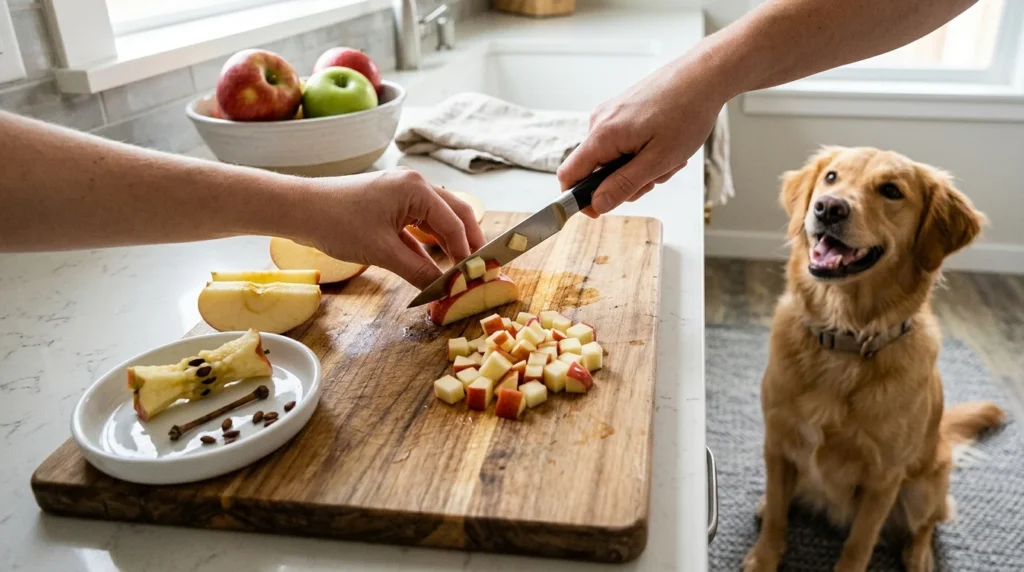
Yes, raw apple flesh is generally safe for dogs and is one of the simplest ways to serve this fruit. Wash the apple thoroughly and remove the core, seeds, and stem before cutting it into small pieces.
Raw apple provides a crunchy texture that some dogs enjoy. However, large or hard pieces can be difficult to chew, especially for small dogs, puppies, or dogs that swallow food quickly.
Can Dogs Eat Applesauce?
Plain unsweetened applesauce may be suitable for dogs in small amounts if it contains only dog-safe ingredients. Check the ingredient list carefully because many commercial applesauces contain added sugar or other additives.
Never give your dog applesauce containing xylitol or another potentially harmful sweetener. When in doubt, fresh plain apple is a simpler option because you can control exactly what your dog receives.
Can Dogs Eat Apple Butter?
Apple butter is generally not recommended for dogs. Although it is made from apples, commercial apple butter often contains added sugar, spices, and other ingredients that make it much less suitable than plain apple.
If you want to give your dog apple, offer a few small pieces of fresh apple with the seeds, stem, and core removed. There is no nutritional need to add sweet spreads or sugary toppings.
Can Dogs Eat Apples with Peanut Butter?
Dogs can potentially eat small pieces of apple with a small amount of plain peanut butter. If you choose this combination, make sure the peanut butter does not contain xylitol, which is highly dangerous to dogs.
Peanut butter is also calorie-dense and relatively high in fat, so only a small amount is needed. Plain apple by itself is an even simpler treat and may be a better option for dogs that need to watch their calorie intake.
Can Dogs Eat Apples with Cinnamon?
Plain apple does not need cinnamon to be a suitable dog treat. Small amounts of ordinary cinnamon used in food are generally not considered highly toxic to dogs, but large amounts or concentrated cinnamon products can cause irritation.
For the simplest option, give your dog plain apple without spices. Avoid apple desserts containing cinnamon along with large amounts of sugar, butter, or other rich ingredients.
Can Dogs Eat Apples with Honey?
It is better to serve apples without honey. Honey contains a significant amount of sugar and does not provide a necessary benefit when added to your dog’s fruit treat.
A few pieces of plain apple are enough for an occasional snack. Dogs with diabetes, weight-management concerns, or dietary restrictions should not be given sugary toppings unless their veterinarian recommends them.
Can Puppies Eat Apples?
Puppies can generally eat small amounts of properly prepared apple. Their primary nutrition should come from a complete and balanced puppy food formulated for growth, while apple should remain an occasional treat.
Cut the apple into very small, soft pieces and remove the seeds, core, and stem. Introduce only a tiny amount at first and watch for diarrhea, vomiting, gas, or other signs of digestive upset.
Can Small Dogs Eat Apples?
Small dogs can enjoy apple, but portion size and preparation are particularly important. A whole slice can be too large for a small dog, so cut the fruit into tiny pieces that are easy to chew.
Always remove the core and seeds and supervise your dog while eating. Because small dogs need fewer calories overall, even healthy treats should be given in modest amounts.
Can Large Dogs Eat Apples?
Large dogs can generally eat apple in moderation, and their larger size may allow them to handle somewhat bigger pieces. However, large pieces can still present a choking concern if your dog tends to swallow food without chewing.
Remove the core, seeds, and stem and serve an appropriate portion. Even for a large dog, apples should remain an occasional addition rather than replacing balanced dog food.
Can Dogs Eat Apples Every Day?

Dogs do not need apples every day. Apples can be included occasionally as a treat, but feeding fruit too frequently can add extra calories and sugar to the diet.
If your dog enjoys apple and tolerates it well, small portions can be used as part of an overall treat plan. Keep treats and additional foods within a reasonable portion of your dog’s daily calorie needs.
How Should You Prepare Apples for Dogs?
Start by washing the apple thoroughly. Cut it into sections and remove the stem, core, and every visible seed. You can leave the skin on if your dog tolerates it, then cut the fruit into small, bite-sized pieces.
Serve the apple plain and avoid sugar, caramel, chocolate, artificial sweeteners, and rich toppings. Refrigerated apple pieces can also make a refreshing treat, provided they are cut to an appropriate size for your dog.
See Also: Can Dogs Eat Parsley? Benefits, Risks & Safe Serving Tips
How Much Apple Can Dogs Eat?
The amount of apple a dog can safely have depends on their size, overall diet, activity level, and individual tolerance. Start with a small amount when introducing apple for the first time and increase only if your dog handles it well.
| Dog Size | General Starting Portion |
|---|---|
| Small dogs | 1–2 small pieces |
| Medium dogs | 2–4 small pieces |
| Large dogs | 4–6 small pieces |
| Extra-large dogs | A small handful of pieces |
These are general starting portions, not strict veterinary serving limits. Apple should remain an occasional treat and should fit into your dog’s overall daily calorie intake.
Can Dogs Eat Apples for Weight Loss?
Plain apple can be a useful lower-fat treat for some dogs, but it should not be considered a weight-loss treatment. Apples still contain natural sugars and calories, so giving large amounts can work against a dog’s calorie goals.
If your dog needs to lose weight, treats should be carefully portioned and included within their daily calorie allowance. Your veterinarian can help create an appropriate weight-management plan based on your dog’s size, activity, and nutritional needs.
Can Dogs Eat Apples with Diarrhea?
It is generally better not to introduce apples while your dog is experiencing diarrhea. Although plain apple can be suitable for healthy dogs, adding new foods during digestive upset may make it harder to determine what is causing or worsening the problem.
If diarrhea is persistent, severe, bloody, or accompanied by repeated vomiting, weakness, dehydration, or other concerning symptoms, contact your veterinarian. Follow your veterinarian’s feeding recommendations rather than relying on apples as a treatment.
Can Dogs Eat Apples with Constipation?
Apples contain fiber and water, but they should not be relied on as a treatment for constipation. A small amount of plain apple may contribute some fiber to the diet, but giving a large amount can instead cause digestive upset.
Make sure your dog has access to fresh water and contact your veterinarian if constipation continues. Repeated straining, pain, vomiting, or an inability to pass stool can require prompt veterinary attention.
Can Dogs Eat Apple Slices?
Yes, plain apple slices can be given to dogs as long as the core, seeds, and stem have been removed. The slices should be appropriately sized for your dog’s mouth and chewing ability.
For small dogs and puppies, cut the slices into smaller pieces to reduce choking concerns. Do not coat the slices with caramel, chocolate, sugar, or other toppings that can make them unsuitable for dogs.
Can Dogs Eat Apple Chips?
Plain, unsweetened apple chips may be suitable in small amounts if they contain only apple. However, many commercially prepared apple chips contain added sugar, salt, spices, oils, or other ingredients that dogs do not need.
Check the ingredients carefully before offering any packaged apple chips. Fresh plain apple is generally a simpler choice because you can easily remove the core and seeds and control the portion.
Can Dogs Eat Apple Pie?
Apple pie is not recommended for dogs. Although plain apple flesh can be safe, apple pie usually contains sugar, butter, pastry, spices, and other rich ingredients that can cause digestive problems and add unnecessary calories.
Some recipes may also contain raisins or other ingredients that are dangerous for dogs. If you want to share apple with your dog, give them a few pieces of plain prepared apple instead.
Can Dogs Eat Apple Muffins?
Apple muffins are generally not a suitable dog treat. They often contain sugar, butter, oils, refined flour, and other ingredients that provide little nutritional value for dogs.
Some muffins can also contain raisins, chocolate, artificial sweeteners, or other potentially harmful ingredients. Keep human baked goods away from your dog and choose a simple dog-safe treat instead.
Can Dogs Eat Canned Apples?
Canned apples are not the best choice for dogs because many canned fruit products are packed in syrup or contain added sugar. The syrup can significantly increase the sugar content compared with fresh apple.
If you use canned apple, choose a plain product without added sugar or unsafe ingredients and rinse it if appropriate. Fresh apple remains the easier option for most dogs.
See Also: Can Dogs Eat Potato Skins? Safety Risks & Guide
Can Dogs Eat Applesauce with Sugar?
It is better not to give dogs applesauce containing added sugar. Dogs do not need extra sugar, and sweetened applesauce can provide more calories than necessary.
Plain unsweetened applesauce may be suitable in a small amount if it contains only dog-safe ingredients. Always check the label for artificial sweeteners and other additives before sharing it with your dog.
Can Dogs Eat Apple Jam?
Apple jam is generally not recommended for dogs. Jam is usually concentrated in sugar and may contain preservatives, artificial sweeteners, or other ingredients that are unnecessary for a dog.
A few pieces of fresh apple are a much simpler alternative. If a dog accidentally eats a small amount of ordinary apple jam, monitor them for digestive upset and check the ingredients for anything potentially harmful.
What Are the Main Risks of Apples for Dogs?
The biggest risks are the seeds, core, stem, excessive portions, and unsafe apple-based products. Apple seeds should not be intentionally fed, while the hard core and stem can create choking or obstruction concerns.
Too much apple can also cause gas, diarrhea, or stomach discomfort because of the fruit’s fiber and natural sugars. Products such as caramel apples, apple pie, and sweetened applesauce can introduce additional risks.
What If a Dog Eats Apple Seeds?
If your dog accidentally eats a small number of apple seeds, do not panic. The seeds contain compounds capable of releasing cyanide when crushed or chewed, but the quantity in a few seeds is generally small.
However, a large amount of seeds or a significant quantity of apple should be taken more seriously. Contact your veterinarian for guidance if your dog consumed many seeds or develops unusual symptoms.
What If a Dog Eats an Apple Core?
If your dog swallows a small piece of apple core, monitor them closely. The core can be difficult to digest and may present a choking or gastrointestinal obstruction risk, particularly if a large piece was swallowed.
Contact your veterinarian if your dog swallowed a large core or develops repeated vomiting, loss of appetite, abdominal pain, lethargy, difficulty passing stool, or other concerning symptoms. Do not try to induce vomiting unless instructed by a veterinary professional.
What Should You Do If Your Dog Eats Too Many Apples?
If your dog eats a large amount of plain apple, watch for vomiting, diarrhea, gas, abdominal discomfort, or changes in appetite. Make sure fresh water is available and avoid giving additional treats while you monitor them.
If the apples contained seeds, core, chocolate, caramel, artificial sweeteners, or other potentially harmful ingredients, contact your veterinarian for advice. Seek prompt help if severe or unusual symptoms develop.
When Should You Contact a Veterinarian?
Contact a veterinarian if your dog eats a large quantity of apple seeds or core, consumes an apple product containing a potentially toxic ingredient, or develops significant symptoms after eating apples.
Repeated vomiting, severe diarrhea, weakness, abdominal pain, choking, difficulty breathing, collapse, or unusual behavior should be treated as reasons to seek veterinary attention. When you are unsure about the amount or ingredients consumed, professional advice is the safest option.
Frequently Asked Questions
Can dogs eat apples every day?
Dogs can generally have small amounts of plain apple, but they do not need it every day. Apple should be an occasional treat and should fit within the dog’s overall daily calorie intake.
Can dogs eat apple seeds?
Dogs should not intentionally eat apple seeds. Remove the seeds and core before serving apples. If your dog accidentally eats a few seeds, monitor them and contact your veterinarian if a large quantity was consumed.
Can dogs eat apple skin?
Yes, most dogs can eat properly washed apple skin. However, peeling the apple may make it easier to digest for dogs with sensitive stomachs. Always remove the core, stem, and seeds.
Can puppies eat apples?
Yes, puppies can generally eat small amounts of properly prepared apple. Cut it into tiny pieces, remove all seeds and the core, and keep apple as an occasional treat alongside a complete puppy diet.
Can dogs eat applesauce?
Plain unsweetened applesauce can be suitable in a small amount if it contains safe ingredients. Avoid applesauce with added sugar, xylitol, or other potentially harmful additives.
Conclusion
Dogs can generally eat plain apples in moderation, and the fruit can be a crunchy, nutritious occasional treat. Always wash the apple and remove the seeds, core, and stem before serving. Cutting the fruit into appropriately sized pieces can also make it easier and safer for dogs to eat.
The safest choice is plain fresh apple without caramel, chocolate, sugar, or other toppings. Apples should complement rather than replace a complete and balanced dog diet. If your dog eats a large amount of apple, seeds, core, or an apple-based product containing a harmful ingredient, contact your veterinarian for guidance.
See Also: Can Dogs Eat Mozzarella Cheese? Safety & Feeding Guide


