

Can Dogs Eat Jello? Safety Guide for Dogs 2026
Dogs can eat a small amount of jello only when all of its ingredients are known to be dog-safe. Ordinary flavored jello is usually high in sugar and offers little nutritional value.
PetMD warns that sugar-free Jello and similar products may contain xylitol, which is acutely toxic to dogs — any Jello given must be checked for xylitol, and plain Jello is a better choice than sugar-free versions.
Dogs can technically eat a small amount of some plain gelatin-based jello, but regular human jello is generally not a good treat for dogs. Many jello products contain large amounts of sugar, artificial sweeteners, flavorings, and other ingredients that dogs do not need.
The most important thing is to check the ingredient list before sharing jello with your dog. Some sugar-free products may contain xylitol, which can be extremely dangerous to dogs. Plain, unsweetened gelatin is a better option than sweetened or flavored jello.
Can Dogs Eat Jello?
If your dog accidentally eats a small amount of regular jello without dangerous ingredients, it will usually not cause a serious problem. However, jello should not become a regular part of your dog’s diet.
Can Dogs Eat Sugar-Free Jello?
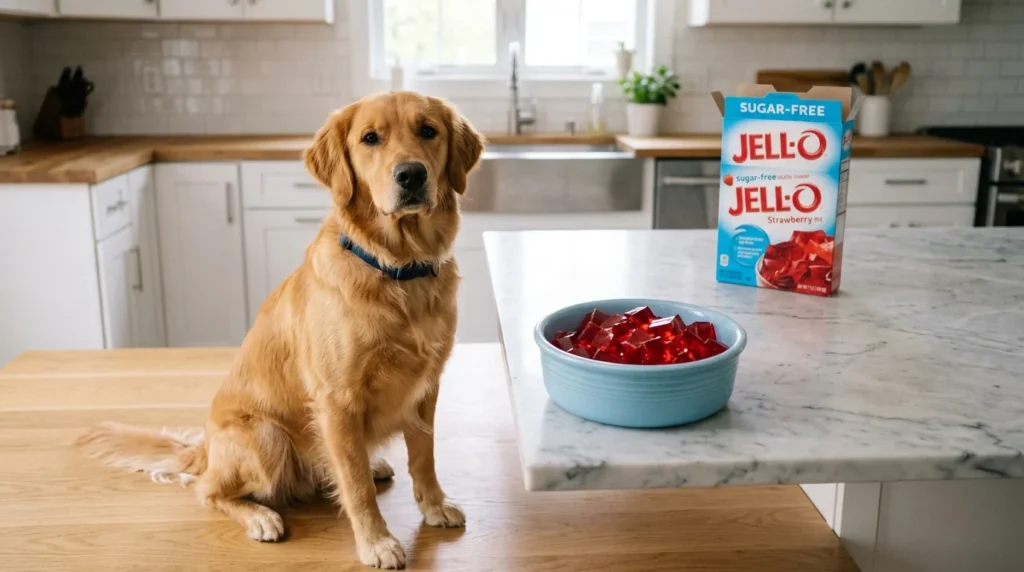
Sugar-free jello requires extra caution because some products contain artificial sweeteners. Xylitol is particularly dangerous for dogs and can cause a rapid drop in blood sugar and potentially serious liver problems.
Never give your dog sugar-free jello without checking the complete ingredient list. If your dog has eaten a product containing xylitol, contact a veterinarian immediately.
Can Dogs Eat Strawberry Jello?
Strawberry-flavored jello may contain sugar, artificial flavors, colors, and other additives. A small amount may not be harmful if the product contains no dangerous ingredients, but it provides little nutritional value.
Fresh strawberries are generally a better option for dogs when served in moderation and prepared properly. Remove any spoiled fruit and serve only small portions.
Can Dogs Eat Grape Jello?
Grape-flavored jello deserves caution because grapes and raisins are associated with serious kidney problems in dogs. Artificial grape flavoring is not necessarily the same as whole grapes, but product ingredients can vary.
Avoid giving dogs jello containing actual grapes or raisins. If your dog has eaten a product containing real grapes or raisins, contact a veterinarian promptly.
Can Dogs Eat Orange Jello?
Orange-flavored jello is generally not a nutritious choice for dogs. It commonly contains sugar, artificial flavors, coloring agents, and other additives.
A small accidental amount of ingredient-safe orange jello is unlikely to cause serious harm in most healthy dogs, but plain dog-safe foods are a better choice.
Can Dogs Eat Cherry Jello?
Cherry jello can contain significant amounts of sugar and artificial flavoring. Some products may also contain additional sweeteners or additives that dogs should avoid.
A tiny amount of ingredient-safe cherry jello may not cause serious problems, but it should not be offered as a routine treat. Fresh dog-safe fruit is generally a better alternative.
Can Dogs Eat Jello Shots?
No. Jello shots are not appropriate for dogs because they commonly contain alcohol. Alcohol can be toxic to dogs and may cause dangerous effects.
If your dog consumes a jello shot or another alcoholic dessert, contact a veterinarian immediately. Keep alcoholic foods and drinks completely out of your dog’s reach.
Can Dogs Eat Jello Gelatin?
Plain, unflavored gelatin without added sugar or unsafe ingredients can generally be tolerated by dogs in small amounts. Gelatin is a protein derived from collagen.
Flavored gelatin desserts are different because they can contain sugar, artificial ingredients, and potentially dangerous sweeteners. Always check the label before giving gelatin to your dog.
Can Dogs Eat Unflavored Jello?
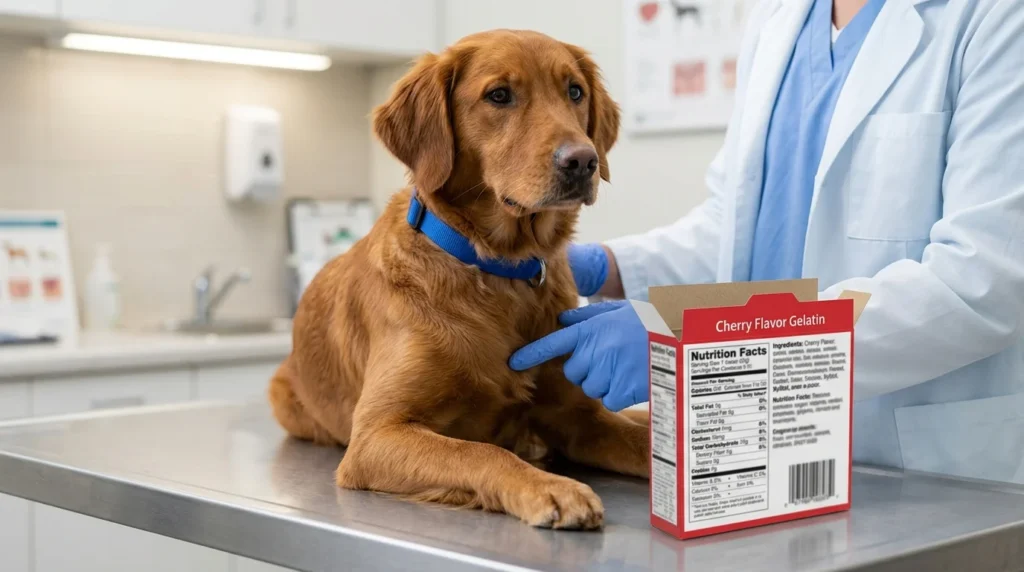
Unflavored gelatin prepared without sugar, xylitol, or other unsafe ingredients is generally a better choice than regular flavored jello.
Even plain gelatin should only be offered in moderation. Dogs do not need gelatin desserts to meet their nutritional requirements, and their primary diet should remain complete and balanced.
Can Dogs Eat Homemade Jello?
Homemade jello can be safer than commercial jello when you control every ingredient. Plain gelatin can be mixed with water and small amounts of dog-safe fruit.
Do not add xylitol, chocolate, grapes, raisins, alcohol, onion, garlic, or excessive sugar. Keep homemade gelatin treats simple and serve small portions.
Can Puppies Eat Jello?
Puppies should generally not be given regular human jello. Sugary desserts provide little nutritional value, while sugar-free products may contain potentially dangerous sweeteners.
Puppies need carefully balanced nutrition for proper growth and development. If you want to give a puppy a treat, choose an age-appropriate dog treat or another known dog-safe food.
Can Small Dogs Eat Jello?
Small dogs may tolerate a tiny amount of regular jello if it contains no dangerous ingredients, but portion size is especially important because even a small dessert can provide a significant amount of sugar and calories.
It is better to avoid routine jello treats and choose simple dog-safe foods instead. Never give sugar-free jello without checking its ingredients.
See Also: Can Dogs Eat Sesame Seeds? Benefits, Risks & Safe Amount
Can Large Dogs Eat Jello?
Large dogs may tolerate a small amount of regular jello without serious effects if it contains no dangerous ingredients. However, being larger does not make sugary desserts healthy.
Large dogs can still experience digestive upset from excessive sugar or serious poisoning from toxic sweeteners. Always check the ingredient list first.
Can Dogs Eat Jello Every Day?
Jello should not be a daily treat for dogs. Regular jello usually contains sugar and provides little nutritional value, while sugar-free versions may contain potentially dangerous sweeteners.
Your dog’s daily calories should primarily come from complete and balanced food. Treats should remain a small part of the overall diet.
Is Jello Good for Dogs?
Regular human jello is not particularly good for dogs. Although gelatin itself contains protein, most commercial jello desserts contain sugar, artificial flavors, colors, or sweeteners.
Plain, unsweetened gelatin without unsafe additives is a better option if you want to offer a gelatin-based treat. Even then, it should only be an occasional addition.
Does Jello Have Any Benefits for Dogs?
Gelatin contains amino acids and collagen-derived protein, but ordinary jello is not a reliable way to provide these nutrients. Most commercial jello contains added sugar or other unnecessary ingredients.
A complete and balanced dog food already provides the nutrients dogs need. Jello is therefore unnecessary and should not be used as a nutritional supplement without veterinary advice.
Can Dogs Eat Jello With Fruit?
Some fruits are safe for dogs in moderation, but fruit-flavored jello often contains added sugar and artificial ingredients. Plain fresh fruit is usually a better option than sweetened jello.
If making homemade gelatin treats, use small amounts of dog-safe fruit and remove seeds, pits, stems, and other unsafe parts. Avoid grapes and raisins completely.
Can Dogs Eat Jello With Yogurt?
Some dogs can tolerate small amounts of plain, unsweetened yogurt, but mixing it with sugary jello is unnecessary. Dairy can also cause digestive upset in dogs that are sensitive to lactose.
If you make a homemade gelatin treat, use plain yogurt only if your dog tolerates it and make sure it contains no added sugar or xylitol.
Can Dogs Eat Jello With Peanut Butter?
Jello mixed with peanut butter is not a good regular treat for dogs. Jello can contain sugar, while peanut butter is high in calories and fat.
If you use peanut butter in a dog treat, check that it contains no xylitol, chocolate, or excessive salt. A simple dog-safe treat is a better choice.
Can Dogs Eat Jello With Chocolate?
No. Dogs should not eat jello containing chocolate. Chocolate contains theobromine and caffeine, which can be toxic to dogs.
If your dog eats chocolate-containing jello, contact a veterinarian promptly. The level of risk depends on the type and amount of chocolate and the dog’s size.
Can Dogs Eat Jello With Grapes?
No. Dogs should not be given jello containing actual grapes or raisins. These foods can cause serious kidney problems in dogs.
If your dog has eaten a product containing grapes or raisins, contact a veterinarian as soon as possible rather than waiting for symptoms.
What Happens If a Dog Eats Jello?
The effects depend on the ingredients and amount consumed. A small amount of regular jello may cause no symptoms or mild digestive upset.
The situation is much more serious if the jello contains xylitol, chocolate, alcohol, grapes, raisins, or another toxic ingredient. Check the package immediately if your dog eats jello.
See Also: Can Dogs Eat Red Peppers? Benefits, Risks & Safe Portions
What Happens If a Dog Eats Jello With Xylitol?
Xylitol can cause a rapid drop in blood sugar in dogs and may also lead to serious liver injury. Possible signs include weakness, vomiting, loss of coordination, tremors, collapse, and seizures.
If your dog has consumed jello containing xylitol, seek emergency veterinary care immediately. Do not wait for symptoms to appear.
How Much Jello Can a Dog Eat?
There is no nutritional requirement for dogs to eat jello. If a healthy dog accidentally eats a small amount of regular jello without dangerous ingredients, it will often be fine.
If you intentionally offer plain gelatin, keep the portion very small and use only ingredients known to be safe. Jello should never replace complete and balanced dog food.
What Are the Risks of Jello for Dogs?
The main risks include excessive sugar, unsafe sweeteners, and toxic ingredients. Regular jello can add unnecessary calories, while some sugar-free products may contain xylitol.
Other jello desserts may contain chocolate, alcohol, grapes, raisins, or other harmful ingredients. Always check the ingredient label before sharing human jello with your dog.
When Should You Contact a Veterinarian?
Contact a veterinarian immediately if your dog eats jello containing xylitol, chocolate, alcohol, grapes, or raisins. These ingredients can cause serious health problems.
You should also seek veterinary advice if your dog develops repeated vomiting, severe diarrhea, weakness, tremors, seizures, collapse, or other unusual symptoms.
Frequently Asked Questions
Can dogs eat regular jello?
A small amount of regular jello without toxic ingredients may not harm a healthy dog, but it is high in sugar and has little nutritional value. It is best avoided as a routine treat.
Can dogs eat sugar-free jello?
Check the ingredients carefully before giving sugar-free jello to a dog. Some products may contain xylitol, which can be extremely dangerous.
Can dogs eat plain gelatin?
Plain, unflavored gelatin without unsafe additives can generally be given in small amounts. It is a better option than sugary flavored jello.
What should I do if my dog eats jello with xylitol?
Contact a veterinarian immediately. Xylitol poisoning can cause dangerously low blood sugar and potentially serious liver problems.
Is homemade jello safe for dogs?
Homemade gelatin treats can be safer when made with plain gelatin and dog-safe ingredients. Avoid sugar, xylitol, chocolate, grapes, raisins, and alcohol.
Conclusion
Dogs generally do not need jello, and regular human jello is best avoided as a routine treat. Its sugar content provides little nutritional value, while sugar-free varieties can be dangerous if they contain xylitol.
Plain gelatin without unsafe ingredients can be a better occasional option. Always check the ingredients before giving your dog jello, and contact a veterinarian immediately if the product contains xylitol or another toxic ingredient.
See Also: Can Dogs Eat Apple Cores? Risks, Seeds & Safe Apple Tips


