

Can Dogs Eat Tomatoes? Safety Guide 2026
Tomatoes can be safe for dogs in certain circumstances, but not every part of the tomato plant is equally safe. A small amount of a ripe, red tomato is generally considered safe for most healthy dogs when served plain and in moderation. However, the green parts of the plant, including the stems and leaves, contain higher levels of compounds that can be harmful to dogs.
How the tomato is prepared also matters. Plain ripe tomato is very different from tomato sauce, canned tomatoes, salsa, ketchup, or other processed tomato products, which may contain ingredients such as onion, garlic, excessive salt, sugar, or spices.
Can Dogs Eat Tomatoes?
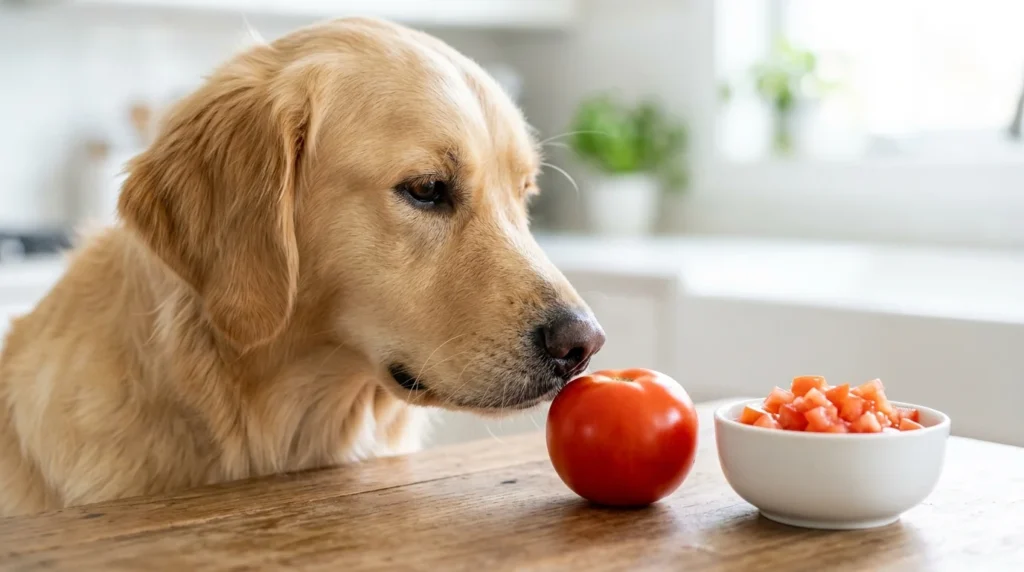
Yes, dogs can generally eat small amounts of ripe, red tomatoes. Ripe tomatoes contain nutrients such as vitamin C, vitamin K, potassium, and antioxidants. When offered occasionally as a treat, plain ripe tomato can be a safe addition to many dogs’ diets.
However, dogs should not be allowed to eat the green parts of the tomato plant. The stems and leaves contain higher concentrations of tomatine, a naturally occurring compound that can cause problems if consumed in sufficient amounts.
Can Dogs Eat Ripe Tomatoes?
Ripe red tomatoes are generally safe for dogs in small amounts. The tomato should be washed thoroughly and served plain, without salt, spices, sauces, or other seasonings.
It is best to remove the stem and leaves before giving tomato to your dog. Cut the tomato into small, manageable pieces to reduce the risk of choking, especially for small dogs.
Can Dogs Eat Raw Tomatoes?
Dogs can generally eat small pieces of ripe raw tomato. Raw ripe tomato does not need to be cooked before serving, provided it is fresh, properly washed, and free from the green parts of the plant.
Introduce it gradually if your dog has never eaten tomato before. Some dogs may develop mild digestive upset after eating new foods, so start with a small amount and monitor your dog’s reaction.
Can Dogs Eat Cooked Tomatoes?
Plain cooked ripe tomatoes can generally be eaten by dogs in moderation. Cooking itself does not make ripe tomato dangerous, but the ingredients added during cooking can change whether the food is appropriate for dogs.
Avoid cooked tomatoes prepared with onion, garlic, excessive salt, chili, or rich sauces. A small amount of plain cooked tomato is a much safer option than seasoned human dishes.
Can Dogs Eat Cherry Tomatoes?
Dogs can generally eat ripe cherry tomatoes in small quantities. Because cherry tomatoes are small and round, however, they should be cut into appropriate pieces before being offered to smaller dogs.
Always remove any green stem or leaves attached to the tomato. Wash the tomatoes thoroughly and serve them plain rather than mixed with sauces, salt, or seasonings.
Can Dogs Eat Green Tomatoes?
Green, unripe tomatoes are not the same as ripe red tomatoes. They contain higher levels of tomatine, so dogs should not be encouraged to eat large amounts of unripe green tomatoes.
If your dog accidentally eats a small piece of an unripe tomato, monitor them closely. If they consume a large amount or develop vomiting, diarrhea, weakness, drooling, or other concerning symptoms, contact a veterinarian.
Can Dogs Eat Tomato Leaves?
Dogs should not eat tomato leaves. The leaves are part of the tomato plant and contain higher concentrations of tomatine than ripe red tomato fruit.
Keep tomato plants in a location your dog cannot access. If your dog has eaten a significant amount of tomato leaves, contact your veterinarian and explain approximately how much was consumed.
Can Dogs Eat Tomato Stems?
Tomato stems should not be given to dogs. Like the leaves, the stems contain higher concentrations of tomatine than ripe tomato fruit.
Remove the stem completely before giving tomato to your dog. If your dog chews or consumes part of a tomato plant, monitor them and seek veterinary advice if a significant amount was eaten or symptoms develop.
Can Dogs Eat Tomato Plants?
Dogs should not be allowed to chew on tomato plants. The leaves and stems contain higher levels of tomatine than ripe tomato fruit and can cause illness when consumed in sufficient quantities.
If you grow tomatoes at home, consider fencing off the plants or otherwise preventing your dog from accessing them. This is especially important for puppies and dogs that like to chew plants.
Can Dogs Eat Tomato Seeds?
The seeds inside a ripe tomato are generally not considered a major danger to dogs when consumed as part of a small amount of ripe tomato. You do not usually need to remove every seed before giving your dog a small piece.
The more important concern is avoiding the green parts of the tomato plant and large amounts of unripe tomato. Wash and prepare ripe tomatoes properly before offering them.
Can Dogs Eat Tomato Skin?
Tomato skin from a ripe, properly washed tomato is generally safe for dogs. There is no need to peel a ripe tomato before giving a small amount to most healthy dogs.
However, wash the tomato thoroughly to remove dirt and possible residues. Remove the stem and any leaves before serving.
See Also: Can Dogs Eat Grass? Safety, Reasons & Potential Risks
Can Dogs Eat Canned Tomatoes?
Plain canned tomatoes may sometimes be tolerated, but they are not the best choice for dogs because canned products can contain added salt or other ingredients. Always check the ingredient list carefully.
Avoid canned tomato products containing onion, garlic, spicy seasonings, sauces, or excessive sodium. Plain fresh ripe tomato is generally a simpler option when you want to share tomato with your dog.
Can Dogs Eat Tomato Sauce?
Most tomato sauces made for people are not ideal for dogs. They commonly contain onion, garlic, salt, sugar, herbs, spices, and other ingredients that may be unsuitable or harmful to dogs.
If you want to give your dog tomato, plain ripe tomato is a safer choice. Do not assume that removing visible pieces of onion or garlic makes a prepared sauce safe, because these ingredients may already be distributed throughout it.
Can Dogs Eat Tomato Paste?
Tomato paste itself is not necessarily toxic when it consists only of tomatoes, but commercial tomato paste can be concentrated and may contain added salt or other ingredients. It is also easy to give more than intended because it is highly concentrated.
Check the label carefully and avoid products containing onion, garlic, excessive sodium, or spices. Plain fresh tomato is usually a more appropriate treat.
Can Dogs Eat Ketchup?
Ketchup is generally not recommended for dogs. It can contain significant amounts of sugar and salt, and some varieties may contain onion powder, garlic powder, or other seasonings.
A small accidental lick is unlikely to cause serious problems in most healthy dogs, but ketchup should not become a regular treat. Plain ripe tomato is a much better choice.
Can Dogs Eat Salsa?
Dogs should not be given ordinary salsa. Salsa commonly contains onion, garlic, chili peppers, salt, and other ingredients that can cause digestive irritation or pose more serious risks.
Even mild salsa may contain ingredients that are inappropriate for dogs. If your dog wants tomato, offer a small piece of plain ripe tomato instead.
Can Dogs Eat Tomato Soup?
Most tomato soup made for humans is not a suitable food for dogs. It may contain onion, garlic, salt, cream, butter, spices, or other ingredients that can cause problems.
Plain tomato without these additions is a safer alternative. If your dog consumes a large amount of tomato soup, check the ingredients and contact your veterinarian if it contains potentially harmful ingredients.
Can Puppies Eat Tomatoes?
Puppies can generally eat a small piece of ripe red tomato, but introducing new foods should be done gradually. Puppies have specific nutritional requirements, so treats should never replace their complete and balanced puppy food.
Keep puppies away from tomato plants, leaves, stems, and large amounts of unripe green tomatoes. Their curiosity and chewing behavior can increase the risk of plant exposure.
Can Small Dogs Eat Tomatoes?
Small dogs can generally eat ripe tomato in moderation, but portion size is especially important. A whole cherry tomato can be difficult for some small dogs to chew safely.
Cut tomato into small pieces that are appropriate for your dog’s size. Start with a tiny amount and monitor for digestive upset before offering it again.
Can Dogs Eat Tomatoes Every Day?
Dogs do not need to eat tomatoes every day. Although ripe tomatoes contain useful nutrients, they should be considered an occasional treat rather than a necessary part of a dog’s diet.
If you regularly add human foods to your dog’s meals, keep portions controlled so they do not replace the complete and balanced nutrition provided by the main diet.
How Much Tomato Can Dogs Eat?
The appropriate amount depends on your dog’s size, overall diet, health, and tolerance of new foods. Start with a small piece of ripe tomato rather than giving a large serving.
| Dog Size | Suggested Starting Amount |
|---|---|
| Small dogs | 1–2 small pieces |
| Medium dogs | 2–4 small pieces |
| Large dogs | A few more small pieces |
| Puppies | A tiny piece to test tolerance |
These are general starting amounts rather than strict serving requirements. Treats and extra foods should remain a small part of your dog’s overall diet.
What Are the Benefits of Tomatoes for Dogs?
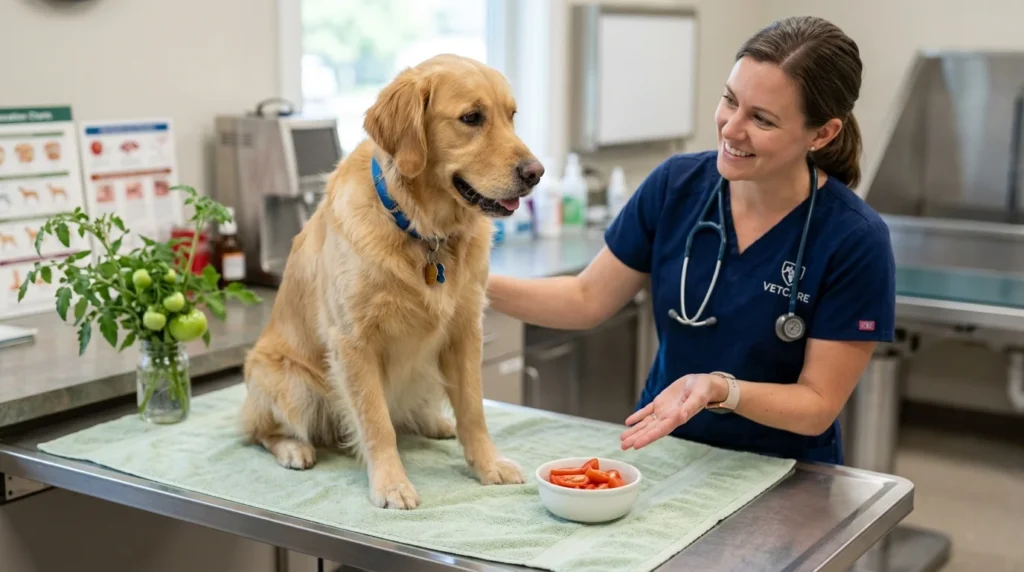
Ripe tomatoes contain nutrients including vitamin C, vitamin K, potassium, and antioxidants such as lycopene. These nutrients can contribute to a dog’s overall nutritional intake when tomato is offered as a small part of an otherwise balanced diet.
However, dogs do not need tomatoes to meet their nutritional requirements. A complete and balanced dog food should remain the primary source of nutrition, while tomato can be used occasionally for variety.
What Are the Risks of Tomatoes for Dogs?
The main concern is the difference between ripe tomato fruit and the green parts of the tomato plant. Leaves and stems contain higher concentrations of tomatine, while unripe green tomatoes also contain more than ripe red tomatoes.
Another risk comes from tomato-based human foods. Sauces, ketchup, salsa, and soups can contain onion, garlic, salt, sugar, and spices. These added ingredients can be more concerning than the ripe tomato itself.
What Happens If a Dog Eats a Tomato Plant?
If a dog eats part of a tomato plant, the potential risk depends on which part was eaten and how much was consumed. Leaves and stems contain higher levels of tomatine than ripe tomato fruit.
Watch for vomiting, diarrhea, drooling, weakness, loss of appetite, or unusual behavior. If your dog consumed a significant amount of the plant, contact your veterinarian for guidance..
See Also: Can Dogs Eat Beef Jerky? Safety, Risks & Tips
What Should You Do If Your Dog Eats Green Tomatoes?
If your dog eats a small piece of green tomato, monitor them closely and prevent further access. A larger amount may be more concerning because unripe tomatoes contain more tomatine.
Contact your veterinarian if your dog consumes a significant quantity or develops vomiting, diarrhea, weakness, excessive drooling, abnormal heart-related signs, or other unusual symptoms.
Can Dogs Be Allergic to Tomatoes?
Food allergies to tomatoes are possible but are not considered common in dogs. A dog with a sensitivity may develop itching, skin irritation, digestive upset, or other symptoms after eating a particular food.
If you notice a consistent reaction whenever your dog eats tomato, stop offering it and discuss the symptoms with your veterinarian. Do not repeatedly expose your dog to a food that appears to cause a reaction.
Conclusion
Ripe red tomatoes can generally be given to dogs in small amounts when they are washed, plain, and properly prepared. They can provide nutrients such as vitamin C, vitamin K, potassium, and antioxidants, but they are not necessary for a complete canine diet.
The most important rule is to keep dogs away from tomato leaves, stems, and large amounts of unripe green tomatoes. Tomato sauces, ketchup, salsa, and soups should also be avoided because they often contain onion, garlic, salt, sugar, and spices.
Frequently Asked Questions
Can dogs eat tomatoes?
Yes. Most healthy dogs can eat small amounts of ripe, red tomato as an occasional treat. The tomato should be washed, plain, and free from stems and leaves.
Can dogs eat green tomatoes?
Dogs should not eat large amounts of unripe green tomatoes because they contain more tomatine than ripe red tomatoes. A small accidental piece may not cause a serious problem, but significant consumption warrants veterinary advice.
Can dogs eat tomato leaves and stems?
No. Tomato leaves and stems contain higher concentrations of tomatine and should be kept away from dogs. Contact your veterinarian if your dog consumes a significant amount.
Can dogs eat cherry tomatoes?
Yes, ripe cherry tomatoes can generally be given in small amounts. Cut them into suitable pieces for your dog and remove any attached green stems or leaves.
Can dogs eat tomato sauce?
Most tomato sauces are not recommended because they commonly contain onion, garlic, salt, spices, or other ingredients that can be harmful or unsuitable for dogs. Plain ripe tomato is a better choice.
Conclusion
Dogs can generally eat small amounts of ripe, red tomatoes when they are washed, served plain, and prepared without harmful ingredients. Tomatoes can provide nutrients such as vitamin C, vitamin K, potassium, and antioxidants, although they are not essential to a dog’s diet.
The most important distinction is between the ripe tomato fruit and the rest of the plant. Keep dogs away from tomato leaves, stems, and large amounts of unripe green tomatoes because these parts contain higher levels of tomatine.
It is also best to avoid processed tomato products such as ketchup, salsa, pasta sauce, and tomato soup when they contain onion, garlic, excessive salt, sugar, or spices. For a simple dog-safe option, stick to small pieces of plain ripe tomato and serve them in moderation.


