
Can Dogs Eat Corn Cobs? Risks, Blockage & Safe Corn Tips
Dogs can eat plain corn kernels in moderation, but corn cobs are a different matter. Dogs should not eat or chew on corn cobs because the cob is difficult to digest and can become a choking hazard or cause an intestinal blockage if swallowed. Even when a dog seems to chew the cob thoroughly, pieces can break off and become trapped in the digestive tract.
If your dog enjoys corn, the safer option is to remove the kernels from the cob and serve a small amount of plain, cooked corn. Avoid corn prepared with butter, salt, spices, onion, garlic, or other ingredients that may be unsuitable for dogs. Understanding the difference between corn kernels and corn cobs can help prevent an avoidable emergency.
Can Dogs Eat Corn Cobs?
No, dogs should not eat corn cobs. Unlike the soft kernels, the cob is fibrous, hard, and difficult for a dog’s digestive system to break down. A dog may chew pieces from the cob and swallow them without the owner realizing it.
The biggest concern is an intestinal obstruction. A swallowed cob or large piece may become lodged in the stomach or intestines and prevent food and waste from passing normally. This can become a serious medical emergency requiring veterinary treatment.
Can Dogs Chew on Corn Cobs?
It is not safe to let dogs chew on corn cobs. Even if your dog does not swallow the entire cob, chewing can break it into smaller pieces that may be swallowed. Those pieces can still create a choking hazard or intestinal blockage.
Dogs that are enthusiastic chewers may be particularly likely to swallow pieces of the cob. Once the corn kernels have been removed, throw the cob away somewhere your dog cannot access it rather than using it as a chew toy.
Can Dogs Eat Corn on the Cob?
No. Corn on the cob should not be offered to dogs. The kernels themselves can be safe when plain and properly prepared, but leaving them attached to the cob creates a significant risk of your dog biting off and swallowing pieces of the cob.
If you want to share corn with your dog, remove the kernels from the cob first. Serve a small portion of plain kernels separately and keep the cob out of your dog’s reach.
Can Dogs Eat Corn Kernels?
Yes, plain corn kernels can generally be eaten by dogs in moderation. Cooked corn provides carbohydrates, fiber, and several nutrients and can be an occasional addition to a dog’s regular food.
Remove the kernels completely from the cob before serving. Avoid canned corn containing excessive sodium and avoid corn covered in butter, salt, sauces, or seasonings. Plain cooked kernels are the simplest option.
Can Dogs Eat Cooked Corn?
Dogs can generally eat plain cooked corn kernels. Cooking makes the kernels easier for many dogs to chew and digest, provided the corn is served without harmful additions.
Steam or boil the kernels without adding salt, butter, garlic, onion, chili, or heavy seasoning. Allow the corn to cool before serving and give only a small portion as an occasional treat.
Can Dogs Eat Raw Corn?
Raw corn kernels are not considered toxic to dogs, but they may be harder to digest than cooked kernels. More importantly, raw corn is often eaten directly from the cob, which creates the major obstruction risk.
If you want to give your dog corn, removing the kernels from the cob and cooking them plainly is a safer approach. Always keep the whole cob away from your dog.
How Much Corn Can Dogs Eat?
The amount of corn a dog can safely eat depends on their size, overall diet, calorie needs, and individual tolerance. Corn should be an occasional treat or food topper rather than a major part of the diet.
Start with a small amount when introducing corn. Too much can add unnecessary calories and fiber and may cause gas, loose stools, or other digestive discomfort.
| Dog Size | Suggested Starting Portion |
|---|---|
| Small Dogs | 1–2 teaspoons of kernels |
| Medium Dogs | 1–2 tablespoons of kernels |
| Large Dogs | 2–4 tablespoons of kernels |
| Puppies | A very small amount when appropriate |
Can Puppies Eat Corn Cobs?
No. Puppies should not chew or eat corn cobs. Their smaller digestive tracts make swallowed foreign objects particularly concerning, and puppies may be more likely to chew and swallow pieces of unfamiliar foods.
If you want to introduce corn to a puppy, use a tiny amount of plain, cooked kernels removed completely from the cob. Their primary nutrition should continue to come from complete and balanced puppy food.
Can Dogs Eat Corn Cobs Every Day?
No. Corn cobs should never be part of a dog’s daily diet or used as a chew. The cob has little nutritional value for dogs and carries a significant risk of choking or intestinal obstruction.
Plain corn kernels can occasionally be offered in small portions, but dogs do not need corn to maintain a balanced diet. Treats and extras should remain limited so they do not displace nutritionally complete food.
Can Dogs Eat Corn Cobs With Butter?
No. Corn cobs with butter are particularly unsuitable for dogs because they combine the physical danger of the cob with a high-fat topping. Butter adds unnecessary calories and may contribute to digestive upset.
If you want to share corn, remove the kernels from the cob and serve them plain. Avoid butter, salt, garlic, onion, chili, and other seasonings commonly added to corn prepared for people.
Can Dogs Eat Corn Cobs With Salt?
Corn cobs with salt should not be given to dogs. The cob itself is the main concern because it can cause obstruction, while excessive salt is also unnecessary and potentially harmful when consumed in large amounts.
Prepare a separate plain portion of corn for your dog instead. Remove the kernels from the cob completely and avoid adding salt or other seasonings.
What Happens If a Dog Eats a Corn Cob?
Swallowing a corn cob can lead to a gastrointestinal obstruction. Some dogs may initially appear normal, while symptoms develop later as the cob moves through the digestive tract. This is why a known cob ingestion should be taken seriously.
Possible warning signs include vomiting, loss of appetite, abdominal pain, lethargy, diarrhea, constipation, difficulty passing stool, or repeated attempts to vomit. If your dog has swallowed a corn cob or a large piece of one, contact your veterinarian promptly.
What Should You Do If Your Dog Swallows a Corn Cob?
If you know or strongly suspect that your dog swallowed a corn cob, contact your veterinarian as soon as possible. Do not wait for symptoms to appear because an obstruction can become more difficult to treat once complications develop.
Do not attempt to make your dog vomit unless your veterinarian specifically instructs you to do so. Tell the veterinarian approximately how much of the cob was swallowed, when it happened, and your dog’s size and age.
How to Safely Share Corn With Your Dog
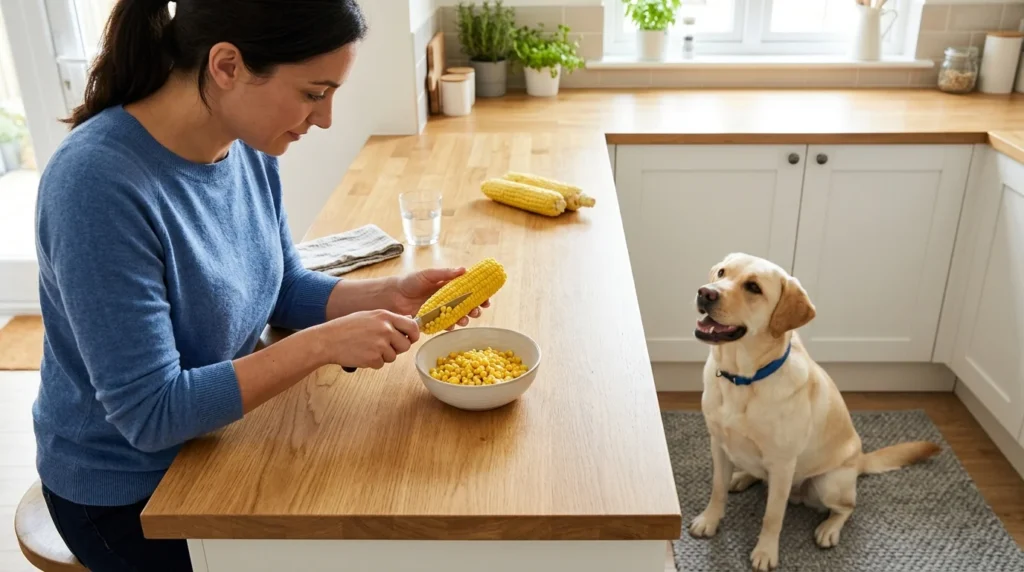
If you want to give your dog corn, always remove the kernels from the cob first. Plain, cooked corn kernels can be offered in a small portion as an occasional treat or food topper. Make sure the kernels have cooled before serving.
Avoid butter, excessive salt, garlic, onion, chili, sauces, and other seasonings. Most importantly, discard the cob immediately after removing the kernels and keep it somewhere your dog cannot reach.
Is Corn Good for Dogs to Eat?
Plain corn kernels can provide carbohydrates, fiber, and some vitamins and minerals. When served in small portions, they can be a perfectly reasonable occasional treat for many healthy dogs.
However, corn is not necessary if your dog already eats a complete and balanced diet. The nutritional value of corn does not make the cob safe to eat. The cob should always be treated as a foreign object rather than a food.
See ALso: Can Dogs Eat Chia Seeds? Benefits, Risks & Safe Amount
Does Corn Have Any Benefits for Dogs?
Corn kernels contain carbohydrates that provide energy and some dietary fiber that can contribute to normal digestion. They also contain nutrients such as B vitamins and minerals.
These benefits apply to the edible kernels, not the cob. Dogs can obtain these nutrients from many balanced foods, so corn should remain an optional occasional treat rather than a nutritional requirement.
Does Corn Have Any Risks for Dogs?
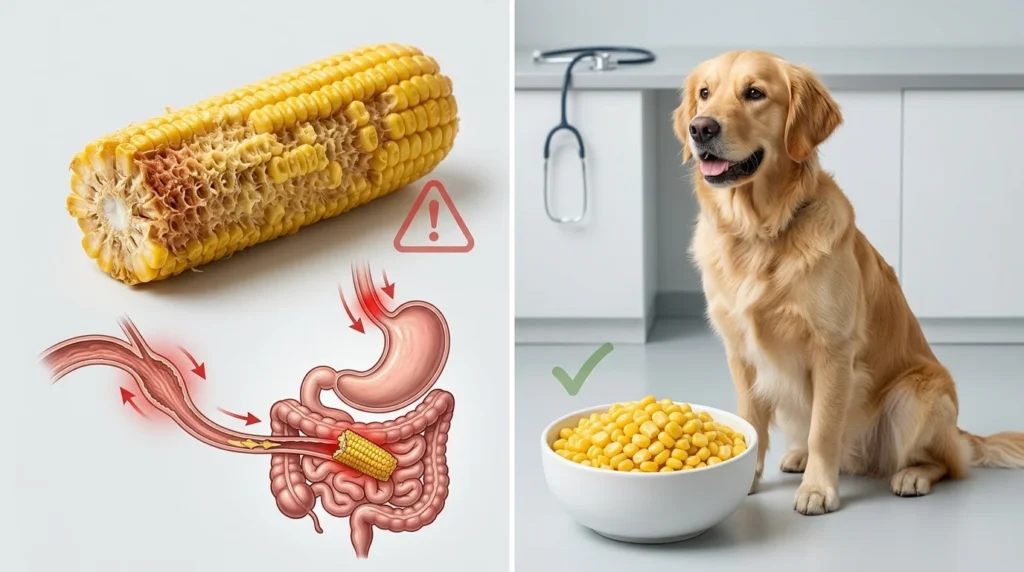
Plain corn kernels are generally safe for most dogs when served in moderation, but eating too much can cause gas, diarrhea, or stomach discomfort. Corn prepared with rich ingredients can also contain excessive fat, sodium, or calories.
The biggest risk comes from the cob. Corn cobs are difficult to digest and can become lodged in the digestive tract. This can result in a potentially serious intestinal obstruction that may require veterinary treatment.
Can Dogs Eat Corn Cobs From the Trash?
Dogs should never be allowed to eat discarded corn cobs from the trash. Even a partially eaten cob can contain enough remaining material to create a choking or obstruction risk.
Use a secure trash container that your dog cannot open. This is especially important after barbecues, picnics, or family meals when discarded corn cobs may be easily accessible.
Can Dogs Eat Corn Cobs From a BBQ?
No. Barbecued corn cobs should not be given to dogs. Besides the physical danger of the cob, barbecue corn may be coated with butter, salt, spices, sauces, or other ingredients that are unsuitable for dogs.
Remove the kernels from a plain portion before seasoning the food for people. Keep the cooked cob away from your dog throughout the meal and dispose of it securely afterward.
Can Dogs Eat Corn Cobs From Canned Corn?
Canned corn should never be offered on the cob, and canned corn products may contain added sodium. If you use canned corn as an occasional treat, choose plain kernels without added sauces or excessive salt.
Rinse plain canned kernels if appropriate and give only a small amount. Fresh or plain cooked corn is generally a simpler choice for dogs.
See Also: Can Dogs Eat Blueberries? Benefits, Safety & Feeding Guide 2026
What Are the Signs of a Corn Cob Blockage?
A dog with a gastrointestinal blockage may develop vomiting, loss of appetite, abdominal discomfort, lethargy, diarrhea, constipation, or difficulty passing stool. Some dogs may also become restless or show signs of pain.
Symptoms can vary and may not appear immediately after swallowing the cob. If your dog is known to have swallowed a corn cob, contact your veterinarian even if they currently seem normal.
How Is a Corn Cob Blockage Treated?
A veterinarian may use a physical examination and diagnostic imaging to determine whether a foreign object is causing an obstruction. The appropriate treatment depends on where the object is located and the dog’s condition.
Some foreign objects may require endoscopic removal or surgery. Early veterinary assessment can be important because a complete obstruction can damage the digestive tract and become life-threatening if left untreated.
Can Dogs Eat Corn Cob Husks?
Corn husks are also not a suitable food for dogs. They are fibrous and difficult to digest, and swallowing large pieces can potentially contribute to gastrointestinal problems or obstruction.
Keep the husks, cob, and other discarded parts of corn away from your dog. If your dog eats a large amount of husk or develops concerning symptoms, contact your veterinarian.
What Should You Do If Your Dog Eats Corn?
If your dog eats a small amount of plain corn kernels, they will usually tolerate it well. Monitor them for gas, diarrhea, vomiting, or other signs of digestive upset, particularly if corn is new to their diet.
If your dog eats the cob, husk, or a large amount of corn, contact your veterinarian for advice. A swallowed cob is much more concerning than eating a few plain kernels.
Frequently Asked Questions
Can dogs eat corn cobs?
No. Dogs should not eat corn cobs because they can cause choking or a potentially serious intestinal blockage.
Can dogs eat corn kernels?
Yes. Plain cooked corn kernels can generally be given to dogs in moderation. Always remove them completely from the cob.
What happens if my dog eats a corn cob?
A swallowed corn cob can become lodged in the digestive tract and cause an obstruction. Contact your veterinarian promptly, even if your dog initially appears normal.
Can puppies eat corn cobs?
No. Puppies should not chew or eat corn cobs. If appropriate, they can have a tiny amount of plain cooked corn kernels removed from the cob.
Can dogs eat corn on the cob with butter?
No. Corn on the cob is already dangerous because of the cob, and butter adds unnecessary fat and calories. Give only plain kernels removed from the cob.
Conclusion
Dogs should not eat or chew corn cobs. The cob is difficult to digest and can cause choking or an intestinal blockage if swallowed. The same concern applies to large pieces of corn husk.
Plain corn kernels, however, can generally be given in moderation when they are completely removed from the cob and served without butter, salt, garlic, onion, or other harmful seasonings. If your dog swallows a corn cob, contact your veterinarian promptly for guidance.
See Also: Can Dogs Eat Oranges? Peel, Juice, Seeds & Every Form Covered


