

Can Dogs Eat Grapefruit? Risks, Symptoms & Safe Fruits
Grapefruit is a citrus fruit packed with vitamin C, antioxidants, and other nutrients. While some fruits are safe for dogs in moderation, grapefruit is one that requires extra caution. Its acidic flesh, bitter taste, seeds, and thick peel can all make it a poor choice for your dog’s diet.
Dogs should generally avoid grapefruit. The flesh itself is not usually considered highly toxic in tiny amounts, but grapefruit can cause stomach irritation, vomiting, and diarrhea. The peel, seeds, and plant material are more concerning and should never be intentionally fed to dogs.
Can Dogs Eat Grapefruit?
It is best not to give grapefruit to dogs. Although a tiny amount of the peeled flesh may not cause serious problems in every healthy dog, grapefruit is acidic and can upset a dog’s digestive system.
There are also safer fruits available that provide nutrients without the same concerns. If you want to give your dog fruit, options such as blueberries, strawberries, or small amounts of seedless watermelon are generally better choices when appropriately prepared.
How Much Grapefruit Can Dogs Eat?
There is no recommended serving size for grapefruit because it is better avoided as a regular dog treat. If your dog accidentally eats a tiny piece of peeled flesh, monitor them for digestive symptoms.
Larger amounts are more likely to cause stomach upset. Grapefruit peel, seeds, and other plant parts should be kept away from your dog.
| Dog Size | Recommended Grapefruit Amount | Safer Alternative |
|---|---|---|
| Small Dogs | None | Small pieces of blueberries |
| Medium Dogs | None | Small pieces of strawberry |
| Large Dogs | None | Seedless watermelon pieces |
| Puppies | None | Age-appropriate dog treats |
Can Dogs Eat Grapefruit Flesh?
A tiny amount of peeled grapefruit flesh is unlikely to cause serious toxicity in most healthy dogs, but it is still not recommended as a regular treat. Grapefruit is highly acidic and may irritate your dog’s stomach.
If your dog accidentally eats a small piece, monitor for vomiting, diarrhea, excessive drooling, or changes in appetite. Avoid giving them additional grapefruit.
Can Dogs Eat Grapefruit Peel?
No, dogs should not eat grapefruit peel. The peel is thick and difficult to digest, and citrus peels contain concentrated plant compounds and essential oils that can irritate dogs.
A large piece of peel can also create a choking hazard or potentially contribute to an intestinal blockage. Always keep grapefruit peels away from your dog.
Can Dogs Eat Grapefruit Seeds?
Dogs should not intentionally eat grapefruit seeds. Seeds can be difficult to chew and may cause choking or digestive problems if swallowed in larger quantities.
When offering any dog-safe fruit, removing seeds, pits, stems, and other hard parts is an important safety precaution.
See Also: Can Dogs Eat Okra? Benefits, Risks & Safe Feeding Guide
Can Dogs Eat Pink Grapefruit?
Pink grapefruit should also be avoided. Although the color and variety differ from other grapefruit, it remains an acidic citrus fruit that can cause digestive irritation in some dogs.
If your dog accidentally eats a small amount of peeled pink grapefruit, monitor them for symptoms rather than offering more as a treat.
Can Dogs Eat Grapefruit Juice?
No, grapefruit juice is not recommended for dogs. Juice is acidic and can contain concentrated sugar without providing the fiber found in whole fruit.
Commercial grapefruit juice may also contain added sugar, preservatives, or other ingredients that dogs do not need. Fresh water is always the best drink for dogs.
Can Puppies Eat Grapefruit?
Puppies should not be given grapefruit. Their digestive systems are still developing, and acidic foods can cause stomach upset more easily.
Puppies should receive their nutrition from complete and balanced puppy food. If you want to introduce fruit as an occasional treat, choose a dog-safe fruit and offer a very small portion.
Can Dogs Eat Grapefruit Every Day?
No, dogs should not eat grapefruit every day. Grapefruit is not necessary for canine nutrition and may cause digestive problems because of its acidity.
Even dog-safe fruits should be given in moderation because treats and extras can add unnecessary calories to your dog’s daily diet.
What Happens If a Dog Eats Grapefruit?
A dog that eats grapefruit may develop vomiting, diarrhea, drooling, reduced appetite, or abdominal discomfort. The risk can be greater if the dog consumes peel or a large quantity of fruit.
If your dog eats a substantial amount of grapefruit, consumes the peel or other plant material, or develops severe or persistent symptoms, contact your veterinarian promptly for advice.
Is Grapefruit Good for Dogs to Eat?
Grapefruit is not considered a good fruit choice for dogs. Although it contains vitamin C and antioxidants, dogs generally do not need grapefruit to meet their nutritional requirements. Its high acidity can also irritate a dog’s digestive system.
There are many milder fruits that can provide nutritional variety with fewer concerns. When offering fruit, choose dog-safe options, remove seeds and pits, and keep portions small.
How to Safely Share Fruit With Your Dog

If you want to give your dog fruit, choose options that are known to be safe and prepare them properly. Wash the fruit, remove seeds, pits, stems, leaves, and tough skins when necessary, then cut the fruit into small pieces.
Introduce new fruits gradually and offer only small portions. Avoid fruit products containing added sugar, chocolate, artificial sweeteners such as xylitol, or other ingredients that may be harmful to dogs.
Does Grapefruit Have Benefits For Dogs?
Grapefruit contains vitamin C, antioxidants, water, and some dietary fiber. However, healthy dogs can obtain the nutrients they need from a complete and balanced diet, so grapefruit is not necessary for their health.
The potential nutritional benefits do not outweigh the possibility of digestive irritation for some dogs. Safer fruits can provide variety without the same acidity and peel-related concerns.
See Also: Can Dogs Eat White Rice? Benefits, Risks & Safe Guide
Does Grapefruit Have Any Risks For Dogs?
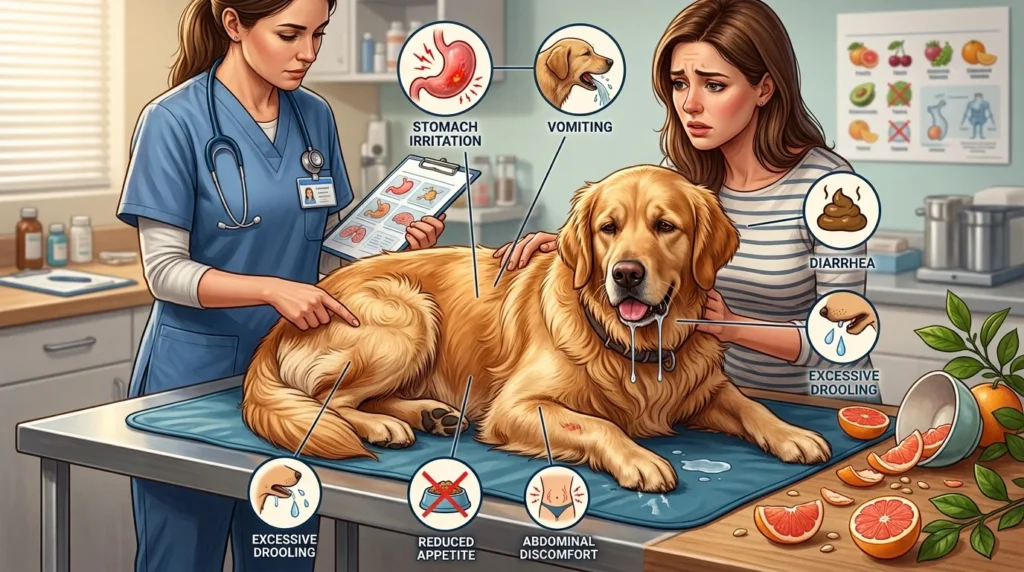
Yes. Grapefruit can cause digestive upset because of its acidity, particularly when a dog eats a larger amount. Possible symptoms include vomiting, diarrhea, drooling, abdominal discomfort, and reduced appetite.
The peel and other plant parts are more concerning because citrus peels contain concentrated essential oils and compounds that can irritate dogs. Large pieces of peel may also pose a choking or intestinal blockage risk.
What Should You Do If Your Dog Eats Grapefruit?
If your dog eats a small piece of peeled grapefruit flesh, monitor them for vomiting, diarrhea, drooling, or other unusual symptoms and make sure fresh water is available.
If your dog eats a large amount, consumes grapefruit peel or other plant material, or develops severe or persistent symptoms, contact your veterinarian promptly for guidance.
Frequently Asked Questions
Can dogs eat grapefruit?
It is best to avoid grapefruit. A tiny amount of peeled flesh may not cause serious problems in every dog, but the fruit can irritate the digestive system.
Can dogs eat grapefruit peel?
No. Grapefruit peel is difficult to digest and contains concentrated citrus compounds that may irritate dogs. Large pieces can also create a blockage risk.
Can dogs eat grapefruit seeds?
Dogs should not intentionally eat grapefruit seeds. Remove seeds before offering any fruit to your dog.
Can puppies eat grapefruit?
No. Grapefruit is not recommended for puppies because their developing digestive systems can be sensitive to acidic foods.
Can dogs drink grapefruit juice?
No. Grapefruit juice is acidic and may contain concentrated sugar or added ingredients. Fresh water is a much better drink for dogs.
Conclusion
Dogs should generally avoid grapefruit. While a tiny amount of peeled flesh may not cause serious problems in every healthy dog, grapefruit can cause digestive irritation and offers no nutritional benefit that dogs cannot obtain from their regular balanced diet.
Never intentionally feed grapefruit peel, seeds, or other plant material. If you want to share fruit with your dog, choose a safer option, prepare it properly, and keep the serving small.
See Also: Can Dogs Eat Lima Beans? Benefits, Risks & Safe Guide


