

Can Dogs Eat Arugula? Safety, Benefits & Risks
Yes, dogs can eat arugula in small amounts. Arugula is a leafy green vegetable that is generally safe for healthy dogs when it is fresh, washed thoroughly, and served plain. It contains nutrients such as vitamins A, C, and K, along with fiber and other plant compounds. However, arugula should be an occasional addition to your dog’s diet rather than a replacement for complete and balanced dog food.
Although plain arugula is generally safe, preparation matters. Dogs should not be given arugula mixed with onion, garlic, salty dressings, spicy sauces, or other ingredients that may be harmful to them. Because arugula has a naturally peppery flavor, some dogs may also dislike it or develop mild digestive upset after eating too much.
Is Arugula Safe for Dogs?
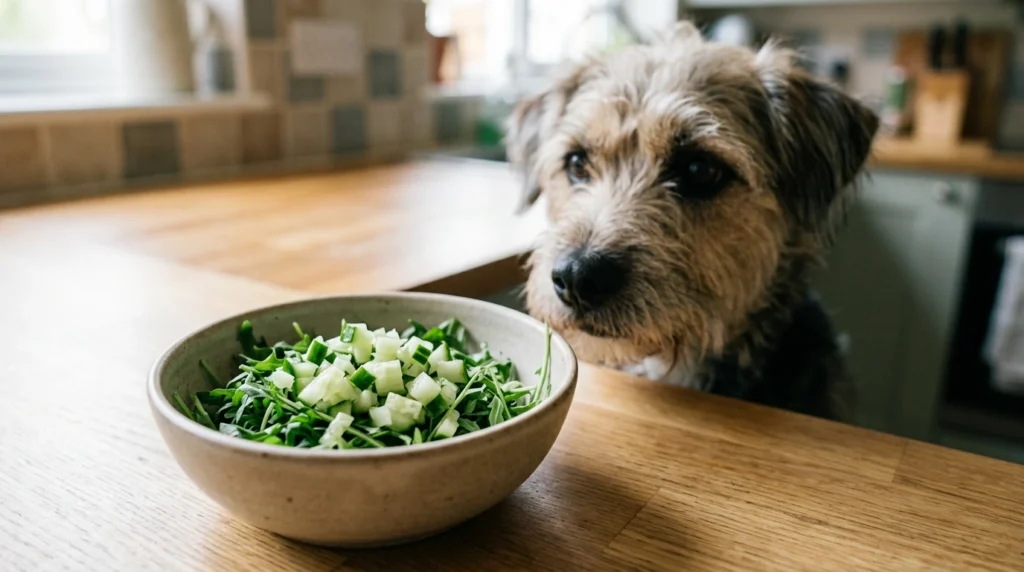
Plain arugula is generally safe for dogs when offered in moderation. You can give your dog a few fresh leaves as an occasional treat, provided the leaves are washed and free from seasonings, dressings, and other potentially harmful ingredients. For most healthy dogs, a small amount is unlikely to cause a problem.
As with any new food, it is best to introduce arugula gradually. A dog’s digestive system may react differently to vegetables, especially if the dog rarely eats leafy greens. Start with a small piece and observe your dog for signs such as loose stool, vomiting, gas, or stomach discomfort before offering more.
Can Dogs Eat Raw Arugula?
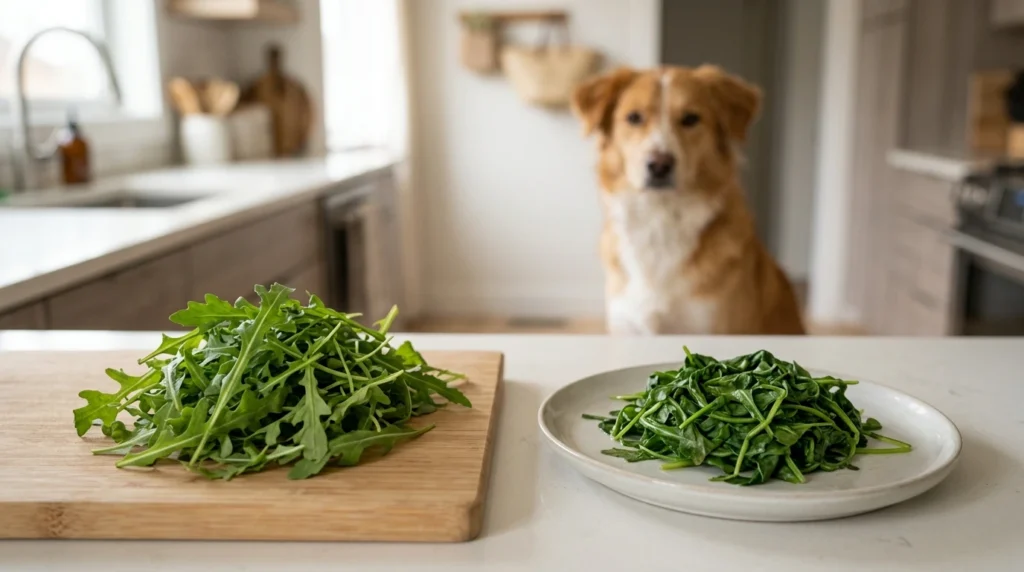
Dogs can eat raw arugula as long as it is properly washed and served plain. Raw leaves can be chopped into small pieces and mixed with a dog’s regular food or offered separately as a small snack. There is no need to add salt, oil, dressing, or seasoning.
Washing is particularly important because fresh leafy greens may carry dirt, bacteria, or traces of agricultural chemicals. Rinse the arugula thoroughly under clean running water before giving it to your dog. Remove wilted, spoiled, or contaminated leaves rather than serving them.
Can Dogs Eat Cooked Arugula?
Dogs can generally eat plain cooked arugula in small amounts. Light cooking can soften the leaves, which may make them easier for some dogs to chew and digest. If you cook arugula specifically for your dog, keep the preparation simple and avoid ingredients commonly used in human recipes.
Do not cook arugula with garlic, onions, chili, excessive salt, butter, or heavily seasoned sauces. These additions can make an otherwise dog-friendly leafy green unsuitable. Plain arugula that has been lightly cooked and cooled is a much better option.
Can Puppies Eat Arugula?
Puppies can potentially eat a very small amount of plain arugula, but they do not need leafy greens to meet their nutritional needs. Puppies require carefully balanced nutrition to support rapid growth and development, so a complete puppy food should remain the main part of their diet.
If you want to introduce arugula to a puppy, start with only a tiny piece of washed leaf. Watch for digestive changes afterward. Puppies can be more sensitive to sudden dietary changes, so avoid introducing several new foods at the same time. If your puppy develops persistent vomiting, diarrhea, weakness, or another concerning symptom, contact your veterinarian.
Can Small Dogs Eat Arugula?
Small dogs can eat arugula, but their portions should be much smaller than those given to larger dogs. A small piece or a few finely chopped leaves can be enough for a small dog to try. Giving a large handful of leafy greens can unnecessarily increase the risk of gas, loose stool, or other digestive discomfort.
Cutting the leaves into smaller pieces can also make them easier for small dogs to eat. Always introduce arugula gradually, especially if your dog has a sensitive stomach or does not normally eat vegetables.
Can Large Dogs Eat Arugula?
Large dogs can generally tolerate a little more arugula than small dogs, but moderation is still important. Arugula should remain a small treat or food topper rather than becoming a major part of the dog’s daily diet.
A few chopped leaves can be mixed with regular dog food if your dog enjoys the taste. However, larger portions are not necessarily better. Too much arugula or any unfamiliar vegetable can contribute to digestive upset, particularly when introduced suddenly.
Is Arugula Good for Dogs?
Arugula contains several nutrients that can contribute to a dog’s overall diet when consumed in small amounts. It provides vitamins and minerals along with fiber and plant compounds. Like many leafy green vegetables, it can add variety and texture to an otherwise consistent diet.
However, the nutritional benefits of arugula should not be overstated. Dogs have different nutritional requirements from humans, and a complete and balanced dog food is designed to provide the nutrients they need. Arugula is best viewed as an occasional extra rather than a necessary health food.
Can Dogs Eat Arugula Every Day?
There is generally no need to feed arugula to a dog every day. Small amounts may be tolerated by some healthy dogs, but vegetables should only make up a limited portion of the overall diet. Feeding too much leafy green food can contribute to digestive problems and may displace nutritionally complete food.
If your dog enjoys arugula, occasional small servings are a more sensible approach. You can also rotate different dog-safe vegetables rather than relying on one vegetable as a daily food. Always consider your dog’s size, age, health, normal diet, and individual tolerance when introducing new foods.
How Much Arugula Can Dogs Eat?
The right amount depends on your dog’s size and tolerance. When offering arugula for the first time, start with a very small amount rather than giving a full serving. This allows you to see whether your dog experiences any digestive reaction.
| Dog Size | Starting Amount |
|---|---|
| Small dogs | 1–2 small pieces of leaf |
| Medium dogs | A few small pieces |
| Large dogs | A small handful of chopped leaves |
These are general starting guidelines rather than strict veterinary serving recommendations. If your dog tolerates arugula well, it can be offered occasionally in small portions. Treats and vegetables should not replace your dog’s complete and balanced meals.
Can Arugula Cause Diarrhea in Dogs?
Yes, eating too much arugula may cause diarrhea or other digestive problems in some dogs. Although plain arugula is generally safe in small amounts, its fiber and unfamiliar plant compounds may upset a dog’s stomach when introduced suddenly or served in excessive quantities. Some dogs may also be more sensitive to leafy greens than others.
If your dog develops mild loose stool after eating arugula, stop offering it and monitor your dog’s condition. Make sure fresh drinking water is available. Contact your veterinarian if diarrhea persists, becomes severe, contains blood, or occurs alongside repeated vomiting, weakness, or other concerning symptoms.
Can Arugula Cause Gas or Bloating in Dogs?
Arugula may cause gas in some dogs, particularly when they eat a large portion or are not accustomed to leafy vegetables. You might notice increased flatulence, mild stomach discomfort, or changes in bowel movements after your dog tries arugula for the first time.
To reduce the likelihood of digestive upset, introduce only a small amount and avoid serving several unfamiliar foods at once. If your dog repeatedly experiences gas or discomfort after eating arugula, there is no need to keep offering it. Sudden abdominal swelling, repeated unproductive retching, restlessness, or difficulty breathing requires emergency veterinary attention.
Can Dogs Eat Arugula With Olive Oil?
A tiny amount of plain olive oil is not generally toxic to dogs, but adding it to arugula is unnecessary. Oil adds fat and calories, and larger amounts can cause digestive upset in some dogs. Dogs with a history of pancreatitis or other conditions requiring a restricted-fat diet may need to avoid added oils.
The simplest option is to serve arugula without oil. Avoid preparing it with garlic-infused oil, spicy oils, butter, or heavily seasoned ingredients. Plain, washed, finely chopped arugula is usually a better choice for a dog-friendly snack.
Can Dogs Eat Arugula Salad?
Dogs should only eat arugula salad if the ingredients are carefully selected. A plain salad made with washed arugula and a few other dog-safe vegetables may be suitable in small amounts. However, many human salads contain ingredients that are inappropriate or potentially harmful to dogs.
See Also: Can Dogs Eat Refried Beans? Safety & Risks
Avoid salads containing onions, garlic, grapes, raisins, heavily salted toppings, spicy ingredients, or rich dressings. Blue cheese dressing, creamy sauces, and other high-fat additions may also cause digestive problems. If you want to share salad with your dog, set aside a small portion of plain vegetables before adding dressing or seasoning.
Can Dogs Eat Arugula With Garlic or Onions?
No. Do not feed your dog arugula prepared with garlic or onions. These ingredients can damage a dog’s red blood cells and may lead to anemia. They can be harmful in raw, cooked, dried, or powdered forms, so garlic powder and onion powder in dressings or seasoning mixes are also concerns.
If your dog eats arugula salad containing garlic or onions, the risk depends on the ingredient, amount consumed, and your dog’s size. Contact your veterinarian promptly for advice rather than waiting for symptoms to appear. Do not try to induce vomiting unless a veterinary professional specifically instructs you to do so.
Can Dogs Eat Arugula With Other Vegetables?
Arugula can be combined with small amounts of other dog-safe vegetables, provided each ingredient is properly prepared. Options may include plain cucumber, carrot, or cooked green beans. Wash fresh vegetables thoroughly and cut them into pieces suitable for your dog’s size.
Introduce new ingredients separately so you can identify which food may cause a reaction. Avoid adding onion, garlic, heavily seasoned vegetables, or ingredients known to be toxic to dogs. Vegetable mixtures should remain occasional extras rather than replacing a complete and balanced diet.
Can Dogs Eat Arugula Stems?
Arugula stems are not generally considered toxic to dogs, and small amounts may be eaten along with the leaves. However, stems can be firmer and more fibrous than the leafy portions. Large or tough pieces may be harder to chew and could present a choking concern, particularly for small dogs or dogs that gulp food.
For easier eating, remove any particularly tough stems and chop the remaining arugula into small pieces. Wash the entire portion thoroughly before serving. If your dog does not enjoy the stems or experiences digestive discomfort, simply offer a small amount of the leaves instead.
Can Dogs Eat Baby Arugula?
Yes, baby arugula can generally be offered to dogs in small amounts when it is fresh, washed, and served plain. Baby arugula consists of younger leaves that are often more tender than mature leaves, which may make them easier to chop and mix with food.
Even though the leaves are tender, the same basic precautions apply. Avoid dressings, seasoning, and harmful additions, and introduce the vegetable gradually. Baby arugula is not nutritionally necessary for dogs, so there is no reason to encourage your dog to eat it if they do not like it.
See Also: Can Dogs Eat Carrots Raw? Safety & Benefits
How to Prepare Arugula Safely for Dogs
Start by choosing fresh arugula with leaves that are not slimy, moldy, or spoiled. Rinse the leaves thoroughly under clean running water to remove dirt and other residues. Discard any damaged or decaying portions, and remove tough stems if they are difficult to chop.
Chop the arugula into small, manageable pieces and serve it plain. You can offer a little by itself or mix it with your dog’s regular food. Do not add salt, garlic, onion, spicy seasonings, or rich dressings. Begin with a small amount and stop feeding it if your dog develops digestive problems.
When Should Dogs Avoid Arugula?
Although arugula is generally safe in small amounts, it may not suit every dog. Dogs with sensitive stomachs, a history of food intolerance, or veterinary-prescribed dietary restrictions may be better off avoiding it. If your dog regularly develops vomiting, diarrhea, or discomfort after eating leafy greens, choose another treat that they tolerate well.
Dogs receiving treatment for a medical condition or following a therapeutic diet should have new foods reviewed by their veterinarian. Arugula should also be avoided when it is spoiled, contaminated, or prepared with ingredients that may harm dogs. When in doubt, a small amount of a familiar dog-safe treat is a reasonable alternative.
Frequently Asked Questions
Can dogs eat arugula every day?
Dogs generally do not need arugula every day. Small occasional portions are more appropriate, and the vegetable should never replace a complete and balanced diet.
Is arugula toxic to dogs?
Plain arugula is not generally considered toxic to dogs when eaten in small amounts. However, excessive quantities may cause digestive upset, and ingredients such as garlic or onions added to arugula dishes can be harmful.
Can dogs eat arugula raw?
Yes, dogs can generally eat raw arugula. Wash it thoroughly, chop it into small pieces, and serve it without dressing, salt, garlic, onion, or other harmful additions.
Can dogs eat arugula with dressing?
It is best to avoid giving dogs arugula with dressing. Many dressings contain excess fat, salt, garlic, onions, or other ingredients that may cause digestive problems or pose a health risk.
What should I do if my dog eats too much arugula?
Stop offering arugula and monitor your dog for vomiting, diarrhea, gas, or abdominal discomfort. Contact your veterinarian if symptoms are severe or persistent, or if your dog seems weak or unusually unwell.
Conclusion
So, can dogs eat arugula? Yes, most healthy dogs can eat small amounts of plain arugula as an occasional treat. This leafy green provides some vitamins, minerals, and fiber, but it is not essential to a dog’s diet. A complete and balanced dog food should remain your pet’s main source of nutrition.
For safe serving, wash the leaves thoroughly, chop them into small pieces, and avoid adding oil, salt, garlic, onions, or salad dressing. Introduce arugula gradually and watch for digestive reactions. If your dog does not tolerate it well, there is no need to continue feeding it. When your dog has a medical condition or follows a special diet, check with your veterinarian before introducing new foods.


