

Can Dogs Eat Cooked Mushrooms? Safety & Risks
Can dogs eat mushrooms cooked? The answer depends on the type of mushroom and how it was prepared. Plain, thoroughly cooked store-bought mushrooms such as white button, cremini, or portobello mushrooms are generally considered safe for dogs when served in small amounts. However, not every mushroom is safe, and wild mushrooms can be extremely dangerous.
Cooking does not automatically make a poisonous mushroom safe. Some wild mushrooms contain toxins that can cause severe poisoning even after cooking. For this reason, dogs should never be allowed to eat mushrooms picked from yards, parks, forests, roadsides, or other places where the type cannot be confidently identified.
Are Cooked Mushrooms Safe for Dogs?
Plain cooked mushrooms from a grocery store can be an occasional food for many healthy dogs. Mushrooms should be washed, cooked thoroughly, and served without ingredients such as garlic, onion, heavy butter, excessive oil, or spicy seasonings. A small portion is usually more appropriate than making mushrooms a regular part of a dog’s diet.
Dogs do not need mushrooms to get the nutrients they need from a complete and balanced dog food. If you choose to offer cooked mushrooms, think of them as an occasional treat rather than a replacement for your dog’s normal meals. Introduce a small amount first and watch for digestive problems.
Can Dogs Eat Cooked White Mushrooms?
Plain cooked white button mushrooms are among the more common mushrooms people may consider sharing with dogs. When they are commercially grown, properly cleaned, thoroughly cooked, and served plain, a small amount can generally be offered to a healthy dog.
The preparation matters just as much as the mushroom itself. Mushrooms cooked with garlic, onion, salty sauces, chili, or rich cream-based ingredients should not be treated as plain mushrooms. If the mushrooms come from a human meal, check the other ingredients before giving any to your dog.
Can Dogs Eat Cooked Portobello Mushrooms?
Plain cooked portobello mushrooms can be offered to dogs in small portions when they are commercially grown and prepared without harmful seasonings. Because portobello mushrooms are relatively large, they should be cut into small, manageable pieces before being offered.
Avoid giving your dog portobello mushrooms that have been grilled or sautéed with garlic, onion, excessive salt, butter, spicy sauces, or large amounts of oil. A mushroom that is safe by itself can become unsuitable because of the ingredients added during cooking.
Can Dogs Eat Cooked Cremini Mushrooms?
Cooked cremini mushrooms, sometimes called baby bella mushrooms, can generally be given to dogs in small amounts when they are commercially grown and served plain. Wash them well and cook them thoroughly before offering a small piece.
As with other edible grocery-store mushrooms, moderation is important. Too many mushrooms at once may cause stomach upset, especially in dogs that are not used to eating them. Start with a small portion and monitor your dog afterward.
Can Puppies Eat Cooked Mushrooms?
Puppies have developing digestive systems and usually do not need extra foods such as mushrooms. If your puppy is eating a complete puppy diet, there is little nutritional reason to add mushrooms. Introducing too many new foods can also make it difficult to determine what caused an upset stomach.
If you want to give a puppy a small amount of plain cooked grocery-store mushroom, keep the portion very small and make sure there are no seasonings or sauces. For very young puppies or puppies with sensitive digestion, it is better to ask your veterinarian before adding unusual foods to the diet.
Can Small Dogs Eat Cooked Mushrooms?
Small dogs can potentially eat plain cooked edible mushrooms, but their portion should be much smaller than the amount given to a large dog. A few small pieces may be enough for a small dog to try, particularly if mushrooms are new to the diet.
Cut the mushroom into small pieces to make it easier to chew and reduce the risk of swallowing large chunks. Avoid treating mushrooms as a major part of the meal because dogs of smaller body size can be more affected by excessive portions, rich cooking ingredients, or digestive upset.
Can Large Dogs Eat Cooked Mushrooms?
Large dogs can also eat small amounts of plain, cooked, commercially grown mushrooms. Their larger body size may allow for a somewhat larger treat portion, but that does not mean they should eat a large bowl of mushrooms.
Introduce mushrooms gradually and watch for vomiting, diarrhea, gas, or other unusual symptoms. A large dog should also never be given an unidentified wild mushroom simply because it appears similar to an edible grocery-store variety.
Can Dogs Eat Cooked Mushrooms Every Day?
It is generally better not to give mushrooms to your dog every day. Dogs get most of their nutritional needs from a complete and balanced diet, so mushrooms should remain an occasional addition rather than a daily staple.
Daily servings can also add unnecessary calories or contribute to digestive upset if the portions become too large. If your dog regularly eats mushrooms or other human foods, keep treats and extras limited so they do not replace a balanced dog food.
Can Dogs Eat Cooked Mushrooms With Butter?
Plain mushrooms and mushrooms cooked in butter are not the same thing. A small amount of plain cooked mushroom may be suitable for many dogs, while buttery mushroom dishes can contain much more fat than a dog needs. Large amounts of fatty foods may cause digestive upset.
Butter-based mushroom dishes may also contain garlic, onion, salt, pepper, or other seasonings. These additional ingredients can create more serious concerns for dogs. If you want to share mushrooms, prepare a small portion separately without butter or seasoning.
Can Dogs Eat Cooked Mushrooms With Garlic?
Dogs should not be given mushrooms cooked with garlic. Garlic belongs to the Allium family and can be harmful to dogs. The concern is not the mushroom itself but the garlic added during cooking.
This is especially important with restaurant mushrooms, pasta dishes, sauces, and side dishes because garlic may be included even when it is not obvious. If you are preparing mushrooms specifically for your dog, leave garlic and other potentially harmful seasonings out completely.
Can Dogs Eat Cooked Mushrooms With Onion?
Dogs should not eat mushrooms cooked with onion. Onion is another Allium ingredient that can be harmful to dogs, including when it is cooked into a dish. Onion powder and onion-containing seasonings can also be a concern.
If mushrooms are part of a human meal containing onion, do not simply remove the visible onion and assume the remaining mushrooms are safe. The food may also contain onion juices, sauces, or seasoning. A plain mushroom prepared separately is a much safer option when offering this food to a dog.
Can Dogs Eat Cooked Wild Mushrooms?
Wild mushrooms are a major safety concern for dogs. It can be extremely difficult for an untrained person to distinguish a harmless wild mushroom from a poisonous species. Some toxic mushrooms can look very similar to edible varieties.
For this reason, do not feed your dog wild mushrooms that you find outdoors, even if they have been cooked. If your dog has eaten an unidentified mushroom from the yard, garden, park, or another outdoor area, contact a veterinarian or animal poison service promptly rather than waiting for symptoms.
How Many Cooked Mushrooms Can Dogs Eat?
The right amount of cooked mushroom depends on your dog’s size, diet, health, and how well they tolerate new foods. For a first taste, start with just one or two small pieces of plain, thoroughly cooked grocery-store mushroom. This allows you to see whether your dog develops digestive problems.
Mushrooms should remain a small treat rather than a large part of the meal. If your dog tolerates them well, occasional small portions are generally more appropriate than frequent or large servings. Treats and human foods should not replace a complete and balanced dog food.
Can Cooked Mushrooms Cause Diarrhea in Dogs?
Yes, mushrooms can cause diarrhea in some dogs, particularly when a dog eats too much or is not accustomed to eating them. Digestive upset can also come from the butter, oil, sauces, salt, or other ingredients used to cook the mushrooms.
If your dog develops mild diarrhea after eating a small amount of plain cooked mushroom, provide access to fresh water and monitor them. If diarrhea is severe, persistent, bloody, or accompanied by vomiting, weakness, or other concerning signs, contact your veterinarian.
Can Cooked Mushrooms Cause Vomiting in Dogs?
Vomiting can occur after eating mushrooms, especially if the portion was large or the mushrooms were prepared with rich or irritating ingredients. A dog that has eaten a poisonous or unidentified mushroom may also develop vomiting as a sign of poisoning.
Do not assume vomiting is harmless if your dog ate a wild mushroom. Try to identify or photograph the mushroom if it can be done safely and contact a veterinarian or animal poison service promptly. Do not induce vomiting unless a veterinary professional specifically tells you to do so.
See Also: Can Dogs Eat Pomegranate Seeds? Safety & Risks
Can Dogs Eat Fried Mushrooms?
Fried mushrooms are not a good choice for dogs. The mushroom itself may be an edible variety, but frying can add a large amount of oil, fat, salt, flour, or breading. These ingredients can make the food much less suitable for a dog.
Restaurant-style fried mushrooms may also contain garlic, onion, spicy seasonings, sauces, or other ingredients that dogs should avoid. If you want to give your dog mushrooms, plain cooked mushrooms are a better option than fried or heavily breaded mushrooms.
Can Dogs Eat Mushrooms Cooked in Oil?
A small amount of plain mushroom cooked with a minimal amount of dog-safe cooking oil is generally less concerning than mushrooms fried in a large quantity of oil. However, dogs do not need added oil for mushrooms to be beneficial as an occasional treat.
Large amounts of fatty foods can cause stomach upset and may be inappropriate for dogs with certain health conditions. When preparing mushrooms for your dog, cooking them plainly with little or no added fat is the simplest approach.
Can Dogs Eat Canned Mushrooms?
Canned mushrooms are not the best option for dogs because many canned products contain added sodium or other ingredients. Excessive salt is unnecessary in a dog’s diet and can be especially problematic when a dog eats a large quantity.
If canned mushrooms are the only option, check the ingredient and nutrition labels carefully and avoid products containing garlic, onion, sauces, or heavy seasoning. Plain fresh mushrooms that are thoroughly cooked are generally a simpler choice.
Can Dogs Eat Mushrooms on Pizza?
It is better not to give dogs mushrooms from pizza. Pizza mushrooms are usually combined with cheese, processed meats, sauces, salt, oil, garlic, onion, and other ingredients that are not appropriate as regular dog treats.
If your dog accidentally eats a small piece of pizza containing mushrooms, monitor them for digestive upset and check the ingredients. If the pizza contained garlic, onion, large amounts of fat, or other potentially harmful ingredients, contact your veterinarian if your dog consumed a significant amount.
Can Dogs Eat Mushrooms in Soup?
Mushroom soup is usually not a suitable food for dogs because prepared soups often contain salt, onion, garlic, cream, butter, spices, or other ingredients. Even when the mushrooms themselves are edible, the soup can contain ingredients that make the dish unsafe.
Homemade soup prepared specifically for a dog would need to be very simple and free from harmful seasonings. In most cases, a small amount of plain cooked mushroom is a safer way to offer this food than giving your dog mushroom soup.
What Happens If a Dog Eats a Wild Mushroom?
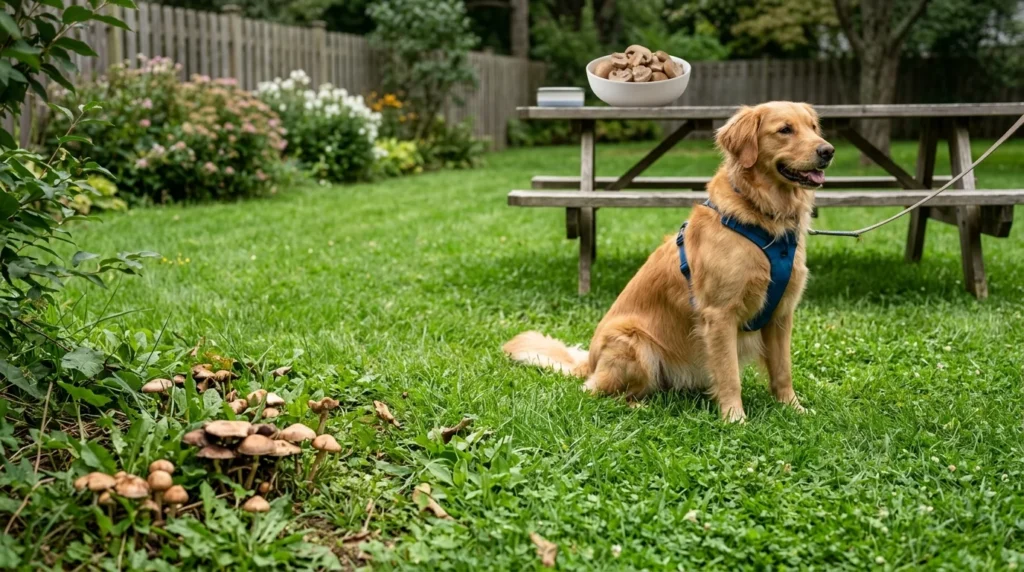
The effects of eating a wild mushroom can range from mild digestive upset to severe poisoning, depending on the mushroom species and amount consumed. Possible signs can include vomiting, diarrhea, drooling, weakness, unusual behavior, tremors, seizures, difficulty walking, or changes in consciousness.
Some mushroom toxins can affect the liver or other organs, and symptoms may not always appear immediately. If your dog has eaten an unidentified wild mushroom, treat the situation as potentially serious and contact a veterinarian or animal poison service as soon as possible.
What Should You Do If Your Dog Eats a Poisonous Mushroom?
If you suspect your dog has eaten a poisonous or unidentified mushroom, remove access to the mushroom and contact a veterinarian or animal poison service immediately. If possible, safely collect a sample or take clear photographs of the mushroom to help with identification.
Do not wait for symptoms before seeking professional advice. Do not give home remedies or attempt to make your dog vomit unless a veterinary professional instructs you to do so. If your dog is having seizures, difficulty breathing, collapsing, or showing severe neurological symptoms, seek emergency veterinary care immediately.
See Also: Can Dogs Eat Chips? Safety, Risks & Better Treats
How to Prepare Mushrooms for Dogs
If you decide to give your dog mushrooms, choose commercially grown edible mushrooms from a reliable grocery store. Wash them thoroughly, remove any damaged portions, and cook them completely. Cut them into small pieces appropriate for your dog’s size.
Do not add garlic, onion, chili, heavy salt, sauces, excessive butter, or large amounts of oil. Allow the mushrooms to cool before serving and offer only a small portion alongside your dog’s normal balanced food.
Cooked Mushrooms vs. Other Mushroom Types for Dogs
| Mushroom Type | Suitable for Dogs? | Important Consideration |
|---|---|---|
| Plain cooked grocery-store mushrooms | Generally yes, in small amounts | Serve plain and thoroughly cooked |
| Raw grocery-store mushrooms | Best avoided | Cooking is preferable for easier digestion |
| Wild mushrooms | No | Some species can be highly poisonous |
| Fried mushrooms | Best avoided | Often high in fat, salt, and breading |
| Mushrooms with garlic | No | Garlic can be harmful to dogs |
| Mushrooms with onion | No | Onion can be harmful to dogs |
| Canned seasoned mushrooms | Best avoided | May contain excessive sodium or seasonings |
| Mushroom soup | Usually no | May contain onion, garlic, salt, cream, or other ingredients |
When Should Dogs Avoid Cooked Mushrooms?
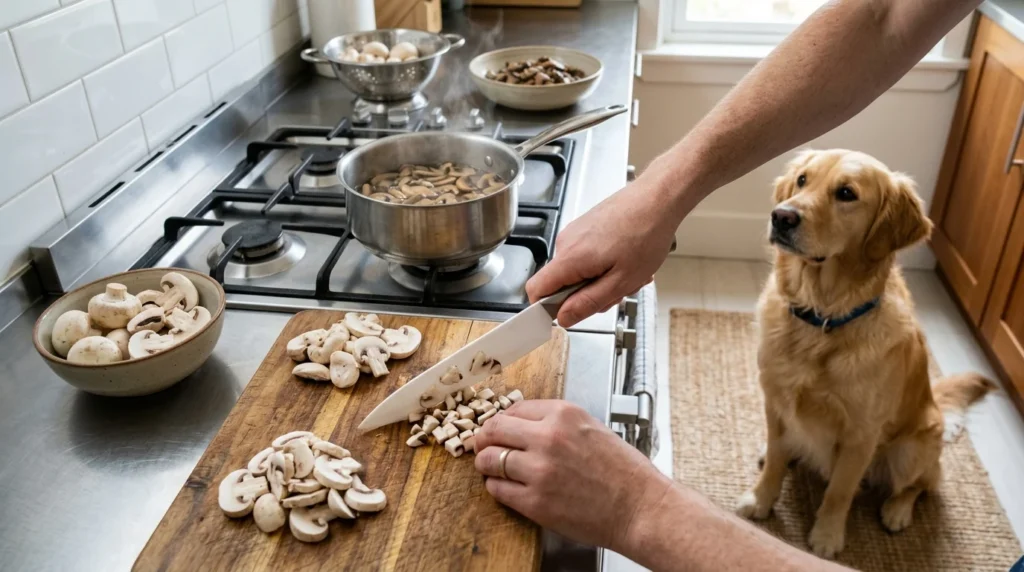
Dogs should avoid mushrooms when the species is unknown, when the mushrooms were collected from the wild, or when they were cooked with ingredients such as garlic or onion. Dogs with sensitive digestion may also do better without mushrooms or other unusual human foods.
If your dog has a health condition requiring a specific diet, ask your veterinarian before adding mushrooms. The safest approach is to keep portions small, choose commercially grown edible mushrooms, and avoid complicated mushroom dishes prepared for humans.
Frequently Asked Questions
Can dogs eat cooked mushrooms every day?
It is better to give cooked mushrooms only occasionally and in small portions. Dogs should get their main nutrition from a complete and balanced diet.
Can dogs eat cooked white mushrooms?
Plain, thoroughly cooked commercially grown white mushrooms can generally be offered to healthy dogs in small amounts. Avoid mushrooms prepared with garlic, onion, heavy salt, or rich sauces.
Are cooked wild mushrooms safe for dogs?
No. Cooking does not reliably make poisonous wild mushrooms safe. Dogs should never be given unidentified mushrooms found outdoors.
What should I do if my dog eats a mushroom from the yard?
Contact your veterinarian or an animal poison service promptly, especially if you cannot identify the mushroom. Do not wait for symptoms or induce vomiting unless instructed by a veterinary professional.
Can dogs eat mushrooms cooked with garlic?
No. Garlic can be harmful to dogs, so mushrooms prepared with garlic should not be given to them. Plain mushrooms prepared separately are a safer option.
Conclusion
So, can dogs eat mushrooms cooked? Plain, thoroughly cooked, commercially grown mushrooms such as white button, cremini, and portobello mushrooms can generally be offered to healthy dogs in small amounts. They should be washed, cooked properly, cut into manageable pieces, and served without garlic, onion, excessive salt, butter, sauces, or spicy ingredients.
The biggest concern is wild mushrooms because some poisonous species can cause serious or life-threatening illness, and cooking does not necessarily remove their toxins. When in doubt, do not let your dog eat an unidentified mushroom. If accidental ingestion occurs, especially involving a wild mushroom, contact a veterinarian or animal poison service promptly.


