

Can Dogs Eat Chips? Safety, Risks & Better Treats
Dogs can eat a small amount of plain potato chips, but chips are not a healthy or recommended snack for dogs. Most chips are high in salt, fat, and calories, and many flavored varieties contain ingredients such as onion or garlic powder that can be harmful to dogs. A tiny piece may not cause a problem in a healthy dog, but regularly feeding chips can contribute to health problems.
If your dog accidentally eats one or two plain chips, there is usually no reason to panic. However, the amount matters, especially for small dogs and puppies. Eating a large quantity can cause digestive upset and may expose your dog to excessive salt and fat. It is better to choose dog-safe treats instead of making chips part of your dog’s regular diet.
Can Dogs Eat Plain Potato Chips?
Plain potato chips are not considered toxic to dogs simply because they are made from potatoes. The main concern is how chips are prepared. They are usually deep-fried or heavily processed and contain much more salt and fat than a dog needs. Even when the chips contain no dangerous seasoning, they provide very little nutritional value for your pet.
If you want to give your dog a tiny taste of a plain chip, keep the portion very small and only do so occasionally. Avoid making it a habit. Dogs have different nutritional needs from humans, and human snack foods should not replace balanced dog food or appropriate treats.
Can Dogs Eat Salted Chips?
Salted chips are a poor choice for dogs because they can contain a significant amount of sodium in a small serving. Dogs need some sodium as part of a balanced diet, but excessive amounts can cause problems. A dog that eats a large quantity of salty food may develop increased thirst, vomiting, diarrhea, or other signs of excessive salt intake.
The risk depends on the amount eaten and the dog’s size and health. A large dog eating a single salted chip is very different from a small dog eating an entire bag. If your dog has eaten a large amount of salty chips, provide access to fresh water and contact your veterinarian for advice rather than trying to treat the situation yourself.
Can Puppies Eat Chips?
Puppies should not be given chips as a regular treat. Young dogs need nutrient-rich food that supports growth, bones, muscles, and normal development. Chips provide calories, salt, and fat without supplying the balanced nutrition a growing puppy needs.
A tiny accidental bite of a plain chip is unlikely to cause serious problems in most puppies, but puppies can be more sensitive to dietary changes. If a puppy eats several chips, especially flavored or heavily salted chips, watch closely for vomiting, diarrhea, unusual thirst, weakness, or other concerning symptoms and contact a veterinarian if needed.
Can Dogs Eat Chips Every Day?
Dogs should not eat chips every day. Regularly feeding chips can add unnecessary calories, salt, and fat to the diet. Over time, frequent high-calorie snacks can contribute to unwanted weight gain, while excessive salty or fatty foods can make a dog’s overall diet less balanced.
Even if your dog begs for chips, it is better to offer a healthier dog-friendly snack. Small pieces of properly prepared vegetables or fruits that are safe for dogs can be used as occasional treats, depending on your dog’s individual diet and health needs.
Can Dogs Eat Flavored Chips?
Flavored chips can be more concerning than plain chips because the seasoning may contain ingredients that are unsafe for dogs. Common chip flavors may include onion powder, garlic powder, spicy seasonings, artificial flavorings, or large amounts of salt. These ingredients can make an otherwise simple potato snack much less suitable for dogs.
Always check the ingredient list before considering any human snack for your dog. If a chip contains onion or garlic ingredients, it should not be intentionally fed to your dog. Spicy flavors can also irritate the digestive system and may cause stomach discomfort, vomiting, or diarrhea.
Can Dogs Eat BBQ Chips?
BBQ chips are generally not a good choice for dogs. Their seasoning can contain high levels of salt, sugar, spices, onion powder, garlic powder, or other ingredients that dogs do not need. The combination of salt, fat, and strong seasoning makes BBQ chips particularly unsuitable as a dog treat.
If your dog steals a single BBQ chip, monitor them rather than assuming a serious problem will occur. However, eating a large amount deserves more attention because the total salt, fat, and seasoning exposure can become significant, particularly in smaller dogs.
Can Dogs Eat Cheese Chips?
Cheese-flavored chips should also be avoided as a regular dog treat. They can contain high levels of sodium and fat, along with artificial flavorings and seasoning powders. Some dogs may also experience digestive upset after eating rich dairy-based or cheese-flavored foods.
A small accidental piece is usually less concerning than eating a large serving, but it is still better not to intentionally feed cheese chips to your dog. If you want to offer a cheese-flavored treat, choose a product specifically made for dogs and follow the recommended serving size.
Can Dogs Eat Spicy Chips?
Spicy chips are not suitable for dogs. Ingredients such as chili powder, hot pepper, and other strong seasonings can irritate a dog’s mouth and digestive tract. Eating spicy chips may lead to excessive thirst, drooling, stomach discomfort, vomiting, or diarrhea.
Spicy chips may also contain onion or garlic powder, which creates an additional safety concern. Dogs do not need spicy foods for variety, so there is no nutritional reason to give them hot or heavily seasoned chips.
Can Dogs Eat Tortilla Chips?
Tortilla chips are also best avoided or limited to a very occasional tiny taste. They are often made with corn, oil, and salt, and many varieties are heavily seasoned. The problem is not simply the corn itself; it is the high sodium, fat, and calorie content of the finished snack.
Plain, unsalted tortilla chips are less concerning than heavily seasoned varieties, but they still do not offer much nutritional benefit to dogs. If your dog enjoys crunchy treats, there are safer options designed specifically for canine diets.
Can Dogs Eat Doritos?
Doritos and similar heavily flavored chips should not be intentionally fed to dogs. They commonly contain substantial amounts of salt and fat, and their seasoning may include onion or garlic ingredients, depending on the flavor. They are designed as human snack foods rather than balanced treats for pets.
If your dog eats one small piece, monitor them for digestive symptoms and make sure fresh water is available. If they consume a large quantity or eat a flavor containing potentially harmful ingredients, contact your veterinarian for guidance.
See Also: Can Dogs Eat Pomegranate Seeds? Safety & Risks
How Many Chips Can a Dog Eat?
There is no recommended daily serving of potato chips for dogs because chips are not a healthy part of a canine diet. If a healthy dog accidentally eats a small piece of a plain, unseasoned chip, it will usually be a minor dietary exposure. However, the amount should remain very small, especially for puppies, small breeds, and dogs with dietary restrictions.
| Dog Size | Occasional Plain Chip Exposure | Better Choice |
|---|---|---|
| Small dogs | A tiny piece at most | Small dog-safe treat |
| Medium dogs | A tiny piece occasionally | Small piece of a dog-safe food |
| Large dogs | A small piece occasionally | Dog-specific treats |
These amounts are not a nutritional recommendation for feeding chips. They simply illustrate why a tiny accidental bite is different from allowing a dog to eat a whole serving. Your dog’s regular treats should fit within an appropriate, balanced diet.
What Happens If a Dog Eats Too Many Chips?
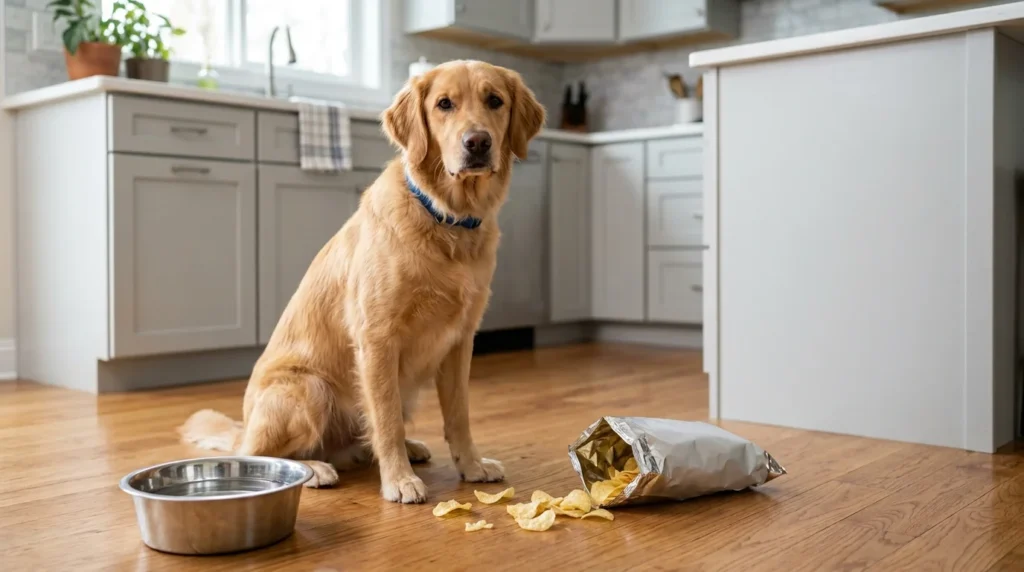
Eating too many chips can cause digestive problems because chips are usually high in fat and salt. Your dog may develop increased thirst, stomach discomfort, vomiting, loose stools, or diarrhea. The severity depends on how many chips were eaten, the ingredients, and the dog’s size and health.
A large amount of fatty food can also create a more serious digestive concern in some dogs. If your dog has eaten a large bag or a substantial quantity of chips, especially if they are heavily seasoned, contact your veterinarian and tell them the product, approximate amount eaten, and your dog’s weight.
Can Chips Cause Diarrhea in Dogs?
Yes, chips can cause diarrhea in some dogs. The high fat content, salt, seasoning, and sudden change from the dog’s normal diet can upset the digestive system. Dogs that are sensitive to rich foods may react even after a relatively small amount.
If your dog develops mild diarrhea after eating a small amount of chips, provide access to fresh water and avoid giving additional human snack foods. Persistent diarrhea, repeated vomiting, weakness, blood in the stool, or other concerning symptoms should be discussed with a veterinarian.
Can Chips Make Dogs Vomit?
Chips may cause vomiting if a dog eats too many, particularly when the chips are greasy, heavily salted, spicy, or strongly seasoned. A sudden intake of rich food can irritate the stomach and cause digestive upset.
If your dog vomits once after eating a small amount, monitor them closely and keep fresh water available. Do not give more chips or other rich foods. Repeated vomiting, severe discomfort, weakness, or an inability to keep water down requires veterinary attention.
Are Chips Bad for Dogs With Sensitive Stomachs?
Chips are especially unsuitable for dogs with sensitive stomachs because they are processed, fatty, salty, and often seasoned. Foods that seem harmless to people can trigger digestive upset in dogs that do not tolerate sudden dietary changes or rich snacks well.
If your dog regularly experiences digestive problems, it is better to avoid human snack foods and follow the diet recommended for your dog. Ask your veterinarian before introducing new treats if your dog has an ongoing digestive condition or a prescribed diet.
Can Dogs Eat Homemade Potato Chips?
Homemade potato chips can be easier to control because you can avoid some of the salt and seasonings found in commercial chips. However, homemade chips are still usually cooked with oil and are not nutritionally necessary for dogs. Simply being homemade does not automatically make them a healthy dog treat.
If you want to give your dog potato as an occasional food, plain cooked potato without salt, butter, oil, onion, garlic, or strong seasonings is a more suitable option. Potatoes should be properly cooked and offered in a small amount rather than replacing balanced dog food.
See Also: Can Dogs Eat Parmesan Cheese? Safety & Feeding Guide
Can Dogs Eat Chips With Onion or Garlic Powder?
Dogs should not be intentionally given chips containing onion or garlic powder. Onion and garlic belong to the Allium family and can be harmful to dogs when consumed in sufficient amounts. Seasoning powders can be concentrated, so flavored chips should not be treated like plain potato.
If your dog has eaten a large amount of chips containing onion or garlic powder, do not wait for symptoms before seeking advice. Keep the packaging so your veterinarian can check the ingredients and determine whether the amount eaten requires further action.
What Should You Do If Your Dog Eats Chips?
First, determine what type of chips your dog ate and approximately how much they consumed. Check the package for salt, onion, garlic, spicy seasonings, or other ingredients. If it was only a small piece of plain chips and your dog is acting normally, monitor them and provide access to fresh water.
If your dog ate a large amount, ate heavily seasoned chips, or develops vomiting, diarrhea, unusual thirst, weakness, tremors, or other concerning signs, contact a veterinarian promptly. Do not induce vomiting unless a veterinary professional specifically tells you to do so.
Healthier Alternatives to Chips for Dogs
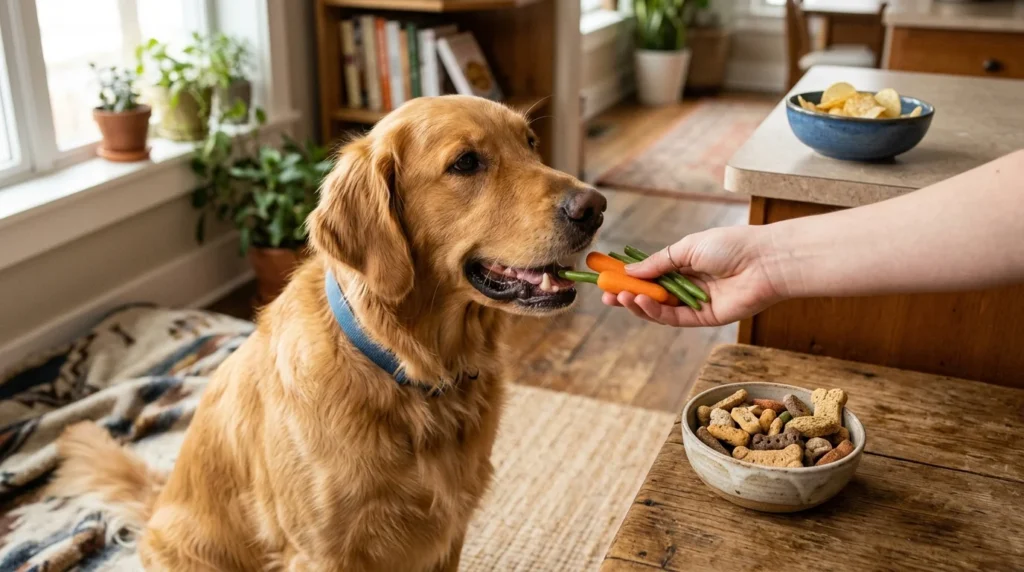
Instead of chips, dogs can enjoy appropriate treats made specifically for them. Depending on your dog’s diet, small portions of plain cooked vegetables such as carrots or green beans may also work as occasional treats. Some dogs can also have small amounts of dog-safe fruits when properly prepared.
The safest choice is to keep treats simple and appropriate for your dog’s nutritional needs. Avoid foods covered in salt, oil, spicy seasoning, onion, garlic, or other ingredients that can create unnecessary risks.
Frequently Asked Questions
Can dogs eat one potato chip?
One small piece of a plain potato chip is unlikely to cause a serious problem in most healthy dogs. However, chips are salty and fatty, so they should not become a regular treat.
What if my dog ate a whole bag of chips?
Eating a whole bag can expose your dog to a large amount of salt, fat, and calories. Contact your veterinarian, especially if your dog is small or the chips contained onion, garlic, or spicy seasonings.
Can dogs eat plain unsalted chips?
Plain unsalted chips are less concerning than heavily salted or flavored chips, but they are still fatty and offer little nutritional value. They are better avoided as a routine snack.
Are spicy chips toxic to dogs?
Spicy chips can cause digestive irritation, and some varieties also contain onion or garlic powder. Avoid intentionally feeding spicy chips to dogs.
What can I give my dog instead of chips?
Choose dog-specific treats or small portions of appropriate, plain dog-safe foods. Carrots and other suitable vegetables can be alternatives for some dogs when prepared properly.
Conclusion
Dogs can accidentally eat a small piece of plain potato chip without necessarily developing a serious problem, but chips are not a healthy snack for dogs. Their high salt and fat content, along with potentially harmful seasonings such as onion and garlic, makes them unsuitable for regular feeding. Puppies and small dogs require particular care because a relatively small amount of human snack food can represent a larger exposure for their body size.
If your dog eats a tiny piece, monitor them and provide fresh water. If they eat a large quantity or develop vomiting, diarrhea, unusual thirst, weakness, or other concerning symptoms, contact your veterinarian. For regular rewards, choose balanced dog treats or appropriately prepared dog-safe foods instead of chips.


