
Can Dogs Eat Pork Chops? Safety & Feeding Guide
Yes, dogs can eat pork chops if the meat is fully cooked, plain, and served in a small portion. Pork itself is not automatically toxic to dogs, but pork chops can become unsafe when they are raw, heavily seasoned, very fatty, or cooked with ingredients such as onion and garlic. The bones are another major concern because pork chop bones can cause choking, mouth injuries, intestinal blockage, or other serious problems.
If you want to share pork with your dog, the safest approach is to remove the bone and visible excess fat, cook the meat thoroughly, and serve it without salt, spices, sauces, butter, or marinades. Pork should be an occasional treat rather than a replacement for your dog’s complete and balanced food.
Can Dogs Eat Cooked Pork Chops?
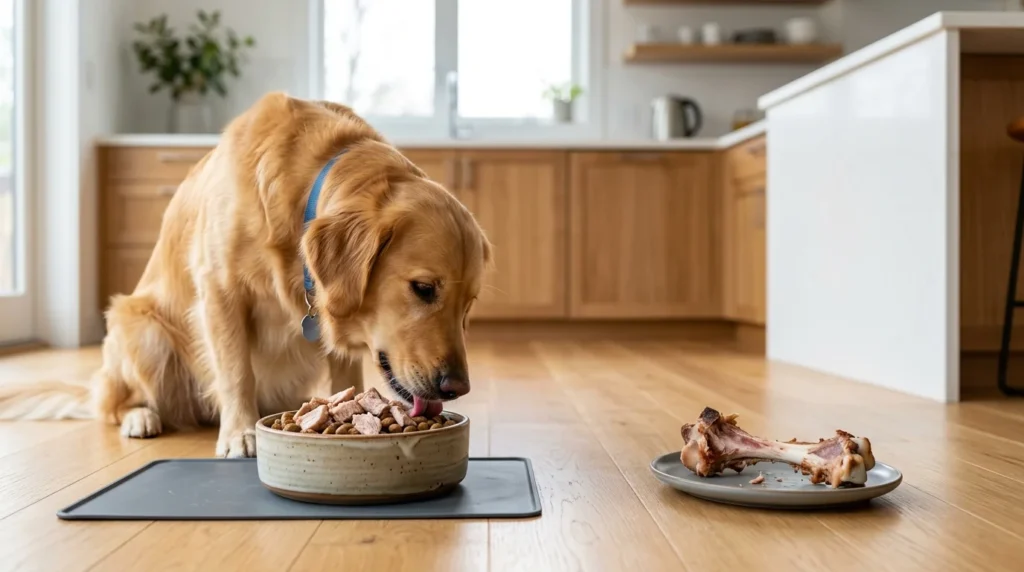
Plain, fully cooked pork chop meat can be suitable for many healthy dogs when given in moderation. Cooking the pork thoroughly reduces the risk associated with harmful bacteria and parasites that may be present in undercooked meat. Before giving it to your dog, remove the bone, excess fat, and any seasoning or sauce.
Cut the cooked pork into small, manageable pieces that match your dog’s size. A small amount can be offered as an occasional treat or mixed into a normal meal. However, because pork chops can be relatively fatty, large portions may cause digestive upset and add too many calories to your dog’s diet.
Can Dogs Eat Raw Pork Chops?
Raw pork chops are not the safest choice for dogs. Raw meat can contain harmful bacteria and parasites, and dogs can become sick after consuming contaminated pork. Handling raw pork can also create a hygiene concern because bacteria can spread to surfaces, hands, and other foods.
For these reasons, it is generally better to cook pork thoroughly before offering it to your dog. Do not assume that a dog’s digestive system makes raw pork completely safe. If your dog accidentally eats raw pork, monitor them closely and contact your veterinarian if they develop vomiting, diarrhea, weakness, fever, or other unusual symptoms.
Can Dogs Eat Pork Chop Bones?
No, it is best not to give dogs pork chop bones. Cooked bones can become brittle and break into sharp pieces when chewed. These fragments can injure the mouth or throat, become lodged in the digestive tract, or cause an intestinal blockage.
Even raw pork bones are not risk-free. A dog can choke on a bone, break a tooth, or swallow a large piece. The safest way to share pork chop with your dog is to remove the bone completely before serving the meat.
Can Dogs Eat Pork Chops With Fat?
Dogs can eat pork meat, but large amounts of pork fat are not recommended. Fatty foods can cause stomach upset and add a significant amount of calories to a dog’s diet. Some dogs are particularly sensitive to rich or greasy foods and may develop vomiting or diarrhea after eating them.
Before serving a pork chop, trim away obvious excess fat and give your dog lean pieces of meat. You do not need to remove every tiny trace of fat, but avoiding large fatty portions is a sensible precaution. Never give your dog a plate of greasy pork drippings or leftover fat from cooking.
Can Dogs Eat Seasoned Pork Chops?
Seasoned pork chops are not a good choice for dogs. Human recipes often include salt, pepper, garlic, onion, chili powder, sauces, marinades, or other seasonings. Some of these ingredients can irritate a dog’s digestive system, while onion and garlic can be harmful to dogs in sufficient amounts.
If you plan to give your dog pork, set aside a plain piece before adding seasonings to the meat. This simple step allows you to share the protein without exposing your dog to unnecessary spices, sauces, or potentially unsafe ingredients.
Can Dogs Eat Pork Chops With Garlic?
Pork chops cooked with garlic should not be intentionally given to dogs. Garlic belongs to the Allium family, which includes onions and related plants that can damage red blood cells when consumed in sufficient quantities. Garlic may appear in fresh, powdered, minced, or sauce-based forms, so check the ingredients carefully.
If your dog accidentally eats a small piece of pork that was lightly seasoned with garlic, the actual risk depends on the amount of garlic consumed and your dog’s size. Do not give more of the seasoned meat. If a substantial amount was eaten or you are concerned about the quantity, contact your veterinarian for individualized advice.
Can Dogs Eat Pork Chops With Onion?
Pork chops prepared with onion should also be kept away from dogs. Onions can be harmful to dogs and may cause problems when enough is consumed. This applies to different forms of onion, including cooked onion, raw onion, dried onion, and onion powder.
If your dog has eaten pork containing onion, remove any remaining food and determine approximately how much was consumed. Save the recipe or ingredient packaging if available. For a significant ingestion or any concerning symptoms, contact your veterinarian promptly rather than waiting for problems to develop.
Can Puppies Eat Pork Chops?
Puppies can potentially eat a small amount of plain, fully cooked, boneless pork, but pork chops should not replace their regular puppy food. Puppies need carefully balanced nutrition to support growth and development, and a fatty human food may not be appropriate as a frequent treat.
If you give a puppy pork, choose a small piece of lean meat with no seasoning, sauce, or bone. Introduce only a little at first and watch for digestive problems. Because puppies are smaller and can be more sensitive to dietary changes, avoid giving them large portions of pork or other rich human foods.
Can Dogs Eat Pork Chops Every Day?
It is better not to feed pork chops to your dog every day. Even plain pork can add extra calories and fat to an otherwise balanced diet. Feeding the same human meat frequently can also make it harder to maintain the nutritional balance provided by complete dog food.
Pork is better treated as an occasional addition rather than a daily staple unless your veterinarian has specifically recommended a pork-based diet. When offering it as a treat, keep the portion small and make sure it is plain, fully cooked, boneless, and trimmed of excess fat.
Can Dogs Eat Fried Pork Chops?
Fried pork chops are not a good choice for dogs. Frying can significantly increase the fat content, and the breading or coating may contain salt, spices, garlic, onion, or other ingredients that are unsuitable for dogs. Greasy foods can also be difficult for some dogs to digest.
If your dog steals a small bite of fried pork chop, monitor them for stomach upset. However, intentionally feeding fried pork is unnecessary when plain cooked pork can be prepared much more simply. Remove breading, sauces, and visible fat rather than offering the fried version as a treat.
Can Dogs Eat Pork Chops With Sauce?
Pork chops covered in barbecue sauce, gravy, steak sauce, or other sauces are generally not recommended for dogs. Sauces can contain high levels of salt and sugar, along with onion, garlic, spices, or other ingredients that may be unsuitable for dogs.
Plain pork is a much safer option. If you are cooking pork chops for your family, you can keep a small portion unseasoned for your dog before adding sauce. This gives your dog a simple treat without the unnecessary ingredients found in many human sauces.
See Also: Can Dogs Eat Goldfish? Safety & Risks
How Much Pork Chop Can a Dog Eat?
The right amount of pork depends on your dog’s size, age, health, and overall diet. Because pork chops can contain more fat than some other lean meats, even plain pork should be offered in a modest portion. A small piece is usually more appropriate than giving your dog an entire pork chop.
| Dog Size | Occasional Pork Portion |
|---|---|
| Small dogs | 1–2 small bite-sized pieces |
| Medium dogs | A few small pieces |
| Large dogs | A small handful of bite-sized pieces |
These are general treat-sized portions rather than a prescription. Treats should remain a small part of your dog’s total daily calorie intake. If your dog is overweight, has a sensitive stomach, or follows a therapeutic diet, ask your veterinarian before adding pork to their meals.
Can Dogs Eat Pork Chop Meat Without the Bone?
Yes, plain boneless pork chop meat can be a reasonable occasional treat for many healthy dogs when it is fully cooked and trimmed of excess fat. Removing the bone eliminates one of the biggest hazards associated with pork chops and makes the meat easier to portion.
Cut the pork into small pieces appropriate for your dog’s size. Avoid giving large chunks that could be swallowed too quickly. The meat should also be free from marinades, sauces, butter, heavy seasoning, and other ingredients commonly added to human pork recipes.
Can Dogs Eat Grilled Pork Chops?
Dogs can eat a small amount of grilled pork chop if the meat is fully cooked, plain, boneless, and free from excessive fat. The grilling method itself is not necessarily the problem. The concern is often what is added to the pork before or during cooking, such as marinades, barbecue sauce, salt, garlic, or onion.
If you want to share grilled pork with your dog, set aside a plain piece before seasoning the rest for your family. Remove any charred or heavily seasoned exterior and trim away excess fat. Serve only a small amount alongside your dog’s normal food.
Can Dogs Eat Pork Chops With Rice?
Plain cooked pork combined with plain cooked rice can be suitable for some dogs as an occasional meal addition. Both foods should be prepared without onion, garlic, excessive salt, butter, spicy seasonings, or rich sauces. The pork should also be fully cooked and boneless.
Do not turn pork and rice into a large human-style meal for your dog. A dog’s regular complete and balanced food should remain the foundation of their diet. If you are considering a homemade pork-and-rice diet for ongoing feeding, speak with a veterinarian or veterinary nutrition professional to ensure the diet meets your dog’s nutritional needs.
Can Dogs Eat Pork Chops With Potatoes?
Plain cooked pork and plain cooked potatoes can be combined in a small portion for a healthy dog. The potatoes should be fully cooked and served without butter, heavy cream, salt, onion, garlic, or other seasonings. Avoid giving your dog fried potatoes or heavily seasoned mashed potatoes alongside pork.
Keep the serving modest because combining two calorie-dense foods can quickly increase the total calories of a meal. Plain pork and a small amount of cooked potato can be an occasional addition, but they should not replace a complete dog food unless a properly formulated diet has been recommended.
Can Dogs Eat Pork Chops With Gravy?
Pork chops with gravy are best avoided. Gravy can contain high amounts of salt and fat, and recipes may include onion, garlic, butter, spices, or other ingredients that are not appropriate for dogs. Even when the pork itself is plain, the gravy can make the meal unsuitable.
If your dog accidentally eats a small amount of pork with gravy, monitor them for digestive upset and check the gravy ingredients if possible. If the gravy contained onion or garlic, or your dog consumed a large amount, contact your veterinarian for advice about the specific ingredients and quantity.
Can Dogs Eat Pork Chop Leftovers?
Pork chop leftovers can be risky because they are usually prepared for people rather than dogs. Leftover pork may contain seasoning, sauce, onion, garlic, excess salt, or a significant amount of fat. Bones left on the plate are another serious hazard and should never be offered to your dog.
If you want to share leftovers, remove the bone and only consider a small piece of plain meat that does not contain unsafe seasonings. Freshly prepared, unseasoned pork is usually easier to control than leftovers from a heavily seasoned family meal.
See Also: Can Dogs Eat Lemon? Safety, Risks & Feeding Guide
What If My Dog Ate a Pork Chop Bone?
If your dog swallowed a pork chop bone, do not automatically assume the bone will pass safely. Bones can become lodged in the throat or digestive tract, cause choking, damage the mouth, or contribute to an intestinal blockage. Cooked bones can also break into sharp fragments.
Do not induce vomiting unless a veterinarian specifically instructs you to do so. Contact your veterinarian and explain the type of bone, whether it was cooked, approximately how much was swallowed, and your dog’s size. Seek urgent veterinary attention if your dog is choking, having difficulty breathing, repeatedly vomiting, showing severe pain, or becoming weak.
What If My Dog Ate a Seasoned Pork Chop?
If your dog ate seasoned pork, first check which ingredients were used and estimate how much your dog consumed. A small piece of lightly seasoned pork may cause nothing more than mild stomach upset, but ingredients such as onion and garlic can create additional concerns depending on the amount.
Do not give your dog more seasoned food while you monitor them. Watch for vomiting, diarrhea, weakness, unusual behavior, excessive thirst, or other concerning signs. If the pork contained onion, garlic, a large amount of salt, or another potentially harmful ingredient, contact your veterinarian for specific guidance.
Can Pork Chops Cause Diarrhea in Dogs?
Yes, pork chops can cause diarrhea, particularly when a dog eats a large, fatty, seasoned, or unfamiliar portion. A sudden change in diet can upset the digestive system, and excess fat may be particularly difficult for some dogs to tolerate.
If your dog develops mild diarrhea after eating a small amount of plain pork, provide access to fresh water and avoid additional rich treats. If diarrhea is severe, persistent, bloody, or accompanied by repeated vomiting, weakness, pain, or other unusual symptoms, contact your veterinarian.
Can Pork Chops Cause Vomiting in Dogs?
Vomiting can occur after a dog eats too much pork, particularly if the pork is greasy, heavily seasoned, or unfamiliar. Some dogs have more sensitive digestive systems and may react even to foods that are not inherently toxic.
If your dog vomits repeatedly or cannot keep water down, veterinary attention is important. Also contact a veterinarian if your dog ate pork bones, a large quantity of fatty pork, or pork containing potentially harmful ingredients such as onion or garlic.
What Is the Safest Way to Prepare Pork Chops for Dogs?
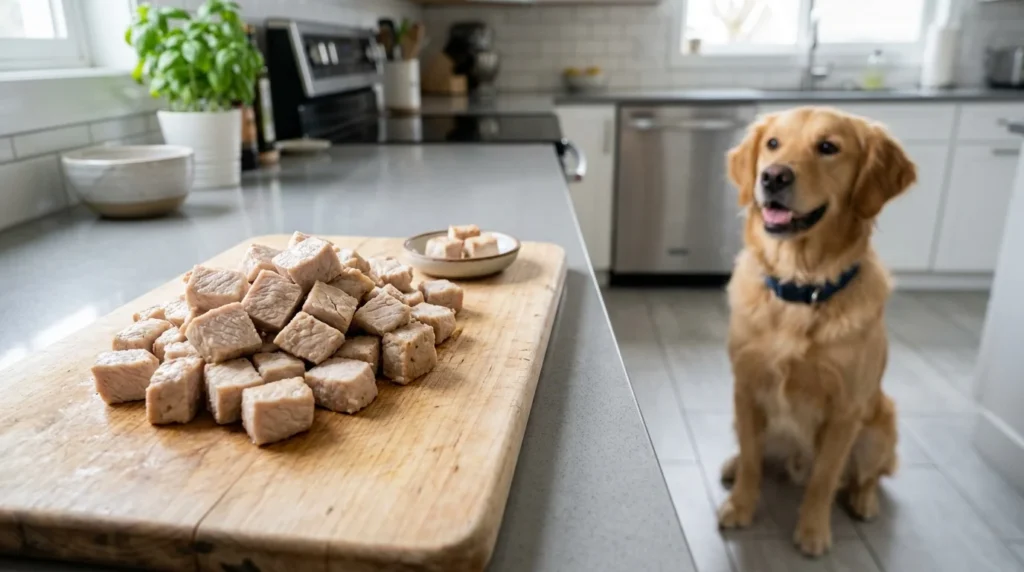
The safest preparation is simple: cook the pork thoroughly, remove the bone, trim away excess fat, and serve the meat plain. Do not add salt, pepper, garlic, onion, chili, barbecue sauce, gravy, butter, or rich marinades. Allow the meat to cool before cutting it into small pieces.
Think of pork as an occasional protein treat rather than a daily food. If your dog has never eaten pork before, start with a very small amount and watch for digestive upset. Dogs with food allergies, pancreatitis history, obesity, or other dietary concerns may need different treats.
Frequently Asked Questions
Can dogs eat pork chops?
Yes, dogs can eat a small amount of fully cooked, plain, boneless pork chop. Remove excess fat and avoid seasonings, sauces, marinades, onion, and garlic.
Can dogs eat cooked pork chop bones?
No. Cooked pork chop bones can splinter and cause choking, mouth injuries, intestinal blockage, or other serious problems. Always remove the bone before giving pork to a dog.
Can dogs eat pork chops every day?
Pork chops are better as an occasional treat rather than an everyday food. Regular portions can add excess calories and fat and may interfere with a balanced diet.
What should I do if my dog ate a pork chop bone?
Contact your veterinarian for advice rather than trying to make your dog vomit. Seek urgent care if your dog is choking, struggling to breathe, repeatedly vomiting, or showing severe pain or weakness.
Are seasoned pork chops safe for dogs?
Seasoned pork chops are not recommended. Human seasonings may contain excessive salt, onion, garlic, spices, sauces, or other ingredients that can upset or harm dogs.
Conclusion
So, can dogs eat pork chops? Yes, a healthy dog can usually enjoy a small amount of fully cooked, plain, boneless pork chop as an occasional treat. The safest pork is thoroughly cooked, trimmed of excess fat, and served without salt, spices, sauces, onion, garlic, or other seasonings.
The pork chop bone is the biggest reason to avoid giving dogs the whole chop. Never intentionally feed cooked pork bones, and be cautious with fatty or seasoned leftovers. If your dog eats a large amount of pork, swallows a bone, or develops concerning symptoms, contact your veterinarian promptly.
See Also: Who is Constantine Yankoglu: Patricia Heaton’s Ex-Husband


