

Can Dogs Eat Tuna Fish? Safety, Benefits, Risks & Tips
If you are wondering, can dogs eat tuna fish, the answer is yes, dogs can eat tuna in small amounts, but it is not the best fish to give regularly. Tuna is a source of protein and contains nutrients such as omega-3 fatty acids, but it can also contain relatively high levels of mercury. The amount and type of tuna matter, especially when it comes to frequent feeding.
For dogs, plain tuna prepared without added salt, oil, sauces, onion, garlic, or spicy seasonings is the safest option. Canned tuna can sometimes be offered in a small amount, but water-packed tuna is generally preferable to tuna packed in oil. Tuna should be an occasional treat rather than a routine part of your dog’s diet.
Can Dogs Eat Tuna Fish?
Yes, dogs can eat tuna fish in moderation. Plain, fully cooked tuna provides protein and some beneficial nutrients, and a small amount is unlikely to cause problems for most healthy dogs. However, tuna is different from many other fish because some types can contain higher levels of mercury.
Because of this, tuna should not be fed frequently or in large portions. If you want to give your dog fish regularly, ask your veterinarian about lower-mercury fish that may be more appropriate for your dog’s diet.
Is Tuna Safe for Dogs?
Tuna can be safe for dogs when it is properly prepared and given in a small amount. Fresh tuna should be cooked thoroughly, while canned tuna should be plain and preferably packed in water without added seasonings. Always remove any bones before serving fresh fish.
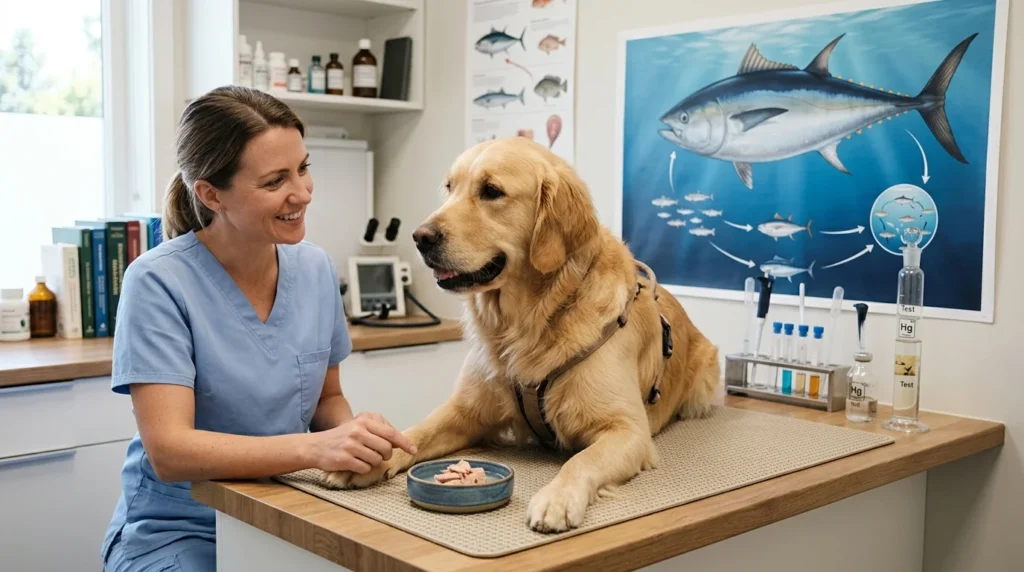
The biggest concern with tuna is repeated exposure to mercury. Mercury can accumulate in fish, and regularly feeding large amounts of tuna can increase a dog’s exposure. For this reason, occasional small servings are safer than making tuna a regular protein source.
Can Dogs Eat Canned Tuna?
Dogs can eat a small amount of plain canned tuna, but you should check the label carefully before serving it. Canned tuna may contain added salt, oil, preservatives, flavorings, or other ingredients that are not ideal for dogs.
Choose tuna packed in water when possible and avoid flavored or seasoned products. If the tuna is very salty, oily, or prepared with sauces, it is better not to share it with your dog.
Can Dogs Eat Tuna in Water?
Tuna packed in water is generally a better choice for dogs than tuna packed in oil, provided it contains no harmful seasonings or unnecessary additives. Water-packed tuna can provide protein without the additional fat that comes from oil-packed varieties.
Even water-packed tuna should only be served in moderation. Check the ingredient list and sodium content, because some canned tuna products contain added salt. Plain tuna with minimal ingredients is the preferable option.
Can Dogs Eat Tuna in Oil?
It is better to avoid giving dogs tuna packed in oil when possible. The added oil increases the fat and calorie content of the food and may cause digestive upset in some dogs. Large amounts of fatty foods can be particularly problematic for dogs with sensitive digestive systems.
If your dog accidentally eats a small amount of tuna packed in oil, monitor them for vomiting, diarrhea, abdominal discomfort, or changes in appetite. For intentional feeding, plain tuna packed in water is generally a simpler option.
Can Dogs Eat Fresh Tuna?
Fresh tuna can be given to dogs in a small amount when it is thoroughly cooked and prepared without harmful ingredients. Cooked tuna provides high-quality protein and contains omega-3 fatty acids, although its mercury content means it should not be a frequent staple.
Never serve fresh tuna with onion, garlic, heavy seasoning, butter, sauces, or excessive salt. Remove all bones and allow the fish to cool before offering it to your dog. A small piece is enough as an occasional treat.
Can Dogs Eat Raw Tuna?

Raw tuna is not the safest choice for dogs. Raw fish can carry parasites and harmful bacteria, and these risks can affect dogs as well as people. Preparing tuna thoroughly reduces the risk associated with consuming contaminated raw fish.
If you want to share tuna with your dog, cooked tuna is a safer option. Avoid raw tuna dishes such as sushi, sashimi, tuna tartare, or seasoned raw fish. These foods may also contain sauces, salt, or other ingredients that are unsuitable for dogs.
Can Dogs Eat Cooked Tuna?
Yes, dogs can generally eat plain cooked tuna in moderation. Cooking the fish thoroughly can reduce risks associated with bacteria and parasites that may be present in raw fish. Before serving, make sure the tuna contains no bones and has not been prepared with unsafe seasonings.
Grilled, baked, or steamed tuna can be suitable when prepared plainly. Avoid tuna cooked with garlic, onion, spicy sauces, large amounts of butter, or excessive salt. A small plain portion is preferable to a heavily seasoned human meal.
Can Dogs Eat Tuna Steak?
Dogs can potentially eat a small piece of fully cooked tuna steak if it is plain and free from bones. Tuna steak can provide protein and omega-3 fatty acids, but it still carries the same mercury concern associated with tuna.
Do not make tuna steak a frequent protein source. Cut the fish into small pieces and make sure it is cooked appropriately before serving. Avoid sauces, garlic butter, marinades, pepper-heavy seasoning, and other human-food toppings.
Can Dogs Eat Tuna Every Day?
It is not recommended to feed tuna to dogs every day. Even though tuna provides protein and useful nutrients, frequent feeding can increase mercury exposure and may add unnecessary calories to the diet.
Dogs should receive most of their nutrition from a complete and balanced food formulated for their life stage. If you want fish to become a regular part of your dog’s diet, discuss safer fish choices and appropriate portions with your veterinarian.
Can Puppies Eat Tuna Fish?
Puppies can potentially eat a tiny amount of plain, fully cooked tuna, but tuna is not an ideal regular food for growing puppies. Puppies need carefully balanced nutrition to support healthy development, and excessive treats or human foods can interfere with that balance.
If you give tuna to a puppy, keep the portion very small and serve it plain. Avoid canned tuna with excessive sodium and never give raw tuna. For regular fish feeding, ask your veterinarian which options are most appropriate for your puppy.
Can Small Dogs Eat Tuna?
Small dogs can eat a small amount of plain cooked tuna, but portion control is particularly important. Because of their smaller body size, even a modest human serving can represent a relatively large amount of food for them.
Cut tuna into tiny pieces and offer only a small portion. Avoid making tuna a regular treat because of its mercury content. If your small dog has a medical condition or follows a specialized diet, consult your veterinarian before offering tuna.
Can Large Dogs Eat Tuna?
Large dogs can generally tolerate a somewhat larger serving of tuna than small dogs, but size does not eliminate the concern about mercury. Tuna should still be offered only occasionally rather than as a daily food.
Choose plain cooked tuna without bones, salt, sauces, onion, or garlic. A small portion mixed with regular dog food may be acceptable for some healthy dogs, but frequent tuna feeding is not recommended.
Can Dogs Eat Tuna Mayo?
Tuna mixed with mayonnaise is not the best choice for dogs. Mayonnaise is high in fat and calories, and some prepared tuna salads can also contain onion, garlic, spices, salt, or other ingredients that may be unsuitable for dogs.
If you want to give your dog tuna, keep it plain instead. A small amount of tuna packed in water is generally easier to control than a prepared tuna-mayonnaise mixture.
Can Dogs Eat Tuna Salad?
Dogs should not be given ordinary human tuna salad without checking the ingredients. Tuna salad may contain mayonnaise, onion, garlic, pickles, mustard, salt, pepper, or other ingredients that can cause problems for dogs.
A dog-friendly version would need to contain only ingredients that are known to be safe for dogs and should still be offered in a small amount. Plain tuna is usually the simplest choice.
Can Dogs Eat Tuna With Salt?
It is best to give dogs tuna without added salt. While sodium is an essential nutrient in appropriate amounts, heavily salted human foods can provide more sodium than a dog needs from an occasional treat.
When choosing canned tuna, check the label because some products contain added salt. Water-packed tuna with minimal ingredients and no unnecessary seasoning is generally preferable.
Can Dogs Eat Tuna With Garlic?
No. Tuna itself may be suitable in moderation, but garlic should not be added to it for dogs. Garlic belongs to the Allium family and can damage red blood cells when dogs consume enough of it.
Avoid garlic-seasoned tuna, garlic butter, tuna sauces, and prepared tuna dishes containing garlic powder. If your dog accidentally eats tuna containing a significant amount of garlic, contact your veterinarian for guidance.
Can Dogs Eat Tuna With Onion?
Dogs should not be given tuna prepared with onion. Onions can be harmful to dogs and may damage red blood cells. This includes different forms of onion, including fresh, cooked, dried, and powdered onion.
For this reason, tuna salads, sandwiches, sauces, and prepared dishes containing onion should not be shared with dogs. Plain tuna is a much safer alternative.
Can Dogs Eat Tuna With Cheese?
It is better to avoid combining tuna with cheese as a regular dog treat. Cheese can add extra fat, calories, and sodium, while some dogs have difficulty digesting dairy products.
If your dog accidentally eats a small amount of tuna and cheese, monitor them for digestive upset. When intentionally sharing tuna, plain cooked fish without cheese or heavy toppings is preferable.
Can Dogs Eat Tuna With Rice?
Plain cooked tuna and plain cooked rice can potentially be combined in a small amount for many healthy dogs. The tuna should be thoroughly cooked and free from bones, while the rice should contain no onion, garlic, excessive salt, or seasoning.
This combination should not become a long-term replacement for complete and balanced dog food unless it has been specifically formulated by a veterinary nutrition professional. For an occasional treat, keep both ingredients plain and portions small.
Can Dogs Eat Tuna With Eggs?
Dogs can potentially eat small amounts of plain cooked tuna and fully cooked egg together. Both foods provide protein, but the combination should remain an occasional treat rather than a substitute for a balanced canine diet.
Avoid adding salt, onion, garlic, butter, spicy seasonings, or sauces. Make sure the egg is fully cooked and the tuna is prepared safely. If your dog has never eaten either food before, introduce them separately so you can identify any digestive reaction.
Can Dogs Eat Tuna Treats Made for Dogs?
Some commercially prepared tuna-flavored or tuna-based dog treats may be appropriate when they are specifically formulated for dogs and fed according to their instructions. These products can be easier to portion than human canned tuna.
Even dog treats containing tuna should be given in moderation. Check the product’s ingredients and feeding recommendations, and consider your dog’s complete diet and individual health needs before making them a regular treat.
How Much Tuna Can Dogs Eat?
There is no single tuna portion that is appropriate for every dog because the suitable amount depends on the dog’s size, health, diet, and how often tuna is offered. As a general approach, a very small amount should be used when introducing tuna for the first time.
| Dog Size | Conservative Starting Portion | Feeding Advice |
|---|---|---|
| Toy / Very Small | 1–2 small pieces | Occasionally |
| Small | 1–2 teaspoons | Occasionally |
| Medium | 1 tablespoon | Occasionally |
| Large | 1–2 tablespoons | Occasionally |
| Very Large | Up to a few tablespoons | Occasionally |
These are conservative starting portions, not universal medical limits. Because tuna can contain mercury, larger or frequent servings are not recommended simply because a dog can physically eat them. Your veterinarian can provide more appropriate guidance based on your dog’s individual circumstances.
Does Tuna Have Benefits for Dogs?
Tuna contains protein, which is an important nutrient for maintaining muscles and supporting normal body functions. It also provides omega-3 fatty acids and several vitamins and minerals. These nutrients are part of what makes fish nutritionally valuable.
However, the benefits of tuna need to be balanced against its mercury content. Dogs do not need tuna specifically to obtain protein or omega-3 fatty acids. Other fish options may provide similar nutritional benefits with different mercury considerations.
Does Tuna Have Omega-3 Fatty Acids?
Yes, tuna contains omega-3 fatty acids, although the amount can vary depending on the type of tuna. Omega-3 fatty acids are associated with several important functions in the body and are commonly included in discussions about healthy fish-based diets.
Despite these benefits, tuna should not be the only source of omega-3 fatty acids for a dog. If your goal is to increase omega-3 intake, ask your veterinarian about fish or veterinary-formulated supplements that are appropriate for your dog’s specific nutritional needs.
What Are the Risks of Feeding Tuna to Dogs?
The biggest concern with feeding tuna to dogs is mercury exposure. Tuna is a large predatory fish, and some types can accumulate higher levels of mercury. Occasional small servings are less concerning than frequent or large servings, but tuna should still not become a dog’s primary fish or protein source.
Other risks depend on how the tuna is prepared. Added salt, oil, sauces, onion, garlic, and other seasonings can make tuna unsuitable for dogs. Bones in fresh tuna can also create choking or digestive hazards. For these reasons, plain, properly prepared tuna in small amounts is the safest approach.
Can Too Much Tuna Make Dogs Sick?
Yes, eating too much tuna can cause problems. A large serving may cause vomiting, diarrhea, stomach discomfort, or other digestive symptoms, particularly if the tuna contains oil, salt, or rich seasonings. Repeatedly feeding large amounts also increases a dog’s exposure to mercury.
If your dog has eaten a large quantity of tuna, consider the type of tuna, preparation, and amount consumed. Contact your veterinarian if you are concerned, particularly if your dog develops unusual behavior, weakness, vomiting, diarrhea, loss of coordination, or other concerning symptoms.
Can Tuna Cause Mercury Poisoning in Dogs?
Mercury poisoning is a potential concern when dogs are exposed to excessive amounts of mercury over time. Tuna can contain mercury because mercury accumulates in fish, especially larger and longer-lived species. Occasional small servings are very different from feeding tuna frequently.
Possible signs of serious mercury exposure can include neurological changes, weakness, loss of coordination, unusual behavior, and digestive symptoms. If you suspect your dog has consumed a large amount of tuna repeatedly or shows concerning symptoms after eating it, contact a veterinarian promptly.
Can Dogs Eat Tuna Water From a Can?
It is better to avoid routinely giving dogs the liquid from canned tuna. The liquid may contain sodium and other substances released from the tuna during canning. Even when the tuna itself is plain, the packing liquid is not necessarily formulated for dogs.
If your dog accidentally drinks a small amount of tuna water, it is usually best to provide access to fresh drinking water and monitor them. When serving tuna, drain the can and offer only a small amount of the plain fish instead.
Can Dogs Eat Tuna Skin?
It is generally better to remove tuna skin before giving tuna to a dog, particularly when the skin has been cooked with oil, salt, sauces, or seasonings. The skin itself is not the main concern, but preparation can make it unnecessarily fatty or salty.
For a simple dog-friendly serving, use plain cooked tuna meat with bones removed. Avoid crispy tuna skin prepared with heavy oil, butter, salt, garlic, onion, or spices.
See Also: Can Dogs Eat Turkey? Benefits, Risks & Safe Feeding Guide
Can Dogs Eat Tuna Bones?
Dogs should not be given tuna bones. Fish bones can be sharp and may become lodged in the mouth, throat, or digestive tract. They can also present a choking hazard, so removing bones carefully is important when preparing fresh tuna.
Do not assume that a cooked bone is safe simply because it is small. Cooked bones can become brittle and splinter. If your dog swallows a fish bone and begins choking, gagging, repeatedly swallowing, vomiting, or showing signs of pain, seek veterinary care immediately.
Can Dogs Eat Tuna Sushi?
Tuna sushi is not a good choice for dogs. Sushi tuna may be raw, and raw fish can carry bacteria or parasites. Sushi also commonly comes with soy sauce, wasabi, spicy ingredients, or other additions that are unsuitable for dogs.
If you want to share tuna with your dog, choose plain, thoroughly cooked tuna instead. Remove bones and avoid sauces and seasonings. Raw tuna dishes such as sashimi and tuna tartare are also better kept out of your dog’s diet.
Can Dogs Eat Tuna Sandwiches?
Dogs should generally not be given a regular tuna sandwich. Besides tuna, sandwiches often contain mayonnaise, salt, butter, onions, pickles, sauces, or other ingredients that may not be appropriate for dogs. Bread can also add unnecessary calories.
A small amount of plain tuna is a much simpler option. If your dog accidentally eats part of a tuna sandwich, check the ingredients and monitor them. If it contains onion, garlic, or another potentially toxic ingredient, contact your veterinarian for guidance.
Can Dogs Eat Spicy Tuna?
Spicy tuna should not be given to dogs. Spicy preparations can contain chili peppers, hot sauces, seasonings, salt, onion, garlic, or other ingredients that can irritate a dog’s digestive system or cause more serious problems.
Dogs do not need spicy food to enjoy tuna. If you want to offer fish as a treat, use plain cooked tuna without sauces or seasonings. This makes it easier to control both the ingredients and the portion.
Can Dogs Eat Tuna Salad With Mayonnaise?
It is better not to give dogs traditional tuna salad made with mayonnaise. Mayonnaise is high in fat and calories, and prepared tuna salad may also contain onion, garlic, mustard, pickles, salt, or other ingredients that are not suitable for dogs.
Plain tuna is a better choice if you want to share a small fish-based treat. If your dog has already eaten tuna salad, check the ingredient list and monitor for digestive upset. Contact your veterinarian if potentially toxic ingredients were included.
Can Dogs Eat Tuna Cat Food?
A small accidental amount of tuna-flavored cat food is unlikely to cause a problem for most healthy dogs, but cat food is formulated to meet feline nutritional requirements rather than canine nutritional requirements. It should not become a regular replacement for dog food.
If your dog frequently eats cat food, it may receive an inappropriate balance of nutrients and calories. Keep cat food separate from your dog’s regular meals and use complete dog food as the primary diet.
Can Dogs Eat Tuna Dog Food?
Yes, tuna-based dog food can be appropriate when it is specifically formulated as complete and balanced dog food. Commercial dog foods are designed to provide the nutrients dogs need, rather than simply relying on tuna as a human-food ingredient.
However, not every tuna-flavored product is nutritionally complete. Check the packaging to determine whether the food is intended as a complete meal or as a treat. Follow the manufacturer’s feeding instructions and consider your dog’s age, size, and health.
Can Dogs Eat Tuna Treats?
Some tuna-based dog treats can be given to dogs when they are specifically formulated for canine consumption. These treats can provide a convenient way to offer a fish flavor without preparing human tuna dishes.
Even tuna treats should be given in moderation. Check the ingredients and feeding instructions, and remember that treats should not replace a complete and balanced diet. If your dog has allergies or dietary restrictions, check with your veterinarian before introducing a new treat.
How to Safely Prepare Tuna for Dogs
If you want to give your dog tuna, choose a plain preparation with minimal ingredients. Fresh tuna should be cooked thoroughly and checked carefully for bones. Canned tuna should preferably be packed in water and should not contain added onion, garlic, spicy seasonings, or excessive salt.
Let cooked tuna cool before serving and cut it into small pieces appropriate for your dog’s size. Avoid tuna prepared with butter, mayonnaise, heavy oils, sauces, or seasonings. Start with a small amount, especially if your dog has never eaten tuna before.
How Often Can Dogs Eat Tuna?
Tuna is best treated as an occasional food rather than something dogs eat frequently. The reason is mainly its potential mercury content. Feeding tuna occasionally in small quantities reduces the concern compared with making it a routine part of the diet.
If you are looking for a fish to feed your dog regularly, speak with your veterinarian about suitable alternatives. Your veterinarian can consider your dog’s size, age, health, existing diet, and nutritional requirements when recommending a fish and serving frequency.
See Also: Can Dogs Eat Raw Eggs? Benefits, Risks & Safety Guide
What Is the Best Tuna for Dogs?
If you choose to give tuna to your dog, plain tuna with minimal ingredients is the preferable option. Water-packed canned tuna without added salt is generally easier to portion than heavily seasoned tuna products. Plain, thoroughly cooked fresh tuna can also be offered in a small amount.
Avoid raw tuna, tuna with bones, spicy tuna, tuna salads containing onion or garlic, and heavily salted or oily preparations. The simpler the ingredient list, the easier it is to control what your dog is consuming.
What Fish Can Dogs Eat Instead of Tuna?
Several fish can be suitable for dogs when properly cooked, deboned, and served without harmful seasonings. Options commonly used in dog diets include salmon, sardines, and some other fish that are appropriately prepared. The choice should depend on the dog’s individual nutritional needs and the fish’s mercury and contaminant profile.
Fish should be fully cooked unless a veterinarian or veterinary nutrition professional recommends otherwise. Remove bones and avoid salt, onion, garlic, butter, and sauces. For regular fish feeding, ask your veterinarian which option is best for your dog.
What to Do If Your Dog Eats Too Much Tuna
If your dog eats more tuna than intended, first determine approximately how much was consumed and whether it was fresh, canned, raw, seasoned, or mixed with other ingredients. A small accidental amount of plain tuna is generally less concerning than a large quantity or a seasoned tuna dish.
Monitor your dog for vomiting, diarrhea, abdominal discomfort, weakness, unusual behavior, tremors, or loss of coordination. If the tuna contained onion, garlic, large amounts of salt, or another potentially harmful ingredient, or if your dog consumed a very large amount, contact your veterinarian promptly.
Frequently Asked Questions
Can dogs eat tuna fish?
Yes, dogs can eat small amounts of plain, properly cooked tuna occasionally. Tuna should not be a daily food because some tuna can contain relatively high levels of mercury.
Can dogs eat canned tuna in water?
Yes, a small amount of plain tuna packed in water can generally be given to dogs. Choose products without added salt, onion, garlic, sauces, or other unnecessary ingredients.
Can dogs eat raw tuna?
Raw tuna is best avoided because raw fish can carry bacteria and parasites. Thoroughly cooked plain tuna is a safer choice for dogs.
How much tuna can a dog eat?
The appropriate portion depends on the dog’s size, diet, health, and how often tuna is offered. Start with a very small amount and keep tuna as an occasional treat rather than a regular meal.
Is tuna good for dogs?
Tuna provides protein and omega-3 fatty acids, but its potential mercury content means it is not the ideal fish for frequent feeding. Dogs can obtain these nutrients from balanced dog foods and other suitable fish.
Conclusion
So, can dogs eat tuna fish? Yes, most healthy dogs can have a small amount of plain, properly prepared tuna as an occasional treat. Tuna provides protein and omega-3 fatty acids, but it also has an important drawback: mercury exposure can become a concern when tuna is fed frequently or in large amounts.
The safest approach is to choose plain cooked tuna or a simple water-packed canned variety, remove bones, and avoid salt, oil, mayonnaise, onion, garlic, spicy sauces, and other seasonings. Raw tuna and heavily prepared tuna dishes are better avoided.
Tuna does not need to be part of your dog’s everyday diet. If you want to feed fish regularly, your veterinarian can help you choose a suitable lower-mercury option and determine portions that fit your dog’s overall nutritional needs.
See Also: Can Dogs Eat Ham? Benefits, Risks & Safe Feeding Guide


