

Can Dogs Eat Berries? Safe Types, Risks & Serving Guide
Yes, many berries are safe for dogs to eat in small amounts, but not every type of berry is suitable for them. Dog-safe berries can provide vitamins, antioxidants, fiber, and natural nutrients when given as an occasional treat. However, some berries can be toxic, difficult to identify, or cause stomach problems if a dog eats too many.
Before giving your dog berries, it is important to know exactly which type you have, how it should be prepared, and how much is appropriate for your dog’s size. Fresh, plain berries are generally a better choice than berries mixed with sugar, syrup, chocolate, or other ingredients that may be unsafe for dogs.
Are Berries Safe for Dogs?

Several common berries can be safely offered to dogs as an occasional treat. Blueberries, strawberries, raspberries, and blackberries are examples of berries that are commonly suitable for dogs when served in moderation and prepared properly.
Other berries require much more caution. Wild berries can be difficult to identify, and some plants produce fruits that are poisonous to dogs. If you are not completely sure what type of berry your dog has eaten, do not assume that it is safe simply because it looks similar to a common edible berry.
Which Berries Can Dogs Eat?
Not all berries have the same safety profile. Common dog-safe choices include blueberries, strawberries, raspberries, and blackberries. These can usually be given fresh, washed, and plain, provided your dog tolerates them well.
Portion size also matters. Even a safe fruit can cause digestive upset when a dog eats too much at once. Treats, including berries, should remain a small part of your dog’s overall diet rather than replacing balanced dog food.
Can Dogs Eat Blueberries?
Yes, dogs can generally eat blueberries. They are small, soft, and easy to serve, making them one of the more convenient berries for dogs. Blueberries also contain fiber and naturally occurring antioxidants.
Wash fresh blueberries before serving and offer only a small amount at first. Frozen blueberries can also be given as an occasional treat, but make sure they are plain and small enough for your dog to eat safely.
Can Dogs Eat Strawberries?
Yes, strawberries can generally be given to dogs in moderation. They contain nutrients and fiber and can make a refreshing occasional treat. However, strawberries should be washed and the leafy green top should be removed before serving.
Cut larger strawberries into smaller pieces, especially for small dogs. Avoid strawberries covered in chocolate, sugar, syrup, whipped cream, or other sweet toppings, because these additions can make an otherwise suitable fruit unsafe or unhealthy for dogs.
Can Dogs Eat Raspberries?
Dogs can eat raspberries in small quantities. Raspberries provide fiber and naturally occurring nutrients, but they should still be treated as an occasional snack rather than a regular large part of a dog’s diet.
Because raspberries contain naturally occurring compounds that can be problematic in excessive amounts, moderation is particularly important. Give your dog only a few berries depending on their size and watch for digestive upset after introducing them.
Can Dogs Eat Blackberries?
Yes, blackberries can generally be safe for dogs when given in moderation. They are soft and contain fiber and various nutrients. Wash them thoroughly and serve them plain.
Blackberries can be mashed or cut into smaller pieces for dogs that have difficulty chewing. As with other fruits, too many blackberries may cause loose stools, gas, or other digestive problems.
Also read: Constantine Yankoglu
Can Dogs Eat Cranberries?
Dogs can generally eat plain cranberries in small amounts. Fresh or properly prepared cranberries may be offered as an occasional treat, although their naturally tart flavor means that some dogs may not enjoy them.
Avoid cranberry products containing large amounts of added sugar or other ingredients. Cranberry sauce, sweetened dried cranberries, and cranberry desserts are not the same as plain cranberries and may contain ingredients that are unsuitable for dogs.
Can Dogs Eat Gooseberries?
Gooseberries require more caution than common dog-safe berries. The exact plant and preparation matter, and dogs should not be given unfamiliar berries simply because they are described as berries.
If you are unsure whether a gooseberry variety is safe for your dog, it is better not to offer it. When dealing with unfamiliar fruit, identifying the exact plant is important before allowing your dog to eat it.
Can Dogs Eat Wild Berries?
You should be very careful with wild berries. Many wild berries can look similar to edible fruits while belonging to plants that are poisonous to dogs. Identification based only on color, shape, or appearance is not reliable.
Do not let your dog freely eat berries growing in forests, fields, gardens, or along trails unless you know exactly what plant they came from. If your dog has eaten an unidentified wild berry, contact your veterinarian or an appropriate animal poison service for advice.
Can Dogs Eat Frozen Berries?
Plain frozen berries can be a convenient treat for dogs, especially during warm weather. Blueberries, strawberries, raspberries, and blackberries can be frozen without adding sugar or other ingredients.
However, whole frozen berries can be a choking concern for some dogs, particularly small dogs or dogs that tend to swallow food quickly. Consider cutting larger berries into smaller pieces and supervise your dog while eating them.
See Also: Can Dogs Eat Raw Eggs? Benefits, Risks & Safety Guide
Can Dogs Eat Dried Berries?
Dried berries are different from fresh berries because the drying process concentrates their natural sugars and many commercial products contain added sugar. A small amount of a plain, dog-safe dried fruit may not always cause a problem, but fresh berries are usually a simpler option.
Some dried fruit products may also contain ingredients that are dangerous for dogs. Always check the ingredients carefully and avoid products containing chocolate, artificial sweeteners, or other potentially harmful additions.
Can Dogs Eat Berries Every Day?
There is usually no need to give berries to your dog every day. Berries are best used as occasional treats alongside a complete and balanced diet appropriate for your dog’s age and nutritional needs.
Giving fruit too frequently or in large quantities can add unnecessary calories and may cause digestive problems. If you want to include berries regularly, keep portions small and consider them part of your dog’s overall daily treat allowance.
How Many Berries Can Dogs Eat?
The appropriate amount depends on the type of berry, your dog’s size, overall diet, and individual tolerance. Start with a small quantity when introducing any new fruit and watch for vomiting, diarrhea, gas, or other digestive changes.
| Dog Size | Starting Portion |
|---|---|
| Small dogs | 1–2 small berries |
| Medium dogs | 2–4 berries |
| Large dogs | 4–6 berries |
These are general starting portions rather than strict veterinary serving limits. Treats should make up only a small portion of a dog’s daily calories, and individual dogs may need less depending on their health, weight, and diet.
Also read: Abella Danger Net Worth
Are Berries Good for Dogs?
Some dog-safe berries can provide useful nutrients, including fiber, vitamins, and antioxidants. They can also be a lower-calorie alternative to some processed treats when served plain and in appropriate portions.
However, berries are not necessary for a dog to receive complete nutrition. A high-quality complete dog food should provide the nutrients a dog needs, while berries can simply be used as an occasional treat or food enrichment.
What Are the Risks of Giving Berries to Dogs?
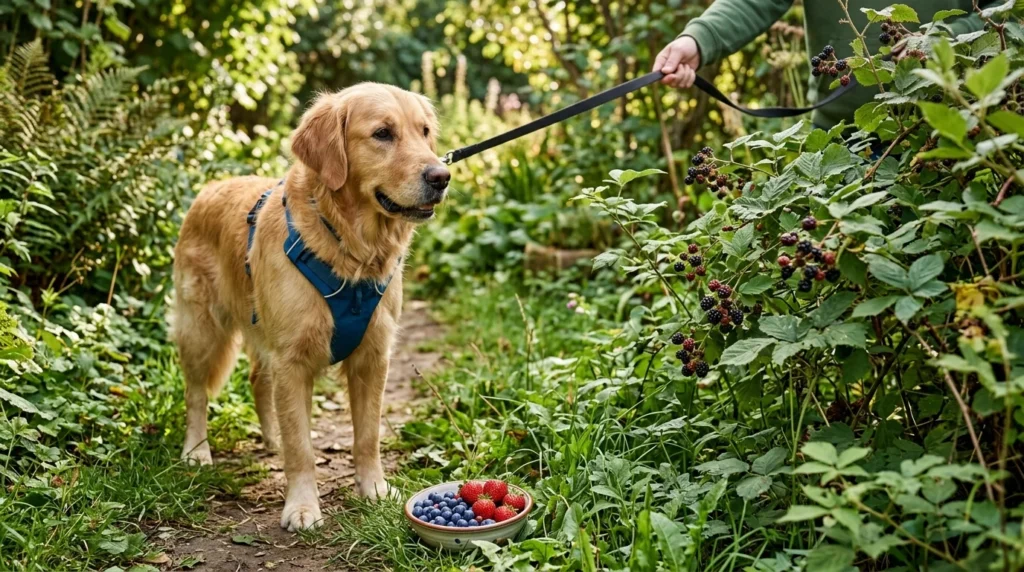
The main risks come from feeding the wrong type of berry, giving too much, or serving berries with unsafe ingredients. Unfamiliar wild berries are especially concerning because some poisonous plants can produce fruits that resemble harmless berries.
Even dog-safe berries can cause stomach upset when eaten in excessive amounts. Some dogs may also have individual food sensitivities. Introduce new berries gradually and stop giving them if your dog develops digestive problems after eating them.
Can Puppies Eat Berries?
Puppies can potentially eat small amounts of certain dog-safe berries, but their main nutrition should come from a complete puppy diet. Their digestive systems can also be more sensitive to sudden dietary changes.
If you give a puppy berries, introduce only a tiny amount of a known dog-safe variety. Wash the fruit, remove unsuitable parts, cut larger berries into small pieces, and monitor your puppy for any digestive reaction.
How Should You Prepare Berries for Dogs?
Before giving berries to your dog, wash them thoroughly to remove dirt and unwanted residues. Serve them plain without sugar, syrup, chocolate, whipped cream, artificial sweeteners, or other toppings. Fresh berries are usually the simplest option because you can control exactly what your dog is eating.
Remove parts that may be difficult to chew and cut larger berries into smaller pieces when necessary. For small dogs and puppies, smaller pieces can make the treat easier to eat. Always supervise your dog when introducing a new food.
Can Dogs Eat Berries With Yogurt?
Dogs may be able to eat a small amount of plain, unsweetened yogurt with dog-safe berries if they tolerate dairy. Choose yogurt without xylitol or other unsafe sweeteners and avoid flavored varieties that contain excessive sugar or unnecessary additives.
A small amount of blueberries or strawberries mixed with plain yogurt can be an occasional treat. However, dogs that are sensitive to dairy may develop gas, loose stools, or other digestive problems, so introduce this combination carefully.
Can Dogs Eat Berries With Oatmeal?
Plain cooked oatmeal can be combined with a small amount of dog-safe berries as an occasional treat. The oatmeal should be cooked with water rather than heavily sweetened or flavored ingredients.
Do not add chocolate, raisins, artificial sweeteners, excessive sugar, or other ingredients that can be dangerous for dogs. Keep the berry and oatmeal portion small so it does not replace your dog’s balanced regular food.
Can Dogs Eat Berries With Peanut Butter?
Some dogs can have a small amount of plain peanut butter with dog-safe berries. If you use peanut butter, choose a product that does not contain xylitol or other ingredients that are unsafe for dogs.
Peanut butter is also relatively high in calories and fat, so only a small amount should be used. A few blueberries or small strawberry pieces can be mixed with a tiny amount of suitable peanut butter as an occasional treat.
Can Dogs Eat Berries in Smoothies?
Berry smoothies are not automatically safe for dogs. Commercial smoothies may contain added sugar, artificial sweeteners, dairy, chocolate, grapes, or other ingredients that dogs should not consume.
If you want to make a dog-friendly smoothie, use a small amount of known dog-safe berries with plain water or another veterinarian-approved ingredient. Avoid adding sugar or sweeteners, and serve only a small portion.
Can Dogs Eat Berry Jam?
Berry jam is generally not a good treat for dogs because it often contains a large amount of added sugar. Some products may also contain artificial sweeteners or other ingredients that can be dangerous for dogs.
Instead of jam, give your dog a few pieces of fresh, washed blueberries, strawberries, raspberries, or blackberries. Fresh fruit provides a simpler option without the unnecessary sugar found in many jams.
Can Dogs Eat Berry Pie?
Berry pie is not a suitable treat for dogs. The berries may be safe, but the finished dessert usually contains large amounts of sugar, butter, fat, and other ingredients that are not appropriate for dogs.
Some pie recipes can also contain ingredients that are harmful to dogs. It is safer to offer a small amount of plain dog-safe berries instead of sharing a slice of berry pie.
See Also: Can Dogs Eat Ham? Benefits, Risks & Safe Feeding Guide
Can Dogs Eat Berries With Chocolate?
No. You should not give dogs berries covered in chocolate or mixed with chocolate. Chocolate can be toxic to dogs, and the risk depends on the type and amount of chocolate consumed as well as the dog’s size.
If your dog accidentally eats chocolate-covered berries, contact your veterinarian promptly for guidance. Do not assume that the small amount of fruit makes a chocolate-containing treat safe.
What Berries Should Dogs Avoid?
Dogs should not be allowed to eat unidentified berries, especially wild berries growing outdoors. Some poisonous plants produce berries that can look similar to harmless fruits, making identification extremely important.
It is also important to avoid berry products containing dangerous ingredients such as chocolate, xylitol, grapes or raisins, excessive sugar, and large amounts of artificial additives. When you cannot identify a berry or its ingredients, it is safest not to feed it to your dog.
What Happens If a Dog Eats Too Many Berries?
Eating too many berries can cause digestive upset even when the berries themselves are considered dog-safe. A dog may develop diarrhea, vomiting, gas, stomach discomfort, or changes in appetite after consuming a large quantity.
If your dog has eaten a large amount of berries, monitor them closely and make sure they have access to fresh water. Contact your veterinarian if symptoms are severe, persistent, or accompanied by weakness, unusual behavior, or other concerning signs.
What If a Dog Eats an Unknown Berry?
If your dog eats a berry that you cannot identify, take the situation seriously rather than assuming it is harmless. Wild or ornamental plants can produce fruits that are poisonous to dogs.
Try to identify the plant or take a clear photo of it if possible, and contact your veterinarian or an animal poison service for appropriate advice. Do not induce vomiting unless a veterinary professional specifically tells you to do so.
When Should You Contact a Veterinarian?
Contact a veterinarian if your dog eats an unidentified or potentially poisonous berry, consumes a large amount of berries, or develops significant symptoms afterward. Vomiting, diarrhea, excessive drooling, weakness, tremors, difficulty breathing, collapse, or unusual behavior can require prompt veterinary attention.
It is especially important to seek professional advice when a dog has eaten a berry product containing chocolate, grapes, raisins, xylitol, or another known harmful ingredient. Early veterinary guidance can help determine the appropriate next step.
Frequently Asked Questions
What berries are safe for dogs?
Blueberries, strawberries, raspberries, and blackberries are commonly safe for dogs when washed, prepared properly, and given in moderation. Always identify the exact berry before feeding it.
Can dogs eat berries every day?
Dogs do not need berries every day. They are best used as occasional treats in small portions rather than becoming a major part of a dog’s diet.
Can dogs eat frozen berries?
Plain frozen dog-safe berries can be given as an occasional treat. Larger frozen berries should be cut into appropriate pieces to reduce choking concerns, particularly for small dogs.
Are wild berries safe for dogs?
Do not let your dog eat unidentified wild berries. Some poisonous berries can resemble edible varieties, so the exact plant should be identified before a berry is considered safe.
What should I do if my dog eats a poisonous berry?
Contact your veterinarian or an appropriate animal poison service immediately for guidance. If possible, keep a sample or photograph of the plant to help identify what your dog consumed.
Conclusion
Many common berries can be safe and nutritious occasional treats for dogs when they are properly identified, washed, and served in small portions. Blueberries, strawberries, raspberries, and blackberries are among the better-known choices, while unidentified wild berries should be avoided because some can be poisonous.
The safest approach is to give berries plain and avoid products containing chocolate, xylitol, excessive sugar, or other unsafe ingredients. Introduce new berries gradually and watch your dog for digestive problems. If your dog eats an unknown berry or develops concerning symptoms, contact a veterinarian for advice.
See Also: Can Dogs Eat Pecans? Risks, Symptoms & Safety Guide